
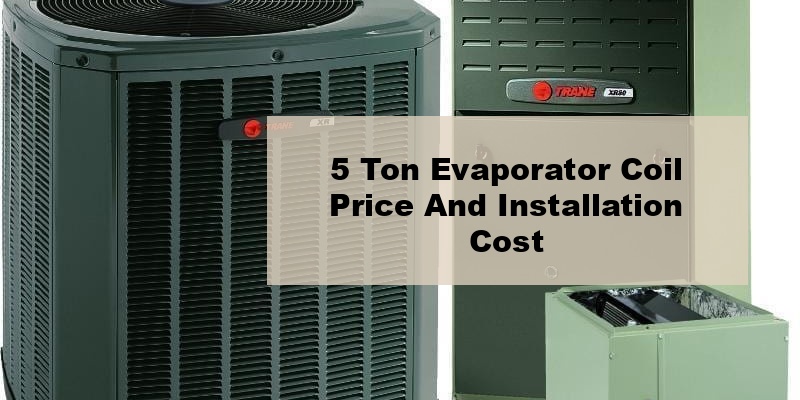
Understanding the true cost of a five-ton evaporator coil involves more than a sticker price. This guide breaks down coil pricing, installation charges, and the factors that influence total cost in the United States. It covers coil material options, expected labor ranges, common ancillary expenses, and how regional differences affect bids. By outlining practical steps to secure accurate quotes, homeowners can compare apples to apples and choose solutions that balance upfront affordability with long-term comfort and efficiency.
Content Navigation
Understanding A Five Ton Evaporator Coil
An evaporator coil plays a central role in refrigerant-based cooling. In a split HVAC system, the indoor evaporator coil absorbs heat from the living space as refrigerant circulates through copper or aluminum tubes. A five-ton coil indicates a cooling capacity of roughly 60,000 BTU per hour and is typically used in larger homes or spaces with a high cooling load. The correct coil size and configuration ensure efficient heat transfer and compatibility with the air handler and outdoor condenser.
Coil construction varies. Aluminum coils are lighter and commonly offered as cost-effective options, while copper coils typically deliver better durability and heat transfer but at a higher price. Some systems use copper tubes with aluminum fins or hybrid designs to balance price and performance. Coils can be finned for enhanced airflow and corrosion resistance, and some manufacturers provide anti-corrosion coatings or epoxy linings for humid climates.
Before replacement, technicians verify refrigerant type, coil dimensions, and compatibility with the existing air handler and outdoor unit. The coil must match the system’s refrigerant circuit, seal fittings to prevent leaks, and align with the indoor unit’s drain and airflow pathways. Improper fit or mismatched refrigerant charge can reduce efficiency, trigger equipment faults, and shorten equipment life.
Price Breakdown: Coil Cost And Installation
The total cost of a five-ton evaporator coil includes two major components: the coil itself and the installation labor. Coil prices can vary widely by material and coil design. Generally, an aluminum evaporator coil suitable for many mid-range systems ranges from $300 to $900 for replacement, while copper or higher-efficiency coils typically run $700 to $2,000. The exact price depends on coil design, warranty terms, and supplier.
| Component | Typical Price Range (USD) | Notes |
|---|---|---|
| New Evaporator Coil (Aluminum) | $300-$900 | Standard efficiency, common in builder-grade systems |
| New Evaporator Coil (Copper) | $900-$1800 | Higher durability and heat transfer, premium option |
| Installation Labor | $600-$1800 | Depends on accessibility and region |
| Refrigerant Recharge (if needed) | $150-$400 | Based on leak status and refrigerant type |
| Permits/Inspectors | $50-$300 | Local requirements vary |
Most installations fall within combined ranges of $1,000 to $3,000, depending on coil material, labor rates, and whether any ductwork adjustments or condensate drainage modifications are required. When a system is older or has unusual ductwork, installers may charge more for access, de-pressurization, or refrigerant handling.
Call 888-896-7031 for Free Local HVAC Quotes – Compare and Save Today!
Factors That Influence Price
Several variables shape both coil price and installation cost. Understanding these factors helps homeowners anticipate where bids may diverge and why.
- Coil Material and Quality: Aluminum coils are cheaper upfront but may have a shorter lifespan in harsh climates. Copper coils offer superior durability and heat transfer but at a higher price. Hybrid designs aim to balance cost and performance.
- Coil Size And Fit: A five-ton coil must precisely match the system’s outdoor unit and air handler. Deviations for unique duct layouts or nonstandard spaces can raise labor time and pricing.
- System Type And Configuration: Central air with a conventional air handler differs from heat pump configurations, which can affect coil design, refrigerant type, and installation complexity.
- Efficiency And Refrigerant Type: Higher SEER-rated systems or systems using newer refrigerants may carry higher coil costs but offer long-term savings through improved efficiency and lower operating costs.
- Access And Labor Hours: Attic, crawl space, or tight installations increase labor time. Accessibility often drives both price and the potential need for specialty equipment.
- Warranty And Service Plan: Longer or more comprehensive warranties on coil and installation can raise upfront price but reduce risk later.
- Additional Modifications: Ductwork adjustments, upgraded condensate drainage, or minor electrical work can add to the total cost.
- Permits And Inspections: Local codes may require permits, inspections, or refrigerant handling documentation, influencing total charges.
Regional Variations And Market Trends
HVAC pricing in the United States varies significantly by region. Labor costs in urban markets and coastal states tend to be higher due to living costs and demand, often resulting in bids that are 15% to 40% above rural areas. Regional climate influences coil selection; areas with extreme heat may prioritize higher efficiency coils and robust corrosion resistance, affecting price.
Supply chain dynamics and contractor availability also impact pricing. Seasonal demand spikes during peak cooling months can widen quotes, and local permitting practices can add time and cost. In general, Northeast and West Coast markets show higher average job prices than Midwest and Southern markets, driven by labor rates and regulatory requirements. Always compare multiple quotes to account for regional differences.
Getting An Accurate Quote: What To Ask
To obtain an accurate, apples-to-apples comparison, homeowners should ask explicit questions and request itemized bids. A well-structured quote helps identify where price differences originate and what is essential for long-term performance.
- Confirm Compatibility: Request exact coil model numbers, dimensions, and refrigerant type to guarantee a proper replacement for the existing system.
- Itemize Each Cost: Require separate line items for coil price, installation labor, refrigerant handling, permits, disposal, and any ductwork or drainage work.
- Warranty Details: Ask for terms on coil warranty and labor warranty, including what is covered and for how long.
- Inclusions And Exclusions: Clarify whether refrigerant recharging is included and if leak testing is part of the service.
- System Impact: Request an assessment of overall efficiency improvements, potential refrigerant loss prevention, and thermostat or controls recommendations.
- Access And Site Conditions: Have the contractor note any access challenges, attic or crawl space work, and whether temporary power or equipment is needed.
- Disposal And Cleanup: Confirm that the old coil, refrigerant cans, and debris will be removed and the workspace cleaned.
- Timeline And Scheduling: Ask about installation duration and any downtime for the cooling system.
Replacement Vs Reuse: When To Upgrade
Deciding between coil replacement and upgrading the entire air handler or furnace depends on several factors. If the air handler is original, has significant wear, or uses an outdated control system, a full upgrade can deliver better long-term reliability and efficiency. A worn-out air handler might also complicate a coil replacement, increasing labor costs and reducing performance gains.
Coil integrity matters. If a refrigerant leak has damaged the coil or if the system shows frequent refrigerant losses, a coil replacement paired with a test for leaks is prudent. In some cases, upgrading to a modern, higher-efficiency coil paired with a compatible air handler yields the most cost-effective improvement in comfort and energy savings over time.
Call 888-896-7031 for Free Local HVAC Quotes – Compare and Save Today!
The decision should factor in the system’s age, existing warranty coverage, duct condition, and potential efficiency gains. Homeowners can request a side-by-side comparison from a qualified technician that outlines total cost, payback period, and expected performance improvements. This enables a clearer, long-term purchasing decision rather than a sole focus on upfront price.
Tips for Getting the Best HVAC Prices
- Prioritize Quality Over Cost
The most critical factor in any HVAC project is the quality of the installation. Don’t compromise on contractor expertise just to save money. - Check for Rebates
Always research current rebates and incentives — they can significantly reduce your overall cost. - Compare Multiple Quotes
Request at least three estimates before making your choice. You can click here to get three free quotes from local professionals. These quotes include available rebates and tax credits and automatically exclude unqualified contractors. - Negotiate Smartly
Once you've chosen a contractor, use the proven strategies from our guide — How Homeowners Can Negotiate with HVAC Dealers — to get the best possible final price.