
Toe kick baseboard heaters and related toe-kick ducting solutions let you add warmth discreetly under cabinets, vanities, and stairs. Below is a concise comparison of five relevant products that cover ducting kits, electric kickspace heaters, standard baseboard heaters, and replacement covers to fit different installations and heating systems.
| Product | Type | Key Feature |
|---|---|---|
| Toe Ductor Floor Vent Under Cabinet Toe Kick Ducting Kit | Ducting Kit | Fits standard 4″ cavity, covers multiple boot sizes |
| Toe Ductor Wall Vent Under Cabinet Toe Kick Ducting Kit | Ducting Kit | For wall vents at toe-kick level, easy assembly |
| HTA15 Under Cabinet Electric Toe Kick Heater | Electric Kickspace Heater | Built-in thermostat & timer, 1500W, compact 3.8″ height |
| Cadet F Series 36″ Electric Baseboard Heater (120V) | Electric Baseboard Heater | Wall-mounted convection baseboard, universal wiring |
| Baseboarders Basic Series 6 ft Galvanized Steel Cover | Hydronic Baseboard Cover | Slip-on replacement cover for hydronic systems |
Content Navigation
- Toe Ductor Floor Vent Under Cabinet Toe Kick Ducting Kit
- Toe Ductor Wall Vent Under Cabinet Toe Kick Ducting Kit
- Kickspace Heater With Built-In Thermostat And Timer
- Cadet F Series 36″ Electric Baseboard Heater (120V)
- Baseboarders Basic Series 6 ft Galvanized Steel Cover
- Buying Guide: Choosing The Right Toe Kick Or Baseboard Solution
Toe Ductor Floor Vent Under Cabinet Toe Kick Ducting Kit

The Toe Ductor Floor Vent Kit is designed to sit in a standard 4″ toe-kick cavity below cabinets and redirect floor or ducted warm air into the toe-kick space. The kit accommodates common supply sizes including 4″x10″, 4″x12″ and a 6″ round supply boot via semi-circle flanges that cover a 6″ round boot.
Installation is described as easy and tool-light, requiring no custom boot. This kit is suitable when a vent or supply is positioned in the floor or toe-kick level and you want to channel heat into the cabinet base area for improved comfort near floors.
- Best for retrofitting toe-kick cavities with existing floor or duct supplies.
- Measure the toe-kick cavity before purchase to confirm the standard 4″ depth.
- Includes unassembled components; assembly instructions are provided.
Toe Ductor Wall Vent Under Cabinet Toe Kick Ducting Kit

The Toe Ductor Wall Vent Kit adapts wall-level vents that are positioned at the same level as the cabinet toe-kick so warm air enters the front kickspace. This kit specifically notes it works only when the wall vent is at toe-kick height.
Call 888-896-7031 for Free Local HVAC Quotes – Compare and Save Today!
Assembly and installation are intended to be straightforward and do not require a custom boot. This option is useful when you have a wall supply or return at toe-kick level and want directed warm air beneath cabinetry without major carpentry changes.
- Intended for wall vents located at the same level as the toe-kick; not for higher wall vents.
- Good choice for kitchens, bathrooms, or built-ins where wall registers align with cabinet bases.
- Check vent location and cabinet cavity depth prior to purchase.
Kickspace Heater With Built-In Thermostat And Timer

This HTA15 Kickspace Heater is an electric under-cabinet unit delivering up to 1500W with double-finned electric heating bars and a fan-forced design for rapid warm air delivery. The unit automatically adapts to 120V/240V input and features an integrated digital thermostat and timer.
At roughly 3.8 inches tall, it fits many standard toe-kick spaces beneath vanities and cabinets. The built-in thermostat includes a tolerance range to reduce short cycling and extend component life. The digital timer provides scheduling for comfort and energy control.
- Good where central heating is absent or supplemental localized heat is required.
- Space-saving profile suitable for bathrooms, kitchens, or tight utility areas.
- Requires appropriate electrical supply and safe mounting within the kickspace.
Cadet F Series 36″ Electric Baseboard Heater (120V)
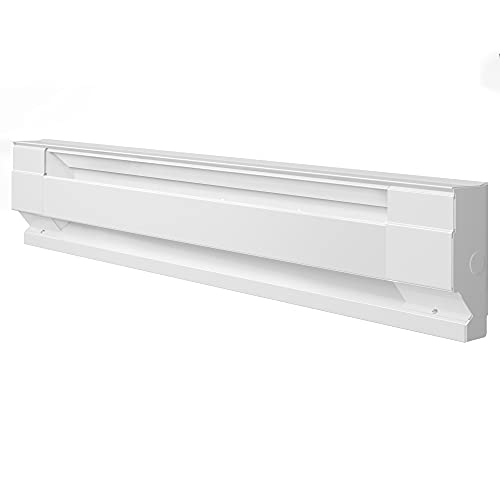
The Cadet F Series 36″ electric baseboard heater provides convection heating and is sized for standard wall-mounted baseboard installations. The 120V model (part 05532) specifies the need for a thermostat and features durable all-metal construction.
Call 888-896-7031 for Free Local HVAC Quotes – Compare and Save Today!
Cadet baseboard units are common for room-level heating via convective airflow and are designed for straightforward wiring with pre-punched knockouts on many models in the series. This particular model requires external thermostat control for temperature regulation.
- Best for replacing or installing standard wall baseboard convection heating.
- Requires wiring to a dedicated circuit and thermostat for operation.
- All-metal housing and junction box meet common electrical installation expectations.
Baseboarders Basic Series 6 ft Galvanized Steel Cover
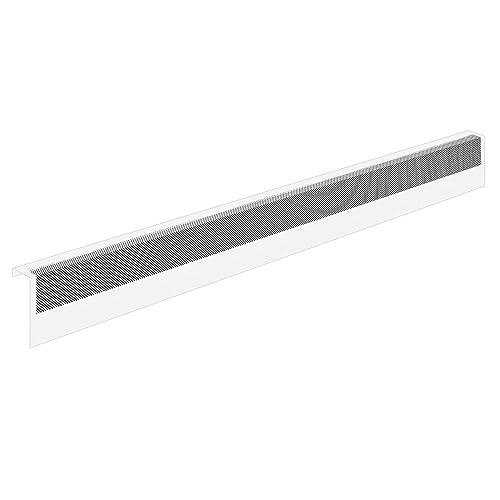
The Baseboarders Basic Series 6 ft cover is a slip-on replacement designed for hydronic (water) baseboard systems. It improves aesthetics and protects heating elements while maintaining airflow for effective heat distribution.
This Basic Series cover is not intended for electric baseboard units. It features galvanized steel construction, a rust-resistant finish, and is offered in multiple lengths to match common hydronic baseboard sizes. Endcaps and attachments are available to complete installations.
- Intended for hydronic baseboards only; do not use on electric heaters.
- Slip-on design simplifies replacement of old or rusted covers.
- Lifetime protection against rust for typical residential use per manufacturer.
Buying Guide: Choosing The Right Toe Kick Or Baseboard Solution
Selecting the appropriate toe-kick or baseboard solution depends on heating source, installation constraints, and functional goals. Use the considerations below to compare options from ducting kits to active electric units and replacement covers.
Identify Heating Type And Source
- Ducted HVAC or Floor Supply: If warm air comes from ducts or floor registers, toe-kick ducting kits (Toe Ductor floor or wall kits) can redirect air into toe spaces without adding new heating elements.
- Electric Kickspace Heaters: Where no duct or hydronic supply exists, electric units like the HTA15 provide localized heat with simple installation when electrical capacity is available.
- Baseboard Convection Units: Traditional wall-mounted baseboards (Cadet) are suitable for room-wide heating and require thermostat wiring and appropriate circuit amperage.
- Hydronic Covers: If you have hot-water baseboards and want an updated appearance, slip-on covers improve safety and aesthetics but do not add heat.
Measure Carefully
- Toe Kick Depth And Height: Most kits require a standard 4″ cavity depth; measure cabinet toe-kicks and register positions before buying.
- Supply Boot Size: Ducting kits list compatibility (e.g., 4″x10″, 4″x12″, 6″ round) — confirm boot dimensions to ensure fit.
- Baseboard Length & Height: For covers or replacement baseboards, match length and maximum width/height specifications to your existing units.
Electrical And Ventilation Requirements
- Voltage And Circuit Capacity: Electric kickspace heaters and baseboards require dedicated circuits and proper voltage (120V vs 240V). Verify home electrical capacity and consult an electrician for complex installations.
- Thermostat Control: Some baseboards require an external thermostat. Choose units with built-in thermostats if integrated control is preferred.
- Ventilation Path: Ensure that toe-kick ducts or fan units have unobstructed airflow and that cabinet contents won’t block heat output or create fire hazards.
Installation Considerations
- DIY vs Professional: Ducting kits and slip-on covers are often DIY-friendly. Electric baseboards and kickspace heaters with wiring are best installed by qualified electricians.
- Clearances and Codes: Maintain manufacturer-recommended clearances from combustible materials and follow local electrical and HVAC codes.
- Mounting and Access: Confirm access for wiring, duct connections, and future maintenance when planning placement.
Performance And Efficiency
- Heat Delivery Method: Convection baseboards distribute heat gradually; fan-forced kickspace heaters provide faster localized warmth.
- Control Precision: Units with built-in thermostats and timers can help reduce energy use by scheduling and precise temperature control.
- System Compatibility: Ducting kits rely on your existing HVAC system; efficiency gains depend on overall system performance and thermostatic settings.
Safety And Material Concerns
- Material Suitability: Use covers meant for hydronic systems only on hydronic baseboards; electric heaters require covers rated for electric units if used.
- Overheat Protections: Look for heaters with built-in thermal cutoffs or thermostatic control to minimize overheating risk.
- Child And Pet Safety: Low-profile toe-kick heat sources reduce direct touch risk vs exposed finned baseboards, but always ensure proper guard installation where needed.
Comparison Perspectives
- Cost To Install: Ducting kits and slip-on covers typically have lower installation costs; electric heaters and baseboards require electrical work that raises labor costs.
- Speed Of Warmth: Fan-forced kickspace heaters warm spaces faster than passive convection baseboards; choose based on how quickly you need heat.
- Aesthetic Impact: Slip-on covers and integrated toe-kick ducts preserve cabinet lines better than exposed wall baseboards in certain designs.
- Long-Term Maintenance: Ducting and passive baseboards have minimal moving parts; fan units may require occasional cleaning or fan maintenance.
If you need help matching a product to a specific cabinet cavity, electrical setup, or hydronic system, gather measurements (toe-kick depth and width, vent size, voltage available) and consult product manuals or a licensed contractor for safe installation guidance.
Tips for Getting the Best HVAC Prices
- Prioritize Quality Over Cost
The most critical factor in any HVAC project is the quality of the installation. Don’t compromise on contractor expertise just to save money. - Check for Rebates
Always research current rebates and incentives — they can significantly reduce your overall cost. - Compare Multiple Quotes
Request at least three estimates before making your choice. You can click here to get three free quotes from local professionals. These quotes include available rebates and tax credits and automatically exclude unqualified contractors. - Negotiate Smartly
Once you've chosen a contractor, use the proven strategies from our guide — How Homeowners Can Negotiate with HVAC Dealers — to get the best possible final price.