
Choosing a decorative propane heater for indoor spaces requires balancing style, safety, and heating performance. The table below summarizes five indoor-safe propane heaters selected for their suitability in homes, sunrooms, garages, and small commercial spaces.
| Product | Type | BTU Range | Coverage |
|---|---|---|---|
| Mr. Heater Portable Buddy Heater MH9BX | Radiant Portable | 4,000–9,000 | Up To ~225 Sq. Ft. |
| Mr. Heater MHVFBF20LPT 20,000 BTU | Blue Flame Vent Free Wall | 20,000 | Up To ~700 Sq. Ft. |
| Dyna-Glo IR30PMDG-1 30,000 BTU | Infrared Vent Free Wall | 6,000–30,000 | Up To ~1,000 Sq. Ft. |
| ProCom ML100TPA-B 10,000 BTU | Infrared Compact | 10,000 | Up To ~500 Sq. Ft. |
| OKF Propane Heater Indoor/Outdoor | Portable Multi-Mode | 6,000–18,000 | Up To ~450 Sq. Ft. |
Content Navigation
- Mr. Heater Portable Buddy Heater MH9BX
- Mr. Heater MHVFBF20LPT 20,000 BTU Blue Flame Heater
- Dyna-Glo IR30PMDG-1 30,000 BTU Infrared Vent Free Heater
- ProCom ML100TPA-B 10,000 BTU Infrared Compact Heater
- OKF Propane Heater Indoor And Outdoor 6k–18k BTU
- Buying Guide: Choosing The Right Indoor Decorative Propane Heater
- 1. Heat Type: Infrared vs Blue Flame
- 2. BTU Output And Coverage
- 3. Vent-Free vs Venting Requirements
- 4. Safety Features
- 5. Installation And Placement
- 6. Control And Thermostat Options
- 7. Fuel Type And Connection
- 8. Noise, Maintenance, And Longevity
- 9. Aesthetic And Decorative Considerations
- 10. Code Compliance And Local Restrictions
- Comparison Perspectives
Mr. Heater Portable Buddy Heater MH9BX
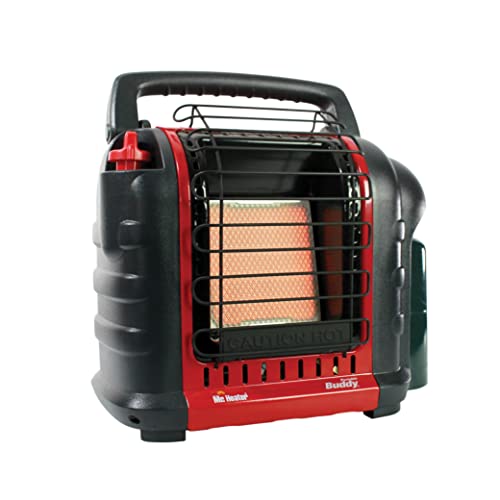
This compact propane radiant heater delivers 4,000 to 9,000 BTUs using infrared technology that directly warms people and objects. The unit is promoted as suitable for spaces up to about 225 sq. ft., making it a common choice for small rooms, workshops, and RVs.
Notable features listed include powerful radiant heat that simulates sun-like warmth, an improved tip-over safety switch with audible engagement, and a durable Piezo igniter that starts the heater without matches or batteries. The design is portable and often used on floors or work surfaces.
For indoor decorative uses, its compact profile and radiant heating can complement seating areas or reading nooks where direct, localized warmth is desired. The safety features reduce risk during routine indoor use, but proper ventilation and adherence to manufacturer instructions remain necessary.
Mr. Heater MHVFBF20LPT 20,000 BTU Blue Flame Heater
Call 888-896-7031 for Free Local HVAC Quotes – Compare and Save Today!
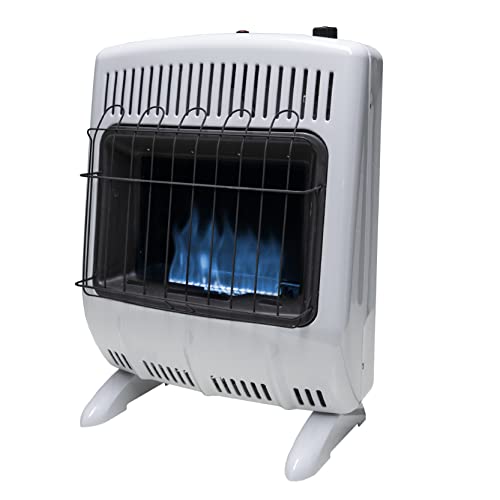
This vent-free blue flame wall heater produces up to 20,000 BTUs and is designed for heating larger rooms, additions, or cabins. The blue flame technology convects air, distributing heat through the room rather than radiating to surfaces first.
Key features include a built-in thermostat for accurate temperature control, battery-powered electronic ignition for simplified startup, and an Oxygen Depletion Sensor (ODS) that shuts the unit off under low-oxygen conditions. Fuel consumption rate and elevation performance are specified for consistent operation.
As a wall-mounted option, this model integrates into room decor with a low visual profile. Blue flame units are commonly used as supplemental whole-room heat where consistent ambient temperature is preferred over targeted radiant warmth.
Dyna-Glo IR30PMDG-1 30,000 BTU Infrared Vent Free Heater

The Dyna-Glo IR30PMDG-1 is a higher-capacity infrared vent-free wall heater with variable output up to 30,000 BTUs. Infrared heating warms objects and surfaces first, providing a sun-like heat feel suitable for seating areas and open rooms.
Listed features emphasize liquid propane readiness and an adjustable output range of 6,000 to 30,000 BTU/hr designed to cover spaces up to around 1,000 sq. ft. The vent-free infrared design aims for efficient radiant delivery so occupants perceive warmth quickly.
Call 888-896-7031 for Free Local HVAC Quotes – Compare and Save Today!
This model is relevant for larger living spaces or open-plan rooms where a decorative wall-mounted heater that provides strong radiant warmth is desirable. As with all vent-free appliances, following local codes and manufacturer installation guidelines is important.
ProCom ML100TPA-B 10,000 BTU Infrared Compact Heater

The ProCom ML100TPA-B is a compact infrared ventless space heater that outputs up to 10,000 BTUs and claims coverage for areas up to about 500 sq. ft. It combines a slim profile with wall or floor placement options and includes mounting hardware and base feet.
Features highlighted are thermostat control for High/Medium/Low settings, a modern slim profile for aesthetics, and infrared technology for direct, object-focused warmth. The design aims to blend functionality with a minimal visual footprint.
For decorative indoor settings, its small form factor and wall-mount capability support discrete installation in bedrooms, offices, or living spaces where a subtle heat source is desired without dominating the room’s look.
OKF Propane Heater Indoor And Outdoor 6k–18k BTU

The OKF model is a versatile portable propane heater offering 6,000/12,000/18,000 BTU modes and pulse ignition. The unit ships with a regulator and hose to connect to a standard 20 lb cylinder and emphasizes long runtime on low settings.
Safety features listed include an Oxygen Depletion Sensor (ODS) and tip-over protection that shuts the gas supply if the unit tilts or senses low oxygen. Pulse ignition is noted as more durable than traditional piezo starters.
Because it supports multiple heat modes and includes safety cutoffs, this heater can be used in garages, covered patios, and some indoor spaces where portable, adjustable decorative heating is required. Users should ensure compliance with indoor usage guidelines.
Buying Guide: Choosing The Right Indoor Decorative Propane Heater
1. Heat Type: Infrared vs Blue Flame
Infrared (Radiant) heaters warm objects and people directly, producing a quick sensation of warmth in seating areas. They are effective for targeted zones and decorative wall installations that mimic sunlight.
Blue Flame (Convection) heaters warm the air and circulate heat throughout a room. They are preferable for whole-room warmth and spaces needing even ambient temperature rather than focused radiant comfort.
2. BTU Output And Coverage
Choose a BTU level that matches room size and ceiling height. Lower BTUs (4k–10k) suit small rooms and nooks, mid-range units (10k–20k) fit average living rooms, and high-output units (20k–30k+) suit large open spaces. Manufacturer coverage estimates are guideline values; insulation and drafts change real-world performance.
3. Vent-Free vs Venting Requirements
Vent-free heaters are easier to install and can be wall-mounted indoors, but they release combustion byproducts into the room and often include ODS sensors and specific clearance rules. Check local building codes as some jurisdictions restrict vent-free appliance use.
Vented units require a flue or proper exhaust and are typically used where indoor combustion products must be expelled. Decorative appeal and placement options differ between vented and vent-free designs.
4. Safety Features
Key safety elements include Oxygen Depletion Sensor (ODS), tip-over shutoff, and robust ignition systems (piezo or pulse). For indoor decorative heaters, prioritized sensors and shutoffs reduce risks in occupied rooms.
Also verify required clearances around combustibles, proper mountings, and any recommended carbon monoxide monitoring when using combustion heaters indoors.
5. Installation And Placement
Wall-mounted units require secure mounting and space for airflow. Portable radiants should be placed on stable, non-combustible surfaces and away from foot traffic. Consider proximity to seating and visual integration with room decor when selecting decorative models.
6. Control And Thermostat Options
Thermostatic control enables consistent room temperatures and efficiency. Models with High/Medium/Low settings provide simpler control, while electronic thermostats give finer regulation and potential energy savings.
7. Fuel Type And Connection
Most listed models are designed for liquid propane with specified regulator and hose requirements. Confirm compatibility with standard 20 lb cylinders and whether conversions are permitted by the manufacturer.
8. Noise, Maintenance, And Longevity
Infrared and blue flame heaters are typically quiet. Pulse ignition or electronic starters may last longer than manual piezo systems. Regular cleaning, checking burners, and following maintenance schedules preserve performance and safety.
9. Aesthetic And Decorative Considerations
For a decorative indoor heater, evaluate faceplate finishes, slim profiles, and whether the unit integrates with room styling. Wall-mounted models can be discreet or feature visible tiles or burners for a design statement.
10. Code Compliance And Local Restrictions
Consult local building codes and regulations about indoor vent-free propane appliance usage. Some municipalities restrict or prohibit vent-free units in certain settings; confirming compliance avoids retrofits or safety issues.
Comparison Perspectives
Portability vs Fixed Installation: Portable units like the Mr. Heater Buddy and OKF model prioritize flexibility; wall-mounted blue flame or infrared units (Dyna-Glo, Mr. Heater 20k, ProCom) offer permanent, integrated heating.
Targeted Comfort vs Whole-Room Warmth: Infrared radiant heaters perform well for direct comfort in seating areas. Blue flame convection units excel at warming entire rooms more evenly.
Safety And Indoor Suitability: Units with ODS and tip-over protection are better suited for indoor decorative use. Verify ignition type and safety certifications when comparing models.
Energy Use And Runtime: Higher BTU units deliver more heat but consume more fuel. Models with adjustable BTU or thermostats allow better fuel control and longer runtime on lower settings.
Tips for Getting the Best HVAC Prices
- Prioritize Quality Over Cost
The most critical factor in any HVAC project is the quality of the installation. Don’t compromise on contractor expertise just to save money. - Check for Rebates
Always research current rebates and incentives — they can significantly reduce your overall cost. - Compare Multiple Quotes
Request at least three estimates before making your choice. You can click here to get three free quotes from local professionals. These quotes include available rebates and tax credits and automatically exclude unqualified contractors. - Negotiate Smartly
Once you've chosen a contractor, use the proven strategies from our guide — How Homeowners Can Negotiate with HVAC Dealers — to get the best possible final price.