
Choosing a reliable 110–120V baseboard heater involves checking wattage, safety features, installation method, and thermostat compatibility. The table below summarizes five selected products focused on 120V performance, wiring options, and control compatibility to help you compare quickly.
| Product | Type / Wattage | Key Features |
|---|---|---|
| KING 4K1210BW K Series Baseboard Heater | 1000W / 120V | Hard-wire, Aluminum Ribbon Fin, Safety Cutout |
| Cadet F Series 36″ Electric Baseboard Heater (3F750-1W) | 750W / 120V | All-metal construction, Requires thermostat, Junction box |
| Cadet F Series 48″ Electric Baseboard Heater (4F1000-1W) | 1000W / 120V | Fast heating, Pre-punched holes, Steel sheath |
| meross Smart Thermostat For Electric Baseboard | Thermostat For 120–240V | Wi‑Fi, HomeKit/Alexa/Google, 16A @120V |
| 120V Manual Electric Baseboard Heater Thermostat (YeloDeer) | Thermostat For 120V | Large knob, 40–80°F range, Up to 2400W |
Content Navigation
- KING 4K1210BW K Series Baseboard Heater, 4′ / 1000W / 120V
- Cadet F Series 36″ Electric Baseboard Heater (3F750-1W)
- Cadet F Series 48″ Electric Baseboard Heater (4F1000-1W)
- meross Smart Thermostat For Electric Baseboard And In-Wall Heaters
- 120 V Manual Electric Baseboard Heater Thermostat (YeloDeer)
- Buying Guide: How To Choose The Right 110–120V Baseboard Heater
KING 4K1210BW K Series Baseboard Heater, 4′ / 1000W / 120V

This hard-wired baseboard heater is designed for 120V wiring and delivers 1000W over a 4-foot length. It uses an Aluminum Ribbon Fin Element for efficient heat transfer and includes a full-length safety cutout to interrupt power in an over-temperature event.
- Designed For Permanent Installation — Not A Plug-In Model; requires hard-wiring at 120V.
- Aluminum Ribbon Fin Element — Helps Evenly Distribute Heat Along The Length.
- Safety Cutout — Full-Length Thermal Protection For Overheat Situations.
- Suitable For Small To Medium Rooms Where A 1000W Output Is Appropriate.
Cadet F Series 36″ Electric Baseboard Heater (3F750-1W)
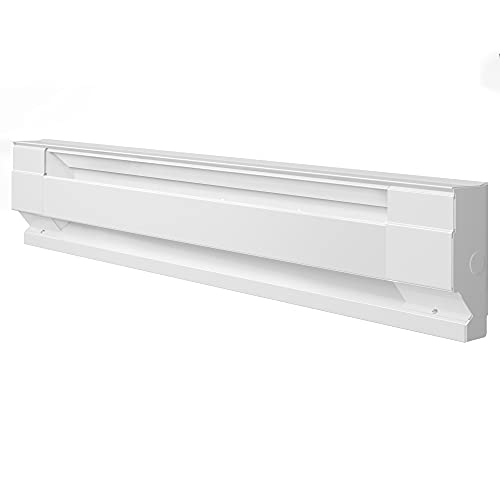
The Cadet 36″ model provides 750W at 120V, making it suitable for smaller rooms or supplemental heat. The unit is made entirely of metal and comes with a 20-gauge junction box with ground to simplify wiring during installation.
- Requires A Thermostat — Heater Does Not Include A Built-In Thermostat; External Control Needed.
- Robust Construction — 25-Gauge Steel Body, Powder-Coated Finish For Durability.
- Factory Junction Box — 20-Gauge Box With Ground For Safe Hard-Wiring.
- All-Metal Design — Improves Longevity Compared To Plastic-Cased Alternatives.
Cadet F Series 48″ Electric Baseboard Heater (4F1000-1W)
Call 888-896-7031 for Free Local HVAC Quotes – Compare and Save Today!
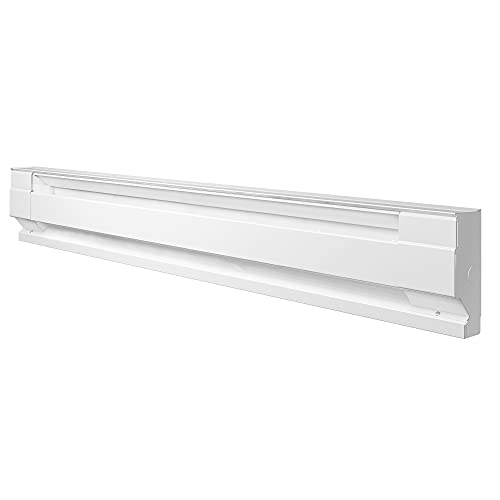
This 48″ Cadet F Series heater delivers 1000W at 120V and is optimized for fast, quiet heating in small to medium rooms. The heater is sheathed in protective steel and includes pre-punched 1″ casing holes for easier wiring and installation.
- Fast Heating — 1000 Watts Delivers Noticeable Output For Single-Room Heating.
- Easy Installation — Pre-Punched Holes And Universal Wiring At Either End.
- Durable Construction — Steel Sheath Protects Internal Elements And Aids Heat Transfer.
- Thermostat Not Included — Requires Wall Or Line Thermostat For Temperature Control.
meross Smart Thermostat For Electric Baseboard And In-Wall Heaters

The meross smart thermostat is built for high-voltage baseboard systems and supports both 120V and 240V setups. It offers Wi‑Fi connectivity with HomeKit, Alexa, Google Home, and SmartThings integration for remote and voice control.
- High‑Voltage Rating — Maximum Output Load 16A, 1920W At 120V; 3840W At 240V.
- Smart Features — Wi‑Fi Control, Scheduling, Voice Assistant Compatibility.
- Installation Note — Requires Four Or More Wires In The Electric Box; Installation Time Typically Under 30 Minutes For Experienced Installers.
- Works With Multiple Heater Types — Baseboard, Convector, Fan‑Forced And In‑Ceiling Radiant.
120 V Manual Electric Baseboard Heater Thermostat (YeloDeer)

This manual thermostat is designed for straightforward control of 120V baseboard heaters. It provides a wide control range (40–80°F) and a traditional large knob for simple adjustment without smart features.
- Simple Manual Control — Large Knob For Intuitive Temperature Adjustment.
- Compatibility — Rated Up To 2400W At 120V Systems; Check Wiring And Load Before Installation.
- Flush Design — Low-Profile Appearance To Match Baseboard Aesthetics.
- Higher Accuracy Than Mechanical Thermostats — Electronic Control For More Stable Room Temperatures.
Buying Guide: How To Choose The Right 110–120V Baseboard Heater
Selecting a baseboard heater for 110–120V systems requires weighing performance, safety, installation needs, and control options. Below are the primary considerations and comparison perspectives to help with a well-rounded decision.
Call 888-896-7031 for Free Local HVAC Quotes – Compare and Save Today!
Wattage And Room Size
Match heater output to room size. Typical guidance: 750W–1000W at 120V is suitable for small to medium rooms or supplemental heating. Consider multiple units or higher total wattage for larger spaces. Confirm the circuit capacity and breaker ratings before adding load.
Permanent Wiring Vs Plug-In
Most 120V baseboard heaters are hard-wired for safety and longevity. Hard-wired models like the KING and Cadet units require electrician installation. Plug-in models may be offered elsewhere but typically provide lower sustained output and may be less suitable for fixed installations.
Thermostat Compatibility
Baseboard heaters often require a separate thermostat. Decide between:
- Manual Line Thermostats (e.g., YeloDeer) — Simple, reliable control without smart features.
- Smart High‑Voltage Thermostats (e.g., meross) — Remote scheduling, voice control, and energy monitoring. Ensure the thermostat’s amp/watt rating meets your heater load.
Safety Features
Look for overheat protection, thermal cutouts, and robust junction boxes. Metal-sheathed units with full-length safety cutouts reduce fire risk and improve heat transfer. For portable or freestanding units, tip-over switches and stay-cool bodies add protection.
Build Quality And Materials
Steel-sheathed heaters provide durability and improved heat conduction. Aluminum ribbon or fin elements enhance efficiency by increasing surface area. Powder-coated finishes resist corrosion in damp environments.
Installation Practicalities
Pre-punched holes and universal wiring (found on some Cadet models) reduce installation time. If you plan to use a smart thermostat, verify you have the required number of conductors and line wiring in the electrical box. For permanent 120V units, professional installation ensures code compliance.
Noise And Operation
Most convective baseboard heaters operate quietly because they rely on natural convection. If noise is a concern, review product specs and user feedback on audible coil expansion; metal-sheathed, well-designed units are typically quiet.
Energy Use And Control Strategy
Baseboard heaters are resistive loads; energy consumption scales with runtime and setpoint. Smart thermostats enable scheduling and setback strategies that reduce runtime. Manual thermostats require occupant adjustments but can still maintain comfort if used consistently.
Comparison Perspectives
- Performance Focus — Choose a 1000W 48″ unit like the Cadet 4F1000-1W for faster heating and broader coverage in a single wall run.
- Installation Ease — Units with pre-punched holes and included junction boxes reduce wiring complexity.
- Control Flexibility — Opt for a smart thermostat when remote control, automation, or voice control is a priority; choose manual thermostats for simplicity and reliability.
- Safety Priority — Prefer heaters with full-length thermal cutouts and robust sheathing to lower risk and extend lifetime.
When combining heater and thermostat choices, verify that both components are rated for the same system voltage and total current. If unsure, consult a licensed electrician to confirm circuit sizing, breaker capacity, and local code requirements before permanent installation.
Tips for Getting the Best HVAC Prices
- Prioritize Quality Over Cost
The most critical factor in any HVAC project is the quality of the installation. Don’t compromise on contractor expertise just to save money. - Check for Rebates
Always research current rebates and incentives — they can significantly reduce your overall cost. - Compare Multiple Quotes
Request at least three estimates before making your choice. You can click here to get three free quotes from local professionals. These quotes include available rebates and tax credits and automatically exclude unqualified contractors. - Negotiate Smartly
Once you've chosen a contractor, use the proven strategies from our guide — How Homeowners Can Negotiate with HVAC Dealers — to get the best possible final price.