
Quick Overview: This guide reviews a selection of vented and vent-free propane wall heaters suited for homes, garages, cabins, and additions. Each product entry highlights key features, venting type, safety systems, and coverage to help match the right heater to your space.
| Product | Brand | Heating Type | BTU / Coverage |
|---|---|---|---|
| Comfort Glow 11,000 BTU Direct Vent Wall Heater | Comfort Glow | Direct Vent | 11,000 BTU — Up To 375 Sq. Ft. |
| Comfort Glow 17,000 BTU Direct Vent Wall Heater | Comfort Glow | Direct Vent | 17,000 BTU — Up To 570 Sq. Ft. |
| Rinnai EX38DTP Direct Vent Wall Furnace | Rinnai | Direct Vent / Modulating | 36,500 BTU — Larger Areas / Modulating Output |
| Rinnai FC824P Ventless Propane Heater | Rinnai | Ventless (Wall) | Compact Room Heating — Programmable Thermostat |
| Dyna-Glo IR30PMDG-1 30,000 BTU Infrared Vent Free | Dyna-Glo | Vent-Free Infrared | 6,000–30,000 BTU — Up To 1,000 Sq. Ft. |
Content Navigation
- Comfort Glow 11,000 BTU Direct Vent Liquid Propane Wall Heater
- Comfort Glow 17,000 BTU Direct Vent Liquid Propane Wall Heater
- Rinnai EX38DTP Direct Vent Wall Furnace, Indoor Propane Heater
- Rinnai FC824P Ventless Propane Heater, Programmable Thermostat
- Dyna-Glo IR30PMDG-1 30,000 BTU Liquid Propane Infrared Vent Free Wall Heater
- Buying Guide: How To Choose A Vent Propane Heater
Comfort Glow 11,000 BTU Direct Vent Liquid Propane Wall Heater
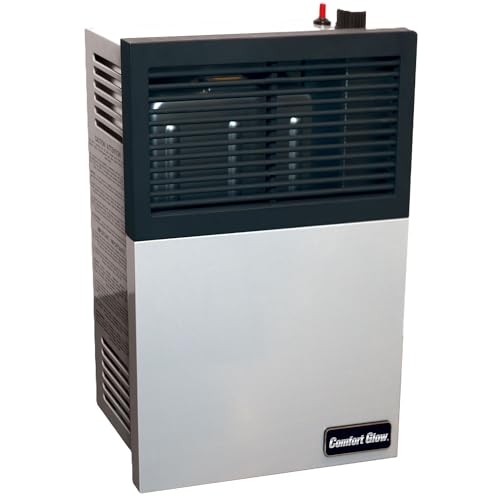
This direct vent propane wall heater delivers 11,000 BTU and is rated to heat up to about 375 sq. ft. Its sealed combustion design draws outdoor air for combustion and exhausts outdoors, which reduces indoor combustion byproducts and helps maintain indoor air quality.
Key safety elements include a sealed burn system, Matchless Piezo Ignition, and a safety pilot with a built-in pressure regulator that stops gas flow if the pilot is extinguished. The wall-mountable, space-saving design measures approximately 20″ H x 17″ W x 7″ D, suitable for small to medium rooms where wall space is available.
Use cases: supplemental heating for living rooms, workshops, or small additions where venting to an outside wall is feasible and maintaining indoor air quality is a priority.
Comfort Glow 17,000 BTU Direct Vent Liquid Propane Wall Heater

Call 888-896-7031 for Free Local HVAC Quotes – Compare and Save Today!
The larger sibling offers 17,000 BTU and is specified to heat up to approximately 570 sq. ft. Like the 11k model, it uses a sealed burn with Matchless Piezo Ignition and a safety pilot with a built-in pressure regulator.
Dimensions are approximately 20″ H x 27.3″ W x 6.5″ D. The extra width accommodates the higher output; this makes it a fit for larger rooms, open plans, or small garages where a direct vent installation to an exterior wall is possible.
Comparative note: Compared with vent-free units, this direct vent model reduces indoor combustion byproducts and is often preferred where air quality and combustion isolation are required.
Rinnai EX38DTP Direct Vent Wall Furnace, Indoor Propane Heater

The Rinnai EX38DTP is a high-capacity direct vent wall furnace with modulating technology and 36,500 BTU capability. Its design focuses on consistent, efficient heating and minimizing cold spots through controlled modulation of output.
Safety and usability features highlighted include a cool-to-the-touch cabinet, self-diagnostic electronics, and modern controls. The system’s modulation helps match heat output to demand, improving fuel efficiency and reducing cycling compared to single-stage heaters.
Call 888-896-7031 for Free Local HVAC Quotes – Compare and Save Today!
Use cases: larger living areas, whole-room replacement for older furnaces, and spaces where a higher continuous output is needed and an exterior vent path can be installed. Direct venting makes this suitable where indoor combustion isolation and energy-efficient operation are priorities.
Rinnai FC824P Ventless Propane Heater, Programmable Thermostat
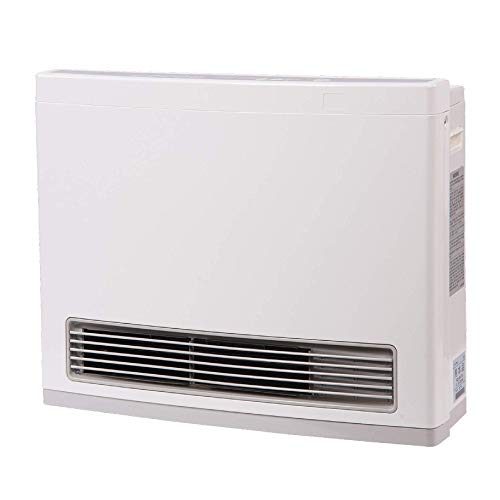
The Rinnai FC824P is a ventless (vent-free) wall heater designed for compact rooms. It emphasizes programmable thermostat control and a digital adaptive control that adjusts to heating needs.
Safety is addressed with a flame failure device, overheat switch, oxygen depletion sensor (ODS), and a tilt switch. The ventless approach delivers high delivered heat since no combustion exhaust is vented outdoors, but it requires adequate ventilation and adherence to local codes.
Use cases: tight indoor spaces where exterior venting is impractical and local codes allow ventless heaters. Best suited for supplemental heat in conditioned living spaces where monitoring indoor air and ventilation is feasible.
Dyna-Glo IR30PMDG-1 30,000 BTU Liquid Propane Infrared Vent Free Wall Heater

This Dyna-Glo unit is a vent-free infrared heater with variable output from 6,000 to 30,000 BTU and is rated to serve spaces up to about 1,000 sq. ft. Infrared technology radiates heat to warm objects and people directly rather than relying solely on convection.
Because it is vent-free, it provides high apparent efficiency and fast warmth, but it requires compliance with indoor air quality considerations and local regulations. The product is specified as liquid propane ready and provides a broad output range suitable for garages, sunrooms, or large open additions.
Comparative note: Infrared vent-free heaters often feel more immediate and comfortable at lower air temperatures compared to convective vent-free models, but room air mixing and sensor placement should be planned carefully.
Tips for Getting the Best HVAC Prices
- Prioritize Quality Over Cost
The most critical factor in any HVAC project is the quality of the installation. Don’t compromise on contractor expertise just to save money. - Check for Rebates
Always research current rebates and incentives — they can significantly reduce your overall cost. - Compare Multiple Quotes
Request at least three estimates before making your choice. You can click here to get three free quotes from local professionals. These quotes include available rebates and tax credits and automatically exclude unqualified contractors. - Negotiate Smartly
Once you've chosen a contractor, use the proven strategies from our guide — How Homeowners Can Negotiate with HVAC Dealers — to get the best possible final price.
Buying Guide: How To Choose A Vent Propane Heater
Vented vs Vent-Free: Key Differences
- Direct Vent (Vented): Sealed combustion draws outside air and exhausts outdoors. Better for indoor air quality and recommended where combustion isolation is needed. Requires an external wall or venting path.
- Vent-Free (Ventless): Releases combustion products into the room; provides high delivered heat and simple installation. Requires proper ventilation, ODS safety devices, and must comply with local codes.
- Infrared vs Blue-Flame: Infrared radiates heat to objects and people, creating immediate warmth. Blue-flame (convective) heats air and is more like central heating. Choice depends on occupant preference and room layout.
BTU Rating And Room Size
- Estimate room heat load: small bedrooms ~5,000–12,000 BTU; medium living rooms ~12,000–25,000 BTU; large open areas or garages may need 25,000–36,000+ BTU.
- Match BTU output to square footage, ceiling height, insulation quality, and climate. Manufacturers often list approximate coverage—use as a starting point, not an absolute.
Safety Features And Codes
- Look For ODS (Oxygen Depletion Sensor), flame failure devices, overheat switches, and sealed combustion when available.
- Confirm local building codes and regulations for ventless use; some jurisdictions restrict or prohibit vent-free propane appliances in primary living spaces.
- Direct vent systems typically have fewer indoor air restrictions but require proper venting installation to an outside wall.
Installation And Venting Requirements
- Direct Vent Models need a sealed vent path to the exterior. Plan for wall penetration or terminating through a sidewall cap.
- Vent-Free Models require no external vent but need sufficient room ventilation. Consider carbon monoxide awareness and maintain recommended clearances.
- Professional installation is recommended for gas appliances to ensure correct gas pressures, safe venting, and compliance with codes.
Energy Efficiency And Operating Costs
- Modulating direct vent or sealed combustion units can improve fuel usage by adjusting output rather than cycling on/off.
- Vent-free units deliver nearly all heat to the room but can affect indoor humidity and indoor air composition. Evaluate trade-offs between delivered heat and air quality.
- Consider thermostat and control precision (programmable thermostats and digital controls can reduce fuel use).
Coverage, Placement, And Comfort
- Place units to avoid obstructions and ensure good heat distribution. Infrared units perform best when aimed at main seating or working areas.
- Ceiling height matters: high ceilings increase volume to heat; consider higher BTU or supplemental heaters for tall spaces.
- Wall-mounted direct vent units are space-saving; free-standing or floor models may be suitable where wall installation is limited.
Maintenance And Longevity
- Regularly inspect burners, pilot assembly, and venting terminations. Clean as recommended by the manufacturer.
- For vented systems, confirm exterior vent caps remain clear of debris and pests.
- Keep instruction manuals and follow manufacturer-recommended service intervals for electronic controls and safety sensors.
Comparison Perspectives
- Air Quality Focus: Choose sealed direct vent models to keep combustion byproducts out of living areas.
- Quick Warmth And Simplicity: Vent-free units provide immediate indoor heat and easier installation but require ventilation planning.
- Large Space Needs: Higher-BTU direct vent furnaces with modulating controls can provide even heating and improved efficiency in larger rooms.
- Specific Use Cases: Infrared vent-free units excel in workshops, garages, and open areas where radiant heat is preferred.