
Note: The keyword asks for heaters that don’t use electricity. The products listed below are primarily electric space heaters found on Amazon. After the product reviews, this article includes practical non-electric alternatives and guidance on choosing the right heating solution for your needs.
Summary Of Selected Products
| Product | Type | Key Feature |
|---|---|---|
| Dreo Space Heater (1500W, Oscillation) | Electric Ceramic Heater | Fast PTC heating, 5 modes, 12H timer |
| Dreo Space Heater (2025 Upgraded) | Electric Ceramic Heater | Precise thermostat 41–95°F, advanced heat funnel |
| WINHL Small Portable Heater | Electric Ceramic Heater | Wide-angle auto oscillation, remote control |
| ENVI Plug-in Electric Panel Wall Heater | Electric Wall Panel (Low Watt) | Fan-less, continuous low-heat, wall-mounted |
| PELONIS Oil Filled Radiator | Electric Oil-Filled Radiator | Multiple modes, ECO mode, large thermal area |
Content Navigation
- Dreo Space Heater, 1500W Electric Heaters For Indoor Use
- Dreo Space Heater, Portable Electric Heaters With Thermostat
- Space Heater, WINHL Small Portable Electric Heaters With Thermostat
- Envi Plug-in Electric Panel Wall Heaters For Indoor Use
- PELONIS Oil Filled Radiator, Electric Space Heater For Indoor Use
- Why These Electric Units Are Listed When You Asked For Non-Electric Heaters
- Buying Guide: Choosing Between Electric And Non-Electric Heaters
- Energy Source And Fuel Availability
- Coverage Area And Output
- Installation And Portability
- Safety Considerations
- Indoor Air Quality
- Noise And Comfort
- Efficiency And Operating Cost
- Maintenance And Longevity
- Regulations, Permits, And Safety Devices
- When To Choose Non-Electric Heaters
- When Electric Heaters Are Preferable
- Comparison Checklist Before Buying
Dreo Space Heater, 1500W Electric Heaters For Indoor Use

This Dreo model Is A 1500W PTC ceramic electric space heater for indoor use. It Includes a thermostat, 70° oscillation, five modes, remote control, and a 12-hour timer. The unit is ETL-certified with multiple safety features such as tip-over protection, overheat protection, V0 flame-retardant materials, and a long flat power cord. The manufacturer warns against using an extension cord and recommends direct wall outlet connection.
Key Features: ETL-certified safety, fast PTC ceramic heating, quiet operation (approx. 34dB), and 200 sq.ft heating coverage. The built-in safety reminders and multiple protections are relevant where unattended use or household safety is a priority.
Dreo Space Heater, Portable Electric Heaters With Thermostat

Call 888-896-7031 for Free Local HVAC Quotes – Compare and Save Today!
The 2025 upgraded Dreo heater emphasizes precise temperature control and extended heat distribution. It Uses a 1500W Hyperamics PTC system plus a heat funnel design, claiming broader warm air circulation than standard units. Safety features include a tilt-detection sensor, V0 flame-retardant materials, and ETL certification.
Key Features: Precise NTC chipset thermostat with 1°F increments from 41–95°F, tilt-detection, and enhanced heat funnel for improved range. This model targets users who want fine temperature control and improved circulation in medium-size rooms.
Space Heater, WINHL Small Portable Electric Heaters With Thermostat

The WINHL small portable heater uses advanced PTC ceramic heating for rapid warm-up and supports wide-angle automatic oscillation to improve distribution. It includes a remote, digital thermostat, five modes, and a 12-hour timer. The unit is positioned for personal or small-room heating in offices, bedrooms, and living rooms.
Key Features: Fast heating, wide-angle oscillation for even distribution, and remote control operation. The remote convenience and oscillation emphasize user comfort and even warmth in compact spaces.
Envi Plug-in Electric Panel Wall Heaters For Indoor Use
Call 888-896-7031 for Free Local HVAC Quotes – Compare and Save Today!
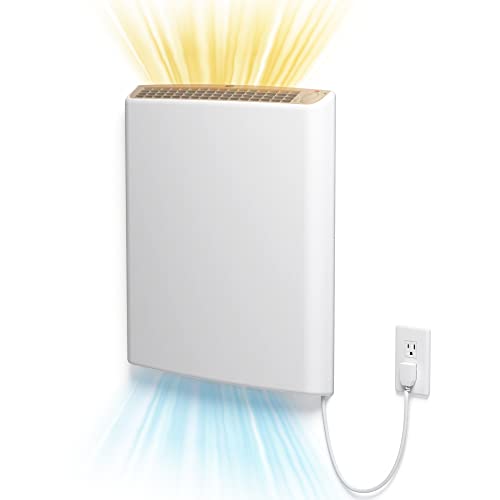
The ENVI plug-in panel heater is a low-wattage, fan-less wall-mounted unit designed for continuous, gentle warmth. It Uses a patented stack-convection design to produce silent heat at a relatively low surface temperature (~90°F) and includes a wall-sense safety sensor that cuts power if removed from the wall. The silent operation and lack of a fan reduce dust circulation and background noise.
Key Features: Energy-efficient low-wattage operation, silent fan-less design, and wall-sense safety sensor. The ENVI is suitable for people sensitive to blown dust or who need quiet, steady background heat for sleeping areas or offices.
PELONIS Oil Filled Radiator, Electric Space Heater For Indoor Use

The PELONIS oil-filled radiator is an electric heater that uses heated oil in sealed fins to radiate warmth. It Offers three heat settings (600W/900W/1500W), ECO and sleep modes, a timer, and a remote. The design lists an increased heat dissipation area and claims improved heating efficiency for larger rooms.
Key Features: Oil-filled radiator for steady radiant heat, multiple modes including ECO, and adjustable thermostat. Oil radiators are known for consistent heat retention and quiet operation, suitable for longer-duration heating and rooms where steady background warmth is desirable.
Why These Electric Units Are Listed When You Asked For Non-Electric Heaters
This selection focuses on common space-heating solutions available on Amazon. They all require electricity to operate. If you specifically need a heater that does not use electricity, you should consider alternatives such as propane, kerosene, natural draft wood stoves, catalytic heaters, or solar-based passive systems. Below, the Buying Guide covers those alternatives and the trade-offs when comparing them with electric units.
Buying Guide: Choosing Between Electric And Non-Electric Heaters
When deciding on a heater, consider energy source, installation needs, safety, coverage area, noise, maintenance, indoor air quality, and local regulations. Below are detailed considerations and multiple comparison perspectives.
Tips for Getting the Best HVAC Prices
- Prioritize Quality Over Cost
The most critical factor in any HVAC project is the quality of the installation. Don’t compromise on contractor expertise just to save money. - Check for Rebates
Always research current rebates and incentives — they can significantly reduce your overall cost. - Compare Multiple Quotes
Request at least three estimates before making your choice. You can click here to get three free quotes from local professionals. These quotes include available rebates and tax credits and automatically exclude unqualified contractors. - Negotiate Smartly
Once you've chosen a contractor, use the proven strategies from our guide — How Homeowners Can Negotiate with HVAC Dealers — to get the best possible final price.
Energy Source And Fuel Availability
- Electric Heaters: Plug-in convenience, easy to install, suitable for apartments and rooms with outlets. Electricity pricing and grid reliability are the main constraints.
- Propane/Kerosene Heaters: Portable off-grid heat; requires fuel storage and safe ventilation. Good for garages, workshops, or emergency backups, but ventilation and CO monitoring are essential.
- Wood Stoves/Pellet Stoves: High heat output and low operating cost where fuel is available. Requires permanent installation, a chimney or flue, and local code compliance.
- Catalytic Heaters (Non-Electric): Use chemical oxidation to produce heat without open flame; some models run on propane and need ventilation. They can be efficient for enclosed spaces if used per manufacturer guidance.
- Solar Passive Heating: Uses building design (sun-facing windows, thermal mass) — no fuel or electricity; best as a supplemental long-term strategy rather than immediate portable heating.
Coverage Area And Output
- Match heater output to room size. Electric portable heaters are typically 1500W and best for small-to-medium rooms (100–250 sq.ft.).
- Non-electric stoves and heaters (wood, pellet, propane) can heat larger spaces but require careful placement and capacity matching.
Installation And Portability
- Electric plug-in heaters: minimal setup, portable, and easy to move room-to-room.
- Wall-mounted electric panels: semi-permanent, ideal for continuous background heat.
- Wood stoves/pellet stoves: permanent installation with chimney; not portable.
- Fuel-based portable heaters: require fuel canisters and safe storage; portable but not plug-and-play.
Safety Considerations
- Electric Heaters: Look for tip-over protection, overheat protection, ETL/UL listing, and warnings about extension cord use.
- Fuel Heaters: Require CO detectors, adequate ventilation, and monitoring. Follow manufacturer guidance for clearances and fuel handling.
- Wood/Pellet Stoves: Require chimney maintenance, spark protection, and compliance with local codes.
Indoor Air Quality
- Electric heaters with fans may circulate dust and allergens. Fan-less options (oil radiators, panel heaters) minimize airborne particulates.
- Combustion heaters (propane, kerosene, wood) produce combustion byproducts; adequate ventilation and CO alarms are required.
Noise And Comfort
- Oil-filled radiators and fan-less panel heaters are quiet and provide gentle, steady warmth.
- Forced-air ceramic heaters offer rapid heat but can produce fan noise. If noise is a concern, choose models with low dB ratings.
Efficiency And Operating Cost
- Compare heater efficiency and your local fuel/electric rates. Electric heaters convert electricity to heat nearly 100% at the device, but the cost per kWh varies by location.
- Wood and pellet stoves can be cost-effective where fuel is inexpensive, but account for installation and maintenance costs.
- Low-wattage wall panels can supplement central heat with lower continuous draw, potentially reducing whole-home heating demand.
Maintenance And Longevity
- Electric plug-in heaters need minimal maintenance — keep vents clear and dust-free.
- Oil-filled radiators require little maintenance but are heavy to move and should be inspected for leaks and cord condition.
- Fuel-burning systems require periodic chimney/vent cleaning and fuel system checks.
Regulations, Permits, And Safety Devices
- Check local codes for installation of wood stoves, pellet stoves, and in-home fuel-burning appliances.
- Install carbon monoxide detectors when using any combustion-based heater indoors.
- Follow manufacturer safety spacing and clearance recommendations.
When To Choose Non-Electric Heaters
- If you need off-grid heating during power outages, consider propane, kerosene, or wood-based options with appropriate ventilation and CO monitoring.
- For long-term heating of larger rooms without high electricity costs, a wood stove or pellet stove can be effective if installation is feasible.
- Use catalytic or vented propane heaters only where allowed and properly ventilated; they are sometimes used in workshops or well-ventilated spaces.
When Electric Heaters Are Preferable
- In apartments, rentals, or homes without fuel storage options, electric plug-in heaters are easy, safe, and generally allowed.
- If you need quiet, low-maintenance background heat, oil radiators and wall-mounted panel heaters provide steady warmth with minimal noise.
- For precise temperature control and safety features like tip-over protection and auto shut-off, modern electric units are often more user-friendly.
Comparison Checklist Before Buying
- Confirm heating area (sq.ft.) and choose a heater rated for that size.
- Decide on fuel source: electricity versus propane/wood/kerosene/solar.
- Review safety features: tip-over, overheat, ETL/UL listing, CO detectors for combustion heaters.
- Consider installation complexity and whether you need a permanent unit or portable option.
- Check noise ratings and whether fan-less operation is preferred for bedrooms.
- Evaluate long-term operating cost based on local fuel and electricity prices.
- Investigate maintenance requirements and warranties.