
Keeping plants healthy during cold spells requires reliable greenhouse heating and accurate control. Below is a quick comparison of five well-reviewed greenhouse heaters that include thermostats, safety protections, and features suited for small to medium grow spaces.
| Product | Type | Key Feature | Coverage |
|---|---|---|---|
| Gardtech Greenhouse Heater | 1500W Portable Electric | Fan Mode + Thermostat Support | Up To ~150 sq ft |
| Joanolga Greenhouse Heater | 1500W Electric With Digital Thermostat | 5118 BTU Output, Low Noise | Up To ~150 sq ft |
| SOSUNLID Heater With Thermostat Kit | 1500W With Included Thermostat | Auto Temperature Control Kit | Up To ~120 sq ft |
| SwSun 1500W WiFi Greenhouse Heater | 1500W Smart Electric Heater | WiFi App Control + Alerts | Up To ~150 sq ft |
| Buyplus 1500W Greenhouse Heater | 1500W With Waterproof Probe | Rapid 3s Heating + Digital Thermostat | Up To ~215 sq ft |
Content Navigation
- Gardtech Greenhouse Heater With Digital Thermostat
- Greenhouse Heater With Digital Thermostat By Joanolga
- SOSUNLID Heater With Thermostat Kit
- SwSun 1500W Greenhouse Heater With WiFi App
- Buyplus 1500W Greenhouse Heater With Digital Probe
- Buying Guide: How To Choose A Greenhouse Heater With A Thermostat
- 1. Determine Heating Load And Coverage
- 2. Thermostat Type And Accuracy
- 3. Power Rating Versus Actual Required Heat
- 4. Heat Distribution And Fan Modes
- 5. Safety Features
- 6. Thermostat Installation And Wiring
- 7. Remote Monitoring And Automation
- 8. Noise, Moving Parts, And Reliability
- 9. Probe Location And Temperature Sensing Strategy
- 10. Energy Efficiency And Running Costs
- 11. Comparative Perspectives
- 12. Installation, Placement, And Maintenance Tips
- 13. Final Selection Checklist
Gardtech Greenhouse Heater With Digital Thermostat
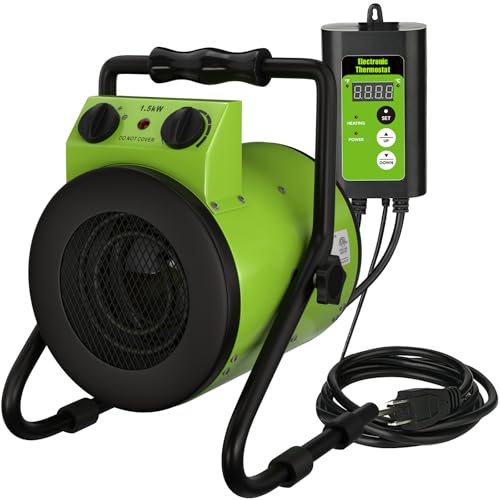
Brand: Gardtech. This 1500W portable electric heater offers two operating modes: a fan-only mode (25W) and a heat mode (1500W). The unit is designed for fast heating in patios, garages, and small greenhouses. Its user-friendly approach supports connection to a compatible external thermostat and recommends setting the built-in knob to maximum when used that way.
The heater includes overheat protection that shuts the unit off at around 108°F (42°C) and uses flame-retardant materials. Ideal for growers who want a simple, dual-mode device that can be paired with a thermostat, it emphasizes safety features and straightforward operation.
Greenhouse Heater With Digital Thermostat By Joanolga

Brand: Joanolga. This 1500W greenhouse heater advertises a heat output of 5118 BTU and is intended for spaces up to about 150 sq ft. It operates quietly and offers two modes: fan-only (20W) and fan + heater (1500W). The digital thermostat enables plug-and-play control by connecting the heater to an external thermostat device.
Call 888-896-7031 for Free Local HVAC Quotes – Compare and Save Today!
Built-in overheat protection automatically shuts the device down when internal temperatures exceed safe thresholds. The product targets growers who require a powerful, low-noise option with a digital thermostat interface and standard safety cutoffs.
SOSUNLID Heater With Thermostat Kit

Brand: SOSUNLID. This listing includes a 1500W heater and a digital thermostat as an integrated kit. The thermostat provides auto temperature control, switching the heater on and off to maintain the setpoint. The heater claims 3-second heat-up capability and adjustable wind speed for ventilation use during warmer periods.
Safety is emphasized with over-temperature protection, fireproof construction, and a thermostat rated for 15A to handle larger appliances. This kit suits users who prefer a bundled thermostat and heater for automatic, continuous temperature management in small greenhouses or grow tents.
SwSun 1500W Greenhouse Heater With WiFi App

Brand: SwSun. This 1500W heater emphasizes smart features: WiFi app control, remote monitoring, and alert notifications. The temperature range is specified roughly between 40–113°F (5–45°C), and users can set high/low temperature alerts to receive smartphone notifications if conditions stray outside presets.
Call 888-896-7031 for Free Local HVAC Quotes – Compare and Save Today!
It includes multiple safety protections such as overheat, tip-over, and power-failure safety behaviors. The SwSun model is aimed at growers wanting remote access and automated alerts for off-site monitoring combined with standard safety measures.
Buyplus 1500W Greenhouse Heater With Digital Probe

Brand: Buyplus. This 1500W heater stresses rapid heating (3s) and a waterproof temperature probe that feeds a digital thermostat. The listing claims coverage up to ~215 sq ft for heat distribution, and the unit provides a self-resetting thermal protector for overheat safety.
The digital thermostat senses ambient temperature through the probe and cycles the heater accordingly. It is suited to users who prefer a probe-based thermostat for more accurate local sensing inside the grow area and who need fast warm-up times.
Buying Guide: How To Choose A Greenhouse Heater With A Thermostat
Selecting the right greenhouse heater with thermostat control requires balancing heating capacity, control accuracy, energy use, safety, and installation logistics. Below are the most important considerations and comparison perspectives to help you decide.
1. Determine Heating Load And Coverage
Estimate the volume of the greenhouse (length × width × height) rather than floor area alone because heat loss is proportional to air volume and surface area. Insulation quality, single vs. double glazing, and outdoor design temperatures determine required wattage. As a general reference, many 1500W electric heaters serve small greenhouses or grow tents (roughly 100–200 sq ft depending on insulation).
2. Thermostat Type And Accuracy
- On-Unit Knob: Basic, inexpensive, often less precise. Some heaters recommend leaving the built-in knob at max when using an external thermostat probe.
- External Digital Thermostat: Provides more accurate control, programmable setpoints, and can handle higher loads. Kits like SOSUNLID include a matched controller for predictable operation.
- Probe-Based Thermostats: Waterproof probes (as used by Buyplus) measure temperature near plants rather than the heater air, reducing overshoot and localized overheating.
- Smart/WiFi Thermostats: Offer remote monitoring and alerts (SwSun), helpful for off-site growers, but consider network reliability and app security.
3. Power Rating Versus Actual Required Heat
Electric heaters are rated in watts; 1500W is common. For greenhouse applications, consider:
- Insulation: Better-insulated structures need less wattage.
- Extreme cold: In colder climates, multiple heaters or supplemental heat sources may be required.
- Distribution: Fan-assisted units distribute heat more evenly than pure convection units.
4. Heat Distribution And Fan Modes
Heaters with a fan-only mode can circulate air during warm days and improve uniformity. Models that combine fan and heater functions (Gardtech, Joanolga) help reduce cold pockets but may increase electric draw when the fan is engaged.
5. Safety Features
- Overheat Protection: Auto shutoff at high element temperatures is essential (present in most reviewed units).
- Tip-Over Protection: Useful for portable setups where accidental knocks may occur (SwSun includes tip-over protection).
- Fire-Resistant Construction: Fireproof or flame-retardant materials increase safety margins.
- Certifications: Look for listings that reference safety testing or compliance with local electrical codes where possible.
6. Thermostat Installation And Wiring
Some heaters are designed to plug directly into a thermostat controller; others include a thermostat in the kit. Ensure the thermostat rating matches the heater amperage (15A or higher common for 1500W on 120V). Check cord lengths, probe placement options, and whether the thermostat is wall-mounted or inline.
7. Remote Monitoring And Automation
WiFi-enabled heaters provide notifications and remote control. This is beneficial for unattended greenhouses or growers who travel. Consider whether the app supports alert thresholds, logging, and multi-user access. Also verify firmware updates and privacy policies if network connectivity is used.
8. Noise, Moving Parts, And Reliability
Fan-equipped heaters move air but can introduce noise and mechanical wear. If continuous operation is expected for freeze protection (e.g., pump houses), a convection heater with fewer moving parts may be preferable for long-term reliability (AEGONAN-type pump house heaters are designed for continuous duty but were not selected in the core five here).
9. Probe Location And Temperature Sensing Strategy
Where you place the temperature sensor matters: mount near the plant canopy to protect plants rather than next to the heater, which can cause frequent cycling. Waterproof probes allow placement in humid environments without failure. For multi-zone greenhouses, multiple sensors or separate controllers per zone improve control.
10. Energy Efficiency And Running Costs
Electric resistance heat is nearly 100% efficient at point-of-use but can be costly to run. Consider:
- Using thermostats with hysteresis control to avoid short-cycling.
- Combining insulation, thermal mass (barrels of water), and passive solar design to reduce runtime.
- Scheduling heaters to run only when outdoor temps are below plant thresholds.
11. Comparative Perspectives
Comparing the five featured units across common use cases:
Tips for Getting the Best HVAC Prices
- Prioritize Quality Over Cost
The most critical factor in any HVAC project is the quality of the installation. Don’t compromise on contractor expertise just to save money. - Check for Rebates
Always research current rebates and incentives — they can significantly reduce your overall cost. - Compare Multiple Quotes
Request at least three estimates before making your choice. You can click here to get three free quotes from local professionals. These quotes include available rebates and tax credits and automatically exclude unqualified contractors. - Negotiate Smartly
Once you've chosen a contractor, use the proven strategies from our guide — How Homeowners Can Negotiate with HVAC Dealers — to get the best possible final price.
- Small, Insulated Grow Tent: Any 1500W unit with a probe thermostat (Buyplus or SOSUNLID kit) offers close control and fast heat-up.
- Remote Or Unattended Greenhouse: SwSun’s WiFi and alert features provide remote assurance and immediate notifications if conditions change.
- Simple, Manual Control: Gardtech and Joanolga provide straightforward operation and compatibility with external thermostats for users who prefer manual or basic digital controls.
- Continuous Freeze Protection For Equipment: While not in the five top picks, purpose-built convection pump house heaters (like AEGONAN) are better for remote, continuous duty; consider that if freeze protection for equipment is your primary goal.
12. Installation, Placement, And Maintenance Tips
- Mount heaters where they cannot drip on electrical components and maintain clearance from flammable materials.
- Position the thermostat probe at plant height, away from direct heater airflow, for accurate control.
- Inspect cords and probes regularly, and ensure outlets and circuits are correctly rated.
- Use Ground Fault Circuit Interrupter (GFCI) protection in humid environments when applicable.
13. Final Selection Checklist
- Calculate greenhouse volume and expected lowest temperature.
- Choose a heater wattage matching the load with margin for worst-case nights.
- Select thermostat type (probe, built-in, smart) that fits your monitoring needs.
- Confirm safety features and electrical ratings for your circuit.
- Plan sensor placement and review installation requirements before purchase.