
Find the right big space heater for your home or workspace. This guide compares five heavy-duty indoor and portable heaters — two high-BTU propane units and three large electric/ceramic models — with safety, coverage, and control features to help you choose a heater for large rooms, garages, or outdoor-covered areas.
| Product | Type | Approx. Coverage | Key Feature |
|---|---|---|---|
| Dreo Space Heater Large Room (30″) | Electric Ceramic | Up To 300 ft² | 308mm PTC, 120° Oscillation |
| Dreo Space Heater 1500W | Electric Ceramic | Up To 200 ft² | 1500W Fast Ceramic, Quiet |
| Dreo Space Heater 25″ Fast Electric | Electric Ceramic | Large Rooms | 11.5 ft/s Fast Heat, Low Noise |
| Mr. Heater Big Buddy Pro (18,000 BTU) | Portable Propane | Up To 450 ft² | 18,000 BTU, Indoor/Outdoor Use |
| Mr. Heater 4000–18000 BTU With Dual Tank | Portable Propane | Up To 450 ft² | Dual Tank Connection, 3 Settings |
Content Navigation
Dreo Space Heater Large Room, 30″

This 30″ ceramic heater features a large 308mm PTC element and an upgraded Hyperamics thermal design to deliver widespread warmth. The unit supports 30°-60°-90°-120° oscillation to direct heat across large spaces, with Dreo claiming coverage up to 300 ft². Controls include multiple heat/fan levels, a remote, and a programmable timer from 1 to 12 hours.
Safety features are comprehensive: V0 flame-retardant housing, cool-touch exterior, FortPlug, thermal insulated wiring, child lock, 45° tip-over, and overheat protection, with ETL certification. The manufacturer notes optimal performance requires stable voltage. This model suits large living rooms and open-plan areas where wide oscillation and strong PTC output matter.
Dreo Space Heater, 1500W Electric

Designed as a 1500W PTC ceramic heater, this Dreo model is optimized for fast warm-up and steady output across rooms up to about 200 ft². The unit highlights quick ceramic heating, a 12-hour timer, and a remote for convenience. Noise is engineered down using oblique airflow, producing around 34 dB, suitable for bedrooms or offices.
Call 888-896-7031 for Free Local HVAC Quotes – Compare and Save Today!
ETL-certified safety measures include V0 flame-retardant materials, smart tip-over and overheat protection, and a long flat 6ft power cord. The listing warns against using extension cords and notes the unit’s suitability for varied indoor spaces like basements and dorms. This heater is oriented toward quiet, efficient operation in medium-to-large rooms.
Dreo Space Heater For Indoor Use, 25″

The 25″ Dreo space heater emphasizes fast air delivery (11.5 ft/s) and an extended impeller design to increase the effective heat range. It uses Hyperamics thermal design to move warm air farther than typical tower heaters, targeting larger rooms and open areas.
Safety upgrades include V0 flame-retardant construction, reinforced plug, 45° tip-over and overheat protection, plus a child lock for reduced accident risk. Dreo also focuses on low noise performance with design tweaks achieving noise levels as low as 32 dB, making this a candidate where quiet operation and rapid heat distribution are priorities.
Mr. Heater 18,000 BTU Big Buddy Pro
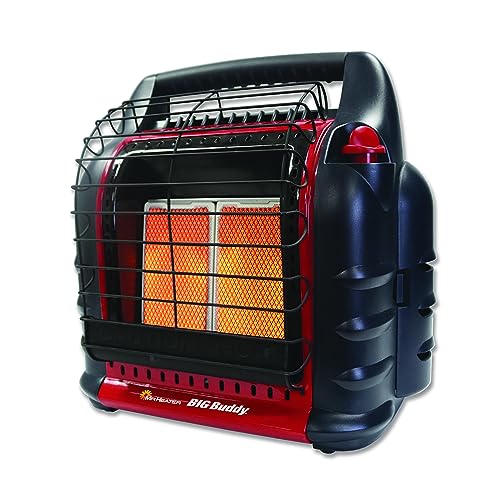
The Mr. Heater Big Buddy Pro delivers 4,000 to 18,000 BTU, supporting spaces up to 450 ft². It’s approved for indoor and outdoor use and operates on propane, offering high heat output and nearly 100% combustion efficiency. Built-in safety features include auto shut-off on tip-over, pilot outage, or low oxygen.
Call 888-896-7031 for Free Local HVAC Quotes – Compare and Save Today!
The unit’s portability and wide BTU range suit garages, workshops, or poorly insulated spaces where electric heaters can be insufficient. Note that propane operation requires proper ventilation and adherence to indoor propane safety guidelines. The Big Buddy line is widely used where concentrated radiant/convective heat is needed quickly.
Mr. Heater 4000–18000 BTU Dual Tank
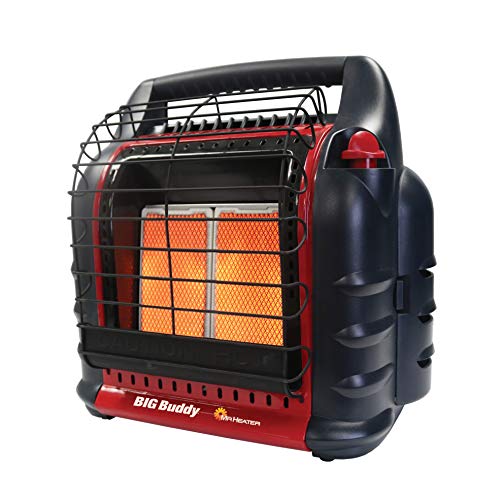
This propane heater offers variable BTU settings (4,000 / 9,000 / 18,000) and supports a dual tank connection for extended run time with larger tanks. It covers up to 450 ft² and is designed for both indoor and outdoor use, with a single-control knob and piezo ignition for reliable starting.
Safety-oriented features include automatic shutoff for tip-over. Its ability to hook to larger propane supplies makes it suitable for extended work sessions in garages, construction sites, or outdoor covered spaces where sustained high heat is required and electric power may be limited.
Buying Guide: How To Choose A Big Space Heater
Heat Output And Coverage
BTU vs Watts: Propane heaters list BTU (higher numbers mean more heat). Electric heaters use watts (1500W is common for powerful portable units). For spaces above 200–300 ft² consider higher-BTU propane or specialized electric units with larger elements and oscillation.
Type Of Heater
- Electric/Ceramic Tower Heaters: Good for indoor use, easy controls, quieter operation, no fuel storage. Limited by household circuit capacity.
- Portable Propane Heaters: High heat output for large or uninsulated areas and outdoor-covered spaces. Require ventilation and propane handling precautions.
- Wall-Mounted Or Built-In: Save floor space and can provide even vertical heat distribution; often designed for continuous, scheduled use.
Noise And Operation
Look at decibel (dB) ratings if the heater will be used in bedrooms or offices. Models with optimized airflow or oblique fan wheels reduce noise. Propane radiant heaters often produce less fan noise but can emit operational sound from the burner.
Safety Features
- Tip-Over Protection: Essential for portable units to cut power if knocked over.
- Overheat Protection: Shuts unit down if temperatures get unsafe.
- Flame-Retardant Materials and Child Lock: Adds protection in homes with kids or pets.
- CO/Low-Oxygen Shutoff: Important on propane models used indoors — prevents dangerous air quality.
Controls And Smart Features
Remote control, programmable timers, precise thermostats (1°F increments), and smart home compatibility (Alexa/Google) make managing larger heaters easier and can improve energy use by maintaining target temperatures rather than constant maximum output.
Placement And Airflow
For electric tower heaters, consider oscillation and impeller/air-funnel design to reach further into a room. Propane units are best placed centrally for radiant coverage or where airflow can circulate heat without blocking vents.
Power And Installation Constraints
Electric heaters draw significant current; avoid extension cords for high-wattage units. Confirm circuit capacity to prevent trips. Propane heaters require safe fuel storage and may need an adapter or hose for larger tanks.
Maintenance And Runtime
Electric heaters typically need minimal upkeep beyond dusting and occasional filter/vent cleaning. Propane heaters require attention to hoses, connectors, and ignition components; dual-tank or larger tank setups extend runtime between refills.
Comparison Perspectives
- Best For Indoor Quiet Comfort: Large ceramic heaters with low dB ratings and programmable thermostats.
- Best For Maximum Heat In Uninsulated Spaces: High-BTU propane models with 18,000 BTU output.
- Best For Even Coverage: Wide-oscillation or wall-mounted electric units that move warm air vertically and horizontally.
- Best For Portability: Compact propane heaters or tower electric units with handles and lightweight design.
When selecting a big space heater, match the heater type to your room size, ventilation options, and desired control features. Prioritize certified safety features and follow manufacturer instructions for installation and fuel use to ensure effective and safe heating.
Tips for Getting the Best HVAC Prices
- Prioritize Quality Over Cost
The most critical factor in any HVAC project is the quality of the installation. Don’t compromise on contractor expertise just to save money. - Check for Rebates
Always research current rebates and incentives — they can significantly reduce your overall cost. - Compare Multiple Quotes
Request at least three estimates before making your choice. You can click here to get three free quotes from local professionals. These quotes include available rebates and tax credits and automatically exclude unqualified contractors. - Negotiate Smartly
Once you've chosen a contractor, use the proven strategies from our guide — How Homeowners Can Negotiate with HVAC Dealers — to get the best possible final price.