
Cold bathroom floors and chilly post-shower moments are common in many American homes. This guide compares five bathroom-friendly space heaters selected for safety features, compact size, and fast heat delivery. Below is a quick comparison table summarizing the key specs of each model covered.
| Product | Key Safety Feature | Heat Type / Power | Controls |
|---|---|---|---|
| Lasko Portable Electric Ceramic Space Heater (CD08200) | ALCI Plug | Ceramic, 1500W | Single-button, 2 heat settings |
| Dreo Space Heater For Bathroom (B09YXJMH87) | ALCI Safety Plug + Filter | PTC Ceramic, 1500W | Digital display, remote, timer, oscillation |
| Dreo Space Heater Portable (B0C6FCKQML) | Tilt Sensor, Overheat Protection | PTC Ceramic, 1500W | Digital thermostat, remote, timer |
| Lasko Portable Electric Ceramic Space Heater (754201) | Tip-Over & Overheat Protection | Ceramic, 1500W | Adjustable thermostat, 2 speeds |
| Amazon Basics Ceramic Space Heater | Tip-Over & Overheat Protection | Ceramic, 1500W | 3 settings, thermostat |
Content Navigation
Lasko Portable Electric Ceramic Heater With ALCI

The Lasko CD08200 is designed specifically to be safe for bathroom use with an ALCI plug that disconnects power if there is a ground fault or water contact. Its compact footprint (under 8 inches tall) is suitable for small vanities or floor placement. The integrated 1500W ceramic heating element and simple one-button control provide two heat levels and an off setting. The product highlights rapid warming to reduce post-shower chill and an energy-efficient ceramic element that fits limited counter space. This unit requires no assembly and emphasizes plug-and-play simplicity for quick bathroom deployment.
Dreo Bathroom Space Heater With ALCI Safety
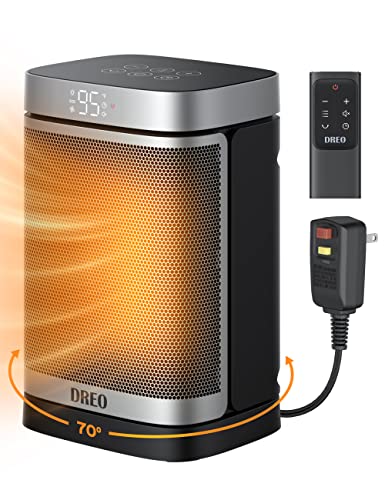
This Dreo model explicitly markets bathroom safety with an ALCI safety plug that shuts off power on short or water contact. The 1500W PTC ceramic element claims fast warm-up and low noise operation, aided by a brushless DC motor and a detachable filter for easier cleaning. Controls include a digital thermostat adjustable from 41–95°F, 12-hour timer, 70° oscillation, and five heating modes (including ECO). Safety-focused features include tip-over and overheat protections, while the quieter airflow design is useful for nighttime bathroom use.
Dreo Portable Heater With Precise Thermostat

Call 888-896-7031 for Free Local HVAC Quotes – Compare and Save Today!
The Dreo Portable Heater uses an advanced PTC system with a heat-funnel design for faster warm-air circulation. It features a precise NTC chipset enabling 1°F increments from 41–95°F, a 12-hour timer, and multiple modes to tailor output. Safety additions include a tilt-detection sensor, overheat protection, and flame-retardant housing certified by ETL. The combination of a digital display and remote control supports hands-free adjustments, and the manufacturer emphasizes extended warm-air reach compared to standard models, which can be relevant for slightly larger bathrooms or connected dressing areas.
Lasko Compact Electric Heater With Thermostat

The Lasko 754201 is a compact indoor ceramic heater offering two heat settings (1500W and 900W) plus a fan-only mode. It includes an adjustable thermostat to maintain a set temperature, along with tip-over and overheat switches for safety. The size and form factor make it suitable for bathroom countertops or small floor spaces when placed away from water sources. Its focus is on easy temperature regulation and versatile placement in small rooms such as bathrooms, offices, and dorms.
Amazon Basics Ceramic Space Heater With Protections

The Amazon Basics ceramic heater delivers three selectable modes (High 1500W, Low 900W, Fan Only) with an integrated thermostat and built-in tip-over and overheat protections. At about 3 pounds and compact dimensions, this unit is portable and fits small bathroom surfaces. The non-oscillating design focuses on direct heat delivery. Safety interlocks are present, but this model does not list an ALCI plug; placement decisions should reflect local electrical safety codes and the distance from water sources.
Buying Guide: Choosing A Bathroom Space Heater
When selecting a bathroom space heater, prioritize safety, placement, and performance. The following factors will help narrow choices and ensure safe operation in wet or damp environments.
Call 888-896-7031 for Free Local HVAC Quotes – Compare and Save Today!
Safety Features To Look For
- ALCI/GFCI/Watertight Plug: An ALCI or GFCI-equipped plug offers immediate shutoff on ground faults and is the most direct protection for bathroom installations.
- Tip-Over Protection: Automatic shutoff if the unit is knocked over reduces fire and burn risks.
- Overheat Protection: Internal sensors that cut power when surfaces or internal components exceed safe temperatures.
- ETL/UL Certification: Third-party certification confirms compliance with electrical and safety standards.
Heat Type And Output
- Ceramic/PTC Elements: Provide rapid, even heating and are common in small portable heaters. PTC variants self-regulate to some extent and can be more energy-efficient.
- 1500W Standard: Most compact space heaters use 1500W for quick heat. Consider models with lower watt modes for energy savings or smaller bathrooms.
- Fan vs Infrared: Fan-based ceramic heaters circulate warm air; infrared heaters deliver radiant heat. For bathroom use, fan-based ceramic heaters warm ambient air faster after showers.
Size, Placement, And Use
- Compact Footprint: Small dimensions allow placement on counters or on floors but always ensure the unit is placed away from splashes and tubs.
- Mounting And Elevation: Do not place directly on wet surfaces. Elevate slightly and keep at least the manufacturer-recommended clearance from sinks and tubs.
- Ventilation And Airflow: Ensure the heater’s intake and exhaust are unobstructed to prevent overheating.
Controls And Features
- Digital Thermostats: Provide precise temperature control (often in 1°F increments), useful for consistent comfort and energy savings.
- Timers: Programmable timers let you limit operation and avoid running the unit unattended for long periods.
- Oscillation: Rotating output distributes heat more evenly across the room; useful for longer bathroom layouts or connected dressing areas.
- Remote Control: Enables adjustments without touching the unit, useful when hands are wet or after showering—though remote batteries should be maintained.
Energy Use And Efficiency
- Multi-Mode Operation: Units with low, medium, high, and ECO modes let you balance comfort and electricity consumption.
- Targeted Heating: Heating only the bathroom versus whole-house heating is more efficient. Use a timer and thermostat to reduce runtime.
Bathroom Electrical Considerations
- Follow Local Codes: Bathroom outlets often require GFCI protection. Check with building codes or an electrician if unsure about plugging space heaters into bathroom circuits.
- Avoid Extension Cords: Most manufacturers advise against using extension cords with heaters due to fire risk and voltage drop.
- Dedicated Circuit: If running multiple high-wattage devices, verify the circuit capacity to avoid tripping breakers.
Comparison Perspectives
- Safety-Focused Buyers: Prioritize models with ALCI or GFCI plugs. Units explicitly rated for bathroom use reduce risk when used correctly.
- Control-Focused Buyers: Choose digital thermostats and timers for precise temperature management and energy savings.
- Noise-Sensitive Buyers: Look for low dB ratings or brushless motors if nighttime operation is needed.
- Space-Conscious Buyers: Compact footprint and lightweight units suit small vanities; consider carry handles for portability.
Selecting a bathroom space heater requires balancing safety requirements, heat output, and control features. Models with ALCI plugs and multiple redundant safety protections are most appropriate for wet or damp locations, while digital thermostats and timers improve comfort and energy efficiency. Always follow manufacturer placement and maintenance recommendations to ensure safe operation.
Tips for Getting the Best HVAC Prices
- Prioritize Quality Over Cost
The most critical factor in any HVAC project is the quality of the installation. Don’t compromise on contractor expertise just to save money. - Check for Rebates
Always research current rebates and incentives — they can significantly reduce your overall cost. - Compare Multiple Quotes
Request at least three estimates before making your choice. You can click here to get three free quotes from local professionals. These quotes include available rebates and tax credits and automatically exclude unqualified contractors. - Negotiate Smartly
Once you've chosen a contractor, use the proven strategies from our guide — How Homeowners Can Negotiate with HVAC Dealers — to get the best possible final price.