
Choosing a space heater with accurate temperature control can improve comfort and energy efficiency. Below is a quick comparison of selected heaters with thermostats, timers, and safety features to help you narrow options.
| Product | Key Features | Best For |
|---|---|---|
| Dreo Portable Heater With Precise Thermostat | 41–95°F Range, ±1°F Precision, 1500W, Remote | Precise temperature control |
| Dreo Quiet 1500W Heater With Safety Protections | ETL certified, 70° Oscillation, 8 protections, 1500W | Quiet rooms and larger coverage |
| Dayette Smart Wi‑Fi Space Heater | Wi‑Fi/App control, 24H timer, 90° oscillation | Smart home integration |
| WINHL Compact Heater With Thermostat | PTC ceramic, 70° oscillation, remote, 12H timer | Small rooms and desks |
| VOCRS 3‑Mode Portable PTC Heater | 700/1000/1500W, 1–12H timer, digital display | Adjustable power levels |
Content Navigation
Dreo Portable Heater With Precise Thermostat
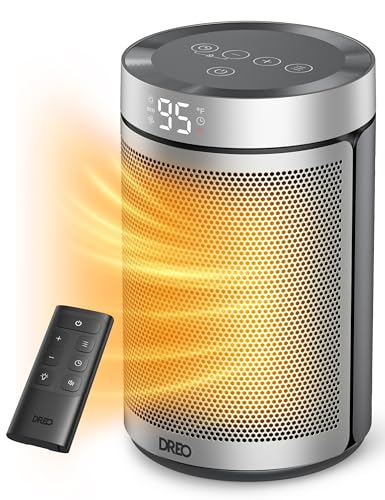
This Dreo model emphasizes precision temperature control with an enhanced NTC chipset that allows settings from 41–95°F in ±1°F increments. The 1500W PTC system and heat funnel design claim faster warm-up and farther airflow reach than standard ceramic heaters.
Key controls include remote operation and built-in thermostat feedback for maintaining set temperature. Safety features listed include a tilt-detection sensor, overheat protection, and V0 flame‑retardant materials certified by ETL. The unit is positioned for reliable tip‑over protection and safer continuous use.
Use case: This heater suits users who need accurate thermostat control for small to medium rooms where maintaining a consistent setpoint and reducing energy waste matter.
Dreo Quiet 1500W Heater With Safety Protections

Call 888-896-7031 for Free Local HVAC Quotes – Compare and Save Today!
This Dreo model lists ETL‑certified safety and multiple protection features including tip‑over and overheat shutoffs, a 12‑hour timer, and a long flat power cord. It uses PTC ceramic heating delivering fast heat-ups suitable for a variety of indoor spaces.
The manufacturer specifies a heating coverage of up to 200 sq. ft. and a low noise rating (around 34 dB), making it suitable for bedrooms or offices where quiet operation matters. Controls include a thermostat, remote, timer, and oscillation.
Use case: This unit targets users who prioritize certified safety features and quiet heating for shared domestic spaces or night use while retaining thermostat-based control.
Dayette Smart WiFi Space Heater With App Control

The Dayette space heater adds smartphone app and Wi‑Fi control to thermostat functions, enabling remote scheduling and temperature adjustments. It features a 24‑hour timer, 90° oscillation, and five operating modes including fan‑only options.
Safety features include tip‑over shutoff, overheat protection, child lock, and power‑off safeguards. The product uses PTC heating elements for rapid heat conversion and lists a digital display and countdown clocks for convenience.
Call 888-896-7031 for Free Local HVAC Quotes – Compare and Save Today!
Use case: This heater is for households seeking smart home integration and the convenience of app-based scheduling combined with standard thermostat control and safety protections.
WINHL Compact Heater With Thermostat And Remote

The WINHL compact heater uses PTC ceramic technology for fast warm-up and lists wide‑angle automatic oscillation for broader heat distribution. It includes a thermostat, remote control, 12‑hour timer, and five operating modes.
The design focuses on portability and small‑space heating such as desks, offices, and bedrooms. Remote control provides easy adjustments of temperature, fan speed, modes, and timer. Manufacturer features emphasize rapid heating and even distribution through oscillation.
Use case: This model is appropriate for consumers needing a portable, thermostat‑equipped heater for compact rooms or personal spaces where easy remote adjustments are helpful.
VOCRS 3‑Mode Portable PTC Heater With Timer

The VOCRS unit offers three power modes (700W/1000W/1500W) and a digital thermostat display. It includes a remote control and a 1–12 hour timer for automated shutoff, plus eco and fan modes for year‑round use.
Safety and usability are emphasized with an easy-to-read display and simple mode switching. The heater is aimed at users who value adjustable output levels and timer scheduling but do not require advanced app connectivity.
Use case: This product fits buyers needing manual multi‑power settings and a clear digital thermostat for small to medium rooms with straightforward control needs.
Buying Guide: Choosing A Temperature-Controlled Space Heater
When evaluating temperature-controlled space heaters, focus on five core considerations: thermostat accuracy, safety features, control options, heating performance, and room suitability.
Thermostat Accuracy And Range
- Precision Matters: Look for heaters that specify temperature range and resolution (for example, 41–95°F with ±1°F). Better resolution reduces cycling and improves comfort.
- Digital Display: A clear digital readout helps confirm the setpoint and current room temperature for more reliable control.
Safety Protections
- Tip‑Over And Overheat Shutoffs: Essential for any portable heater to prevent accidents if the unit is knocked over or airflow is blocked.
- Certifications: ETL, UL, or equivalent testing and V‑0 flame‑retardant materials add confidence in sustained use.
- Placement Guidance: Follow manufacturer advice about cords and avoid extension cords unless explicitly allowed.
Control Options And Convenience
- Remote Control: Useful for adjusting temperature or timer without approaching the unit. Batteries may be required.
- App/Wi‑Fi: Smart connectivity enables scheduling and remote adjustments, useful for pre‑heating rooms or integrating with routines.
- Timer Function: Timers (1–24 hours) can reduce energy use by shutting off after a set period.
Heating Performance And Modes
- Wattage And Heat Type: 1500W ceramic/PTC heaters are common for effective, fast heating in small to medium rooms. Infrared/quartz models provide radiant heat for larger open spaces.
- Oscillation And Airflow: Oscillation (70°–90°) spreads heat horizontally, reducing cold spots. Fan modes add ventilation during warmer months.
- Multiple Power Levels: Adjustable wattage (e.g., 700/1000/1500W) helps balance warmth with energy consumption.
Room Size And Placement
- Match Capacity To Room Size: Small personal heaters suit desks and small bedrooms; 1500W units typically serve up to medium rooms, while radiant heaters can heat larger open areas.
- Placement For Accuracy: Keep the heater away from drafts and obstructions for the thermostat to read room air accurately. Ceiling fans and HVAC vents can affect local temperature readings.
Noise And Daily Use
- Noise Ratings: If used while sleeping or working, choose models with lower dB ratings or fan designs that minimize airflow noise.
- Continuous Operation: For long runs, ensure the heater has reliable thermal protection and follow recommended duty cycles in the manual.
Energy Efficiency And Cost Considerations
- Thermostat Control Saves Energy: Maintaining a set temperature avoids uneconomical constant high output. Smart scheduling can further reduce runtime.
- Eco Modes: Some heaters include eco settings that modulate power to maintain comfort with less energy.
Comparison Perspectives
- Precision Vs. Simplicity: High‑precision thermostats suit users wanting tight control; simpler digital thermostats are adequate for most daily needs.
- Smart Features Vs. Privacy: Wi‑Fi heaters offer convenience, but consider network privacy and firmware update policies before adopting smart devices.
- Radiant Vs. Convection: Radiant (infrared/quartz) heaters warm objects and people directly and can feel warmer in large spaces, while convection/PTC heaters warm air and are effective for enclosed rooms.
By assessing thermostat accuracy, safety, control methods, heating performance, and intended room use, you can select a temperature‑controlled space heater that balances comfort and energy efficiency for your home or office.
Tips for Getting the Best HVAC Prices
- Prioritize Quality Over Cost
The most critical factor in any HVAC project is the quality of the installation. Don’t compromise on contractor expertise just to save money. - Check for Rebates
Always research current rebates and incentives — they can significantly reduce your overall cost. - Compare Multiple Quotes
Request at least three estimates before making your choice. You can click here to get three free quotes from local professionals. These quotes include available rebates and tax credits and automatically exclude unqualified contractors. - Negotiate Smartly
Once you've chosen a contractor, use the proven strategies from our guide — How Homeowners Can Negotiate with HVAC Dealers — to get the best possible final price.