
Quick Overview: This guide reviews five propane heaters with built-in or integrated thermostat control suitable for homes, garages, cabins, and offices. Each option varies by heat output, technology (infrared vs. blue flame), ventless design, and mounting configuration. The table below summarizes key specs for fast comparison.
| Product | Type | Max BTU | Coverage |
|---|---|---|---|
| ProCom ML100TPA-B | Ventless Infrared | 10,000 | Up To 500 Sq. Ft. |
| ProCom ML300TBA-B | Ventless Blue Flame | 30,000 | Up To 1,400 Sq. Ft. |
| Mr. Heater MHVFBF20LPT | Vent Free Blue Flame | 20,000 | Up To 700 Sq. Ft. |
| ProCom 25,000 BTU Ventless Fireplace | Ventless Free Standing Fireplace | 25,000 | Up To 1,100 Sq. Ft. |
| Dyna-Glo 20,000 BTU | Vent Free Blue Flame | Up To 20,000 | Up To 700 Sq. Ft. |
Content Navigation
- ProCom ML100TPA-B Ventless Infrared Propane Heater
- ProCom ML300TBA-B Ventless Blue Flame Propane Heater
- Mr. Heater MHVFBF20LPT 20,000 BTU Blue Flame Heater
- ProCom 25,000 BTU Ventless Free Standing Dual Fuel Fireplace
- Dyna-Glo Signature Series 20,000 BTU Blue Flame Wall Heater
- Buying Guide: Choosing A Thermostat Controlled Propane Heater
- 1. Heat Output And Coverage
- 2. Heating Technology: Infrared Vs. Blue Flame
- 3. Ventless/ Vent Free Considerations
- 4. Thermostat Type And Control Precision
- 5. Safety Features
- 6. Installation Flexibility
- 7. Aesthetics And Room Integration
- 8. Fuel Type And Conversion
- 9. Elevation And Performance
- 10. Maintenance And Long-Term Use
- Comparison Perspectives
ProCom ML100TPA-B Ventless Infrared Propane Heater

This compact infrared ventless heater delivers up to 10,000 BTU and is rated to heat areas up to 500 square feet. It uses liquid propane and includes both wall mount hardware and base feet for floor placement.
Built-in thermostat control provides High/Medium/Low thermostat settings allowing the unit to cycle to maintain room temperature. The unit’s slim design aims to integrate with room décor while offering targeted radiant heat suited to living rooms, bedrooms, or offices.
Key features listed by the manufacturer include its compact infrared technology, versatile mounting options, and thermostat control for zoned heating. As a ventless infrared model, it heats objects and people directly rather than relying solely on air convection.
ProCom ML300TBA-B Ventless Blue Flame Propane Heater

Call 888-896-7031 for Free Local HVAC Quotes – Compare and Save Today!
This blue flame ventless heater provides up to 30,000 BTU and is specified to heat spaces up to 1,400 square feet. It operates on liquid propane and offers thermostat control with multiple heat settings.
The product’s listed features emphasize dependable thermostat control (High/Medium/Low), modern slim styling for wall or floor placement, and a higher heat capacity suitable for larger rooms or open-plan areas. Blue flame technology warms room air through convection, which can help more evenly distribute heat in a living space.
Included mounting hardware and base feet add installation flexibility. For users seeking higher output with thermostat regulation, this model targets larger residential spaces that need consistent ambient warmth.
Mr. Heater MHVFBF20LPT 20,000 BTU Blue Flame Heater
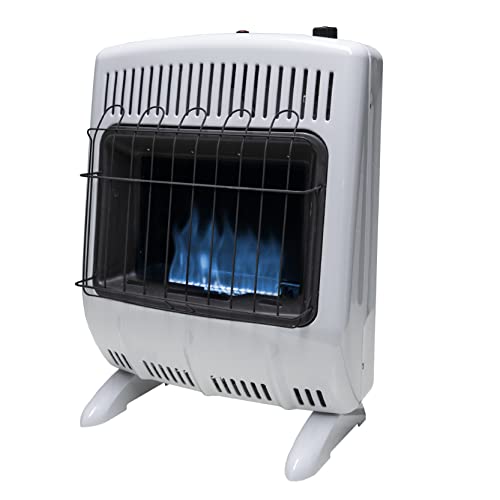
The Mr. Heater MHVFBF20LPT is a blue flame vent-free wall heater offering up to 20,000 BTU, recommended for spaces up to 700 square feet. The unit includes an electronic ignition and a thermostat for temperature control.
Manufacturer features highlight reliable ignition (battery-powered), an integrated thermostat for accurate control, and an Oxygen Depletion Sensor (ODS) that automatically shuts down the heater if oxygen drops below safe levels. Fuel consumption rate is specified by the maker, and the unit is rated for operation at elevations up to 4,500 feet.
Call 888-896-7031 for Free Local HVAC Quotes – Compare and Save Today!
This model prioritizes safety features and steady blue flame convection heating for indoor use where ventless operation is allowed by local codes. Thermostat control supports maintaining desired ambient temperature efficiently.
ProCom 25,000 BTU Ventless Free Standing Dual Fuel Fireplace
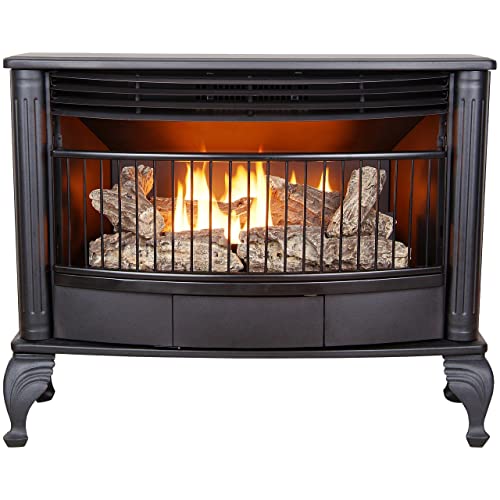
This ventless freestanding fireplace provides 25,000 BTU and is designed to heat up to 1,100 square feet. The unit features hand-painted logs and refractory ceramics to mimic a traditional fireplace appearance while operating as a ventless gas appliance.
Manufacturer-listed features include thermostat-operated control with variable heat settings, dual-fuel capability, and a decorative log set for visual appeal. Thermostat control enables the fireplace to cycle on and off to maintain room temperature.
The unit targets users who want both aesthetic and functional heating in a room where a ventless appliance is permitted. Its design emphasizes an elevated look combined with the convenience of integrated thermostat control.
Dyna-Glo Signature Series 20,000 BTU Blue Flame Wall Heater

The Dyna-Glo Signature Series is a vent-free blue flame wall heater rated up to 20,000 BTU with adjustable output typically between 16,000 and 20,000 BTU for coverage up to 700 square feet. It is designed for liquid propane operation without conversion.
Key manufacturer features include blue flame convective heating that warms room air similarly to central heating, and a thermostatic control to modulate output and maintain temperature. The heater is intended for installations where vent-free appliances are allowed.
This model focuses on even air heating via convection and includes thermostat functionality to reduce cycling and maintain set temperatures in smaller to mid-size spaces.
Buying Guide: Choosing A Thermostat Controlled Propane Heater
Selecting a thermostat-controlled propane heater requires matching unit features to your space, safety requirements, and installation constraints. The following factors will help organize comparisons across the reviewed models.
1. Heat Output And Coverage
Match the heater’s BTU rating to the square footage and ceiling height of the area. Lower BTU units (like 10,000 BTU) suit bedrooms and small offices, while 20,000–30,000 BTU units cover larger open areas. Consider insulation, windows, and cold-weather exposure when estimating required capacity.
2. Heating Technology: Infrared Vs. Blue Flame
- Infrared (Radiant): Heats objects and occupants directly; effective for targeted warmth and often perceived as warmer at lower air temperatures.
- Blue Flame (Convection): Heats air that circulates through the room; good for overall ambient temperature and even distribution in enclosed spaces.
3. Ventless/ Vent Free Considerations
Ventless appliances discharge combustion products into the room within allowed limits. Verify local building codes and manufacturer guidance before installation. Ventless heaters often require ODS (Oxygen Depletion Sensor) safety systems and adequate ventilation for safe operation.
4. Thermostat Type And Control Precision
Compare the thermostat control options: basic High/Medium/Low cycling vs. more precise adjustable thermostats or electronic controls. More precise thermostats can reduce fuel use by maintaining set temperatures with fewer cycles.
5. Safety Features
Look for ODS, automatic shutoff features, and reliable ignition systems. Battery-powered electronic ignition provides ease of start-up but requires battery maintenance. Ensure the unit includes or supports recommended safety sensors and meets applicable safety standards.
6. Installation Flexibility
Consider whether the heater supports wall mounting, floor placement with base feet, or free-standing installation. Some units include mounting hardware; others may need professional installation. Check clearances and fuel connection requirements.
7. Aesthetics And Room Integration
Products vary from slim, modern profiles to decorative fireplace-style units with log sets. Choose a unit that fits your design preferences while meeting heating needs.
8. Fuel Type And Conversion
Most reviewed units are designed for liquid propane. Verify whether the model permits fuel conversion if natural gas is desired; some manufacturers restrict conversion for safety and certification reasons.
9. Elevation And Performance
Some heaters specify operation limits at higher elevations. If located in mountainous regions, check manufacturer recommendations to ensure consistent performance and safety.
10. Maintenance And Long-Term Use
Consider access for cleaning, burner maintenance, and sensor replacement. Ventless models may require periodic inspection of burners and sensors to maintain safe operation and efficiency.
Comparison Perspectives
- Small Rooms/Targeted Warmth: Infrared ventless units offer focused radiant heat and compact form factors.
- Whole Room/Ambient Heat: Blue flame convection models tend to distribute heat more evenly across living spaces.
- Decor Plus Heat: Free-standing ventless fireplaces provide aesthetic ambiance with thermostat control.
- High Output Needs: 25,000–30,000 BTU ventless units are suitable for large or less insulated areas, assuming code compliance.
Use this guide to assess which combination of BTU output, heating technology, and safety features best matches your installation location and heating objectives.
Tips for Getting the Best HVAC Prices
- Prioritize Quality Over Cost
The most critical factor in any HVAC project is the quality of the installation. Don’t compromise on contractor expertise just to save money. - Check for Rebates
Always research current rebates and incentives — they can significantly reduce your overall cost. - Compare Multiple Quotes
Request at least three estimates before making your choice. You can click here to get three free quotes from local professionals. These quotes include available rebates and tax credits and automatically exclude unqualified contractors. - Negotiate Smartly
Once you've chosen a contractor, use the proven strategies from our guide — How Homeowners Can Negotiate with HVAC Dealers — to get the best possible final price.