
Hydronic radiator systems move heat using hot water or steam and are common in homes, bathrooms, and workshops. This guide compares five Amazon-listed hydronic heaters and compatible accessories to help you choose components that fit hot-water heating systems, kickspace installations, towel radiators, and baseboard setups.
| Product | Type | Primary Feature |
|---|---|---|
| ALECOIL 100,000 BTU Hydronic Hot Water Hanging Unit Heater | Hanging Unit Heater | Water Temp Control Switch & Centrifugal Blower |
| Beacon Morris Twin-Flo III K84 Hydronic Kickspace Heater | Kickspace Heater | Compact 72 CFM Hydronic Air Delivery |
| Runtal RTR-2924-9010R Towel Radiator Hydronic | Towel Radiator | Hydronic Panel For Bathrooms |
| Baseboarders Basic Series 3 ft Galvanized Steel Cover | Baseboard Cover | Slip-On Cover For Hydronic Baseboards |
| Baseboard Heater Cover, 3FT-6FT Retractable Galvanized Steel | Adjustable Baseboard Cover | Retractable Fit 3–6 ft For Hydronic Systems |
Content Navigation
- ALECOIL 100,000 BTU Hydronic Hot Water Hanging Unit Heater
- Beacon Morris Twin-Flo III K84 Hydronic Kickspace Heater
- Runtal RTR-2924-9010R Towel Radiator Hydronic
- Baseboarders Basic Series 3 ft Galvanized Steel Cover
- Baseboard Heater Cover, 3FT-6FT Retractable Galvanized Steel
- Buying Guide: Choosing The Right Hydronic Radiator Heater Or Component
ALECOIL 100,000 BTU Hydronic Hot Water Hanging Unit Heater
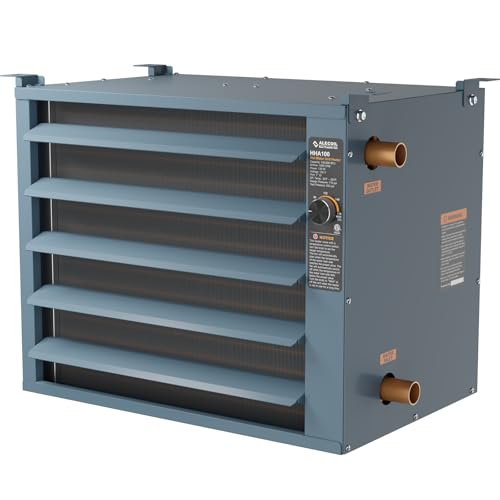
The ALECOIL hanging unit heater is designed for use with a building’s hot water source such as outdoor wood boilers. It functions as a water-to-air heat exchanger with a built-in fan and temperature control switch.
- Outstanding Performance: Uses hot water source to provide efficient, low-noise heating for garages, warehouses, or workshop spaces.
- Temperature Control Switch: Senses water inlet temperature to automatically start or stop the fan at preset values, offering basic thermostat-like behavior tied to water temperature.
- Whisper & Directional Airflow: Centrifugal blower for low noise, higher pressure, and adjustable louvers for directional airflow.
Use Cases: Best suited for utility spaces where hot water is available and blower-forced air is needed. Installation considerations include plumbing connections, mounting height, and matching flow/temperature ranges to system capacities.
Beacon Morris Twin-Flo III K84 Hydronic Kickspace Heater

The Beacon Morris Twin-Flo III K84 is a compact hydronic kickspace heater designed to fit under cabinets or in confined toe-kick areas. It circulates warm air into living spaces discreetly.
Call 888-896-7031 for Free Local HVAC Quotes – Compare and Save Today!
- Design Focus: Kickspace profile fits below cabinets for concealed heating in kitchens, bathrooms, or hallways.
- Airflow: Rated around 72 CFM for active air movement; suitable for localized zone heating rather than whole-house output.
- Hydronic Compatibility: Connects to hot water loops; intended for integration with forced hot water systems and existing boiler loops.
Installation notes: Requires plumbing and electrical for the fan motor. Consider clearance for airflow and the cabinet base height to ensure unobstructed intake and discharge.
Runtal RTR-2924-9010R Towel Radiator Hydronic

The Runtal RTR towel radiator is a panel-style hydronic radiator intended for bathrooms and small spaces. It connects to closed-loop forced hot water systems to provide both room heating and towel warming.
- Heat Output: Listed heat output of 2136 BTU/hr at 180°F, suitable for modest bathroom heating or supplemental zone heat.
- Hydronic Compatibility: Designed for closed-loop forced hot water systems commonly used with boilers.
- Application: Wall-mounted towel radiator that doubles as a functional towel warmer and localized radiant heat source.
Practical considerations: Match the appliance’s BTU to bathroom size and existing system water temperature. Plumbing valves and placement height influence drying and heat circulation.
Baseboarders Basic Series 3 ft Galvanized Steel Cover

This 3-foot slip-on baseboard cover is tailored for hydronic baseboard heating systems and replaces old, rusted covers with a galvanized steel solution protected from corrosion.
Call 888-896-7031 for Free Local HVAC Quotes – Compare and Save Today!
- Purpose: Covers protect heating elements, improve aesthetics, and help direct airflow while preventing direct contact with hot surfaces.
- Fitment: Designed for hydronic baseboards only; ensure length, height, and width compatibility before purchase.
- Durability: Galvanized steel with lifetime protection against rust for normal use.
Installation tip: This cover is slip-on style—measure the finished floor to top of existing back plate and confirm clearance to avoid interference with hydronic piping or fins.
Baseboard Heater Cover, 3FT-6FT Retractable Galvanized Steel

This adjustable baseboard cover expands flexibility with a retractable design accommodating 3 to 6 foot lengths and includes end covers and an installation kit for easier fitting across varying baseboard sizes.
- Adjustable Design: Adapts to multiple lengths, which is useful for uneven or multiple baseboard runs.
- Material: High-quality galvanized steel with white powder coat finish for improved rust resistance and heat tolerance.
- Included Hardware: Installation kit and end covers reduce the need for extra parts when replacing covers.
Best used when replacing segments or when precise baseboard lengths vary. Confirm depth and height clearances against your existing hydronic element geometry.
Buying Guide: Choosing The Right Hydronic Radiator Heater Or Component
This buying guide covers technical compatibility, installation, and performance perspectives so you can evaluate hydronic heaters, kickspace units, towel radiators, and baseboard accessories.
System Compatibility And Heat Source
Confirm Boiler Temperatures And Flow: Hydronic devices are rated for heat output at specific water temperatures (e.g., 180°F). Verify your boiler’s supply temperature and circulation pump capacity to ensure adequate BTU delivery and flow rates.
Closed-Loop vs. Open Systems: Some radiators and towel warmers require closed-loop forced hot water systems. Verify if your system is closed-loop and compatible with the product’s connection type.
Heating Capacity And Room Sizing
Match BTU To Space: Calculate room heat loss or use square-foot guidelines to match device BTU output. Panel radiators and towel bars with lower BTU suit bathrooms; hanging unit heaters and kickspace units handle larger or workshop spaces.
Air Delivery And Placement
Forced-Air Hydronic Units: Hanging unit heaters and kickspace devices rely on fans to move warm air. Consider CFM ratings and directional louvers to ensure airflow reaches occupied zones.
Radiant And Convection Units: Baseboard and panel radiators rely on convection. Cover designs can impact heat dispersion; ensure covers do not overly restrict convection fins.
Installation Considerations
Plumbing Connections: Professional plumbing is often required for hydronic devices—threaded fittings, shut-off valves, and air vents matter. Verify required connection sizes and locations.
Electrical Needs: Units with fans or thermostats require power. Confirm voltage and wiring needs and, if applicable, the need for a control circuit or thermostat integration.
Clearances And Mounting: Verify mounting height, floor clearance, and cabinet clearance for kickspace units. For hanging units, check ceiling or wall mounting points and weight support.
Materials, Durability, And Safety
Material Choice: Galvanized steel and powder-coated finishes resist rust in humid environments. Stainless or enamel finishes may be preferred for bathrooms.
Safety Features: Covers reduce contact with hot elements. For units with fans, ensure motors are rated for continuous operation and protected from moisture.
Controls And Thermostatic Options
Temperature Sensing: Some hydronic heaters use water inlet temperature sensors to control fans. Decide if you want water-based control or a room thermostat for more precise comfort control.
Zone Control: Consider thermostatic zone valves or separate circulation loops to control heat per room when adding multiple hydronic radiators.
Aesthetic And Space Integration
Concealment: Kickspace units and slip-on covers provide discreet heating. Towel radiators serve dual functions for bathrooms but require wall space planning.
Finish Matching: Choose covers and radiators that match cabinetry or trim to maintain room aesthetics.
Maintenance And Serviceability
Access To Elements: Slip-on covers should be removable for cleaning and servicing. For fan-assisted units, ensure motor access and filter or blower cleaning paths.
Rust Prevention: Select corrosion-resistant materials when installed in damp rooms. Regular bleeding of radiators and routine checks of valves extend system life.
Comparison Perspectives
- Performance Vs. Stealth: Hanging unit heaters and kickspace heaters provide stronger forced-air delivery; panel radiators offer quieter convection and better integration into living areas.
- Fixed vs. Adjustable Covers: Fixed-length covers are simple and often lower cost; retractable or adjustable covers offer flexibility when lengths vary or for segmented runs.
- DIY vs. Professional Install: Slip-on covers and towel radiators may be suitable for DIY installation if plumbing and mounting are straightforward. Forced-air hydronic units typically require professional plumbing and electrical work.
Final Selection Tips: Prioritize compatibility with your boiler temperature and loop flow, confirm required clearances, and choose the form factor that best matches the room function—forced-air for utility spaces, panel/towel radiators for bathrooms, and protective covers for baseboard longevity.
Tips for Getting the Best HVAC Prices
- Prioritize Quality Over Cost
The most critical factor in any HVAC project is the quality of the installation. Don’t compromise on contractor expertise just to save money. - Check for Rebates
Always research current rebates and incentives — they can significantly reduce your overall cost. - Compare Multiple Quotes
Request at least three estimates before making your choice. You can click here to get three free quotes from local professionals. These quotes include available rebates and tax credits and automatically exclude unqualified contractors. - Negotiate Smartly
Once you've chosen a contractor, use the proven strategies from our guide — How Homeowners Can Negotiate with HVAC Dealers — to get the best possible final price.