
Finding the right portable air conditioner and heater combo for a garage requires balancing cooling/heating power, airflow, and durability. Below is a concise comparison table of five portable units suited for garage spaces, followed by focused product summaries and a practical buying guide.
| Product | BTU / Coverage | Key Features |
|---|---|---|
| SereneLife 12,000 BTU Portable AC (Link) | 12,000 BTU / Up to 550 sq ft | 4 Modes, Built-In Dehumidifier, Remote |
| Uhome 12,000 BTU Portable AC Heater (Link) | 12,000 BTU / Up to 400 sq ft | Self-Evaporating, 4-in-1, 24-Hour Timer |
| Whynter 14,000 BTU Dual Hose (Link) | 14,000 BTU / Up to 500 sq ft | Dual Hose, Auto Drain, Quiet Operation |
| KoolSiln 14,000 BTU Portable AC (Link) | 14,000 BTU / Up to 700 sq ft | R32 Refrigerant, Auto-Evaporation, Low Noise |
| Wiytamo 10,000 BTU 4-in-1 Portable AC (Link) | 10,000 BTU / 450 sq ft (cool) | Child Lock, Sensor Control, Remote |
Content Navigation
- SereneLife 12,000 BTU Portable AC With Heat
- Uhome 12,000 BTU Portable Air Conditioner With Heater
- Whynter 14,000 BTU Dual Hose Portable AC And Heater
- KoolSiln 14,000 BTU Portable AC For Large Spaces
- Wiytamo 10,000 BTU 4-In-1 Portable Air Conditioner
- Buying Guide: How To Choose A Portable AC And Heater For Your Garage
- 1. Assess Garage Size And Insulation
- 2. BTU And Heating Capacity
- 3. Hose Configuration: Single Vs Dual Hose
- 4. Dehumidifier And Auto-Evaporation
- 5. Noise Level
- 6. Portability And Installation
- 7. Power Requirements And Safety
- 8. Energy Efficiency And Refrigerant Type
- 9. Condensate Management And Maintenance
- 10. Features And Controls
- Comparison Perspectives To Consider
SereneLife 12,000 BTU Portable AC With Heat

This SereneLife unit is presented as a handy and portable system with rolling wheels and a remote control. It offers 4 operating modes—cooling, heating, dehumidifier, and fan—making it versatile for garages that need seasonal use. The listed 1350 watts and coverage up to 550 sq ft indicate suitability for typical two-car garage spaces when the garage is insulated.
The built-in dehumidifier reduces moisture levels that can accumulate in garages, while the automatic swing vent improves circulation. Installation uses the included window mount exhaust kit, and portability lets you reposition the unit for workshop tasks. For garages with moderate insulation, this model’s combination of heating and cooling modes addresses year-round comfort needs.
Uhome 12,000 BTU Portable Air Conditioner With Heater

The Uhome 12,000 BTU model lists high-end technology with a self-evaporating system and noise reduction to around 52 dB, plus a 24-hour programmable timer. Its 4-in-1 functionality (cooling/heating/dehumidifier/fan) supports multi-season use in a garage workspace up to 400 sq ft.
Call 888-896-7031 for Free Local HVAC Quotes – Compare and Save Today!
Key features include adjustable fan speeds, automatic air swing, and a reported moisture removal of 91 pints/day. The self-evaporating design reduces condensate management—useful when a permanent drain is not present in a garage. This unit is a candidate for garages used as workshop spaces or hobby areas where consistent temperature control and quieter operation are beneficial.
Whynter 14,000 BTU Dual Hose Portable AC And Heater

The Whynter ARC-14SH is a dual-hose design that separates intake and exhaust airflows, improving efficiency in larger or less-insulated garages. The product features an auto-drain function that can exhaust condensate in many environments and a dehumidifying capacity around 71 pints/day.
Listed as operating quietly (about 51 dBA at low speed) and designed for areas up to 500 sq ft, this unit suits larger garages or shop spaces. The dual-hose setup and higher airflow (430 m3/h) support more effective temperature control during heavy cooling or heating demand, which can be important when garage doors open frequently during work.
KoolSiln 14,000 BTU Portable AC For Large Spaces

KoolSiln advertises 14,000 BTU cooling and coverage up to 700 sq ft, using eco-friendly R32 refrigerant for faster, greener cooling. The unit emphasizes auto-evaporation technology and low noise down to 48 dB in sleep mode, which may be advantageous if the garage doubles as a workspace or studio where lower sound matters.
Call 888-896-7031 for Free Local HVAC Quotes – Compare and Save Today!
The enlarged air outlet and rapid temperature drop claim suggest a focus on faster cooling performance. Auto-evaporation reduces condensate handling, and the sleep mode dims displays and reduces fan noise for overnight use. For larger garages with moderate insulation, this unit’s higher BTU and airflow design can handle larger air volumes more effectively.
Wiytamo 10,000 BTU 4-In-1 Portable Air Conditioner
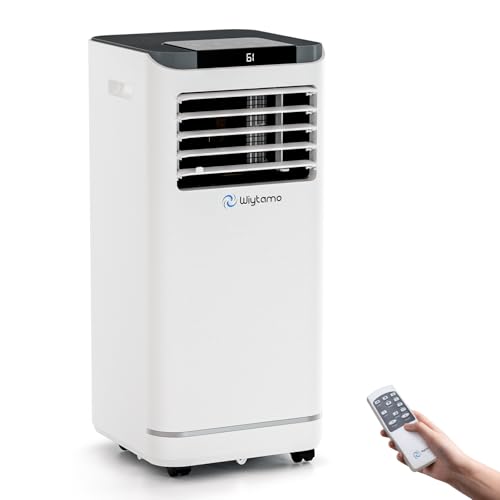
The Wiytamo 10,000 BTU unit lists cooling capacity for up to 450 sq ft and heating capacity to 350 sq ft, and includes features aimed at family use such as child lock and sensor-driven compressor operation. It offers 4-in-1 functions and multiple control methods including remote and LED display.
Auto-sensing compressor behavior aims to reduce energy consumption by adjusting to ambient temperature, which can be practical in a garage that experiences rapid temperature swings. This unit is suitable for medium-sized garages or work areas where sensor-controlled operation and simple remote control are preferred for convenience and safety.
Buying Guide: How To Choose A Portable AC And Heater For Your Garage
Choosing the right portable AC and heater for a garage depends on several technical and practical factors. The following considerations help align features with your garage’s needs.
1. Assess Garage Size And Insulation
Calculate the garage’s square footage and consider insulation quality. A well-insulated one-car garage needs less BTU than an uninsulated two-car garage. For typical garage spaces: 10,000–14,000 BTU units cover most garages when combined with reasonable sealing.
2. BTU And Heating Capacity
BTU rating determines the cooling power; heating output matters for colder months. Look for models that specify both cooling and heating capacities and match them to your garage area. Dual-hose and higher BTU units generally perform better in larger, draftier garages.
3. Hose Configuration: Single Vs Dual Hose
Dual-hose units typically cool more efficiently by using separate intake and exhaust paths, reducing negative pressure and improving performance in larger spaces. Single-hose units are simpler but may be less efficient in open or frequently ventilated garages.
4. Dehumidifier And Auto-Evaporation
Garages often have humidity issues. Models with a strong built-in dehumidifier and auto-evaporation reduce condensate management. If a permanent drain isn’t available, choose a unit with self-evaporation or auto-drain features.
5. Noise Level
Consider dBA ratings if you use the garage as a workspace. Lower noise models (48–52 dB) reduce disruption while working or using power tools. Sleep mode and noise reduction features can be helpful if the garage is adjacent to living spaces.
6. Portability And Installation
Wheels, handles, and a window exhaust kit simplify positioning and seasonal removal. Ensure the included window kit fits the garage window or door you plan to use for the exhaust hose. Consider hose length and whether you need an adapter for unconventional openings.
7. Power Requirements And Safety
Check the unit’s wattage and circuit requirements. Higher BTU units often need a dedicated circuit. Look for built-in safety features such as overheat protection, metal control boxes, and power failure memory if the garage has power variability.
8. Energy Efficiency And Refrigerant Type
Energy-efficient compressors and eco-friendly refrigerants like R32 can lower energy consumption and environmental impact. Sensor-driven compressor operation can reduce runtime and electricity use in garages with fluctuating temperatures.
9. Condensate Management And Maintenance
Confirm how condensate is handled—self-evaporation, auto-drain, or manual draining. Regular filter cleaning and access to service panels affect long-term performance. For dusty garages, choose units with easy-to-clean filters.
10. Features And Controls
Remote controls, programmable timers, multiple fan speeds, and automatic air swing improve convenience. Child lock and LED displays can be relevant if the garage is used as a family workspace or has intermittent household access.
Tips for Getting the Best HVAC Prices
- Prioritize Quality Over Cost
The most critical factor in any HVAC project is the quality of the installation. Don’t compromise on contractor expertise just to save money. - Check for Rebates
Always research current rebates and incentives — they can significantly reduce your overall cost. - Compare Multiple Quotes
Request at least three estimates before making your choice. You can click here to get three free quotes from local professionals. These quotes include available rebates and tax credits and automatically exclude unqualified contractors. - Negotiate Smartly
Once you've chosen a contractor, use the proven strategies from our guide — How Homeowners Can Negotiate with HVAC Dealers — to get the best possible final price.
Comparison Perspectives To Consider
- Performance vs Efficiency: Higher BTU units cool faster but may consume more power—dual-hose designs often offer better real-world efficiency.
- Noise vs Power: Quieter units often focus on insulation and lower-speed operation; ensure noise trade-offs don’t reduce needed airflow.
- Portability vs Permanence: Portable units offer flexibility; if you plan a permanent garage HVAC solution, compare ducted mini-splits instead of portable units.
- Condensate Handling: For garages lacking drains, prioritize auto-evaporation or auto-drain features to avoid regular manual emptying.