
Choosing the right electric heater for a workshop requires balancing power, mounting, safety, and control features. The table below summarizes five well-suited options selected from the list to cover ceiling-mounted hardwired units, high-output shop heaters, and portable forced-air options.
| Product | Type | Key Feature |
|---|---|---|
| Comfort Zone CZ220 Ceiling Mount | Ceiling Hard-Wired | Space-saving, adjustable louvers |
| TEMPWARE 7500-Watt Ceiling Heater | Ceiling Hard-Wired | Digital controls, remote, timer |
| CTSC 10000W Electric Garage Heater | High-Power Hard-Wired | Voltage display, digital thermostat |
| VORBO 5000 Watt Garage Heater | Ceiling Hard-Wired | Adjustable louvers, multi-level power |
| Dura Heat EUH1465 Portable | Portable Forced-Air | PTC ceramic element, pivoting base |
Content Navigation
- Comfort Zone Hard-Wired Ceiling Mount Garage Heater
- TEMPWARE 7500-Watt Digital Fan-Forced Ceiling Heater
- CTSC 10000W Electric Garage Heater With Thermostat
- VORBO 5000 Watt Ceiling Mounted Garage Heater
- Dura Heat EUH1465 Electric Forced Air Heater
- Buying Guide: Choosing The Right Electric Workshop Heater
- 1. Heater Type And Installation
- 2. Power, Coverage, And Heat Output
- 3. Air Distribution And Targeting
- 4. Controls And Convenience
- 5. Safety Features And Certifications
- 6. Construction And Durability
- 7. Installation Considerations
- 8. Energy Use And Operating Cost Perspective
- 9. Noise And Workplace Comfort
- 10. Troubleshooting And Maintenance
- 11. Matching Product To Use Case (Comparison Perspectives)
Comfort Zone Hard-Wired Ceiling Mount Garage Heater

Type: Ceiling-mounted, 5000 watt, 240V hard-wired heater. Built for garages, workshops, and storage areas where floor space is limited.
Construction And Durability: Heavy-gauge steel body designed for tough environments and frequent temperature swings found in poorly insulated spaces.
Airflow And Heat Distribution: Fan-forced design with louvers and an adjustable mounting angle provides targeted airflow and helps distribute heat through a workspace.
Safety Features: Includes overheat protection and a thermal cut-out switch for prevention of excessive temperatures during operation.
Call 888-896-7031 for Free Local HVAC Quotes – Compare and Save Today!
TEMPWARE 7500-Watt Digital Fan-Forced Ceiling Heater
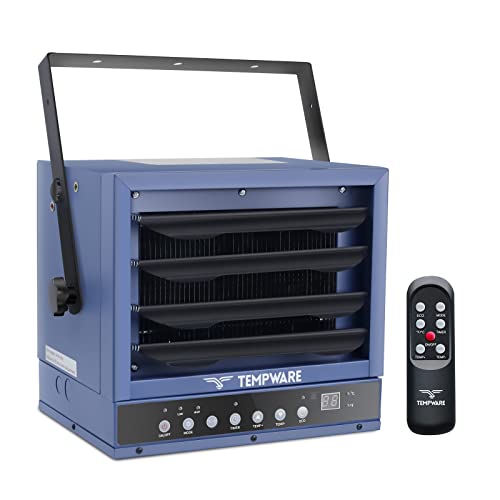
Type: 7500-watt, 240V hardwired ceiling heater with digital controls and remote for shop and large garage use.
Control And Modes: Digital thermostat, full-function remote, ECO mode that adjusts operation based on ambient temperature, and a 12-hour timer for scheduled shutoff.
Installation And Aiming: Adjustable louvers and variable mounting angle enable directional heating. Two heat settings provide flexibility from medium to high power.
Safety: Built-in overheat protection and temperature sensor to automatically switch off the unit if overheating is detected.
CTSC 10000W Electric Garage Heater With Thermostat

Call 888-896-7031 for Free Local HVAC Quotes – Compare and Save Today!
Type: High-capacity 10000W hardwired shop heater with digital thermostat, remote control, and multiple heat settings to cover larger workshops.
Voltage Awareness: Features a voltage display to help diagnose installation voltage issues—useful for troubleshooting fan performance during setup.
Controls: Digital touch panel plus remote control; offers three operating modes: high, low, and fan-only to match varying heating needs.
Durability And Safety: SPCC cold-rolled steel construction with ETL listing and overheating protection built into the design for enclosed-shop applications.
VORBO 5000 Watt Ceiling Mounted Garage Heater

Type: 5000W fan-forced ceiling heater designed for indoor workshop use with adjustable thermostat and multiple heating levels.
Heating Performance: Fast warm-up and fan-forced distribution claim quick circulation. Adjustable louvers and mounting angles aid in directing heat to work zones.
Controls: Rotary knob thermostat and heating level switch (3000 / 4000 / 5000 watts) enable simple on-unit control for typical workshop workflows.
Coverage And Automation: Thermostat range supports automatic shutoff or mode adjustment depending on ambient temperature to maintain setpoints.
Dura Heat EUH1465 Electric Forced Air Heater
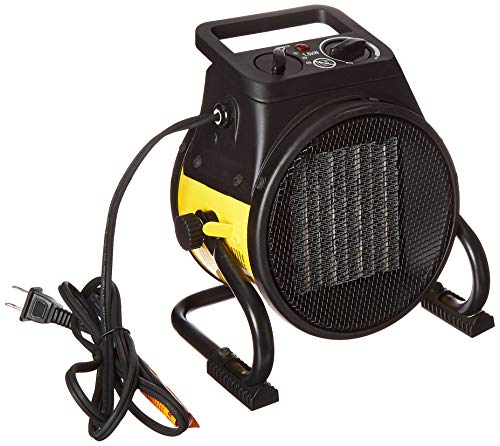
Type: Portable 1500W PTC ceramic forced-air heater with pivoting base for small workshop areas or targeted spot heating.
Heating Modes: Offers heat and fan-only settings to serve as a portable heater or an air circulator when heat isn’t required.
Build And Use: Rugged steel construction intended for jobsite durability. Compact footprint and pivoting base make targeting specific workstations straightforward.
Safety And Practicality: Ceramic PTC elements typically offer quick warm-up and stable output; the portable design is a good complement to larger fixed heaters.
Buying Guide: Choosing The Right Electric Workshop Heater
This buying guide covers the key considerations when selecting an electric heater for a workshop, garage, or shop. Each section offers comparison perspectives to help match equipment to space, safety needs, and installation constraints.
1. Heater Type And Installation
Ceiling-Mounted Hardwired Units: Save floor space and deliver broad area heating. Require professional hardwiring and mounting; best for permanent installations and larger shops.
Portable Forced-Air Heaters: Plug-and-play options for spot heating, flexibility, and temporary jobs. Typically lower wattage and suitable for small areas or supplemental warmth.
2. Power, Coverage, And Heat Output
Wattage Matters: Higher wattage yields more heat. Small workshops may do well with 1500–5000W units; large shops often need 7500–10000W or multiple units for even coverage.
BTU And Square Foot Estimates: Convert wattage to BTU roughly if needed (1 watt ≈ 3.41 BTU). Use manufacturer coverage claims as a starting point and account for insulation quality.
3. Air Distribution And Targeting
Fan-Forced And Louvers: Fan-forced designs and adjustable louvers provide directed airflow to benches or bays. Ceiling-mounted louvers allow aiming without moving the unit.
Pivoting Bases: Portable units with pivoting bases or oscillation help distribute heat without installation; useful for changing job locations.
4. Controls And Convenience
Thermostats And Remote Control: Built-in thermostats allow automatic on/off cycles to maintain set temperatures and save energy. Remote controls and digital panels add convenience for larger shops.
Timers And ECO Modes: Timers enable scheduled operation, and ECO modes can optimize runtime to reduce energy consumption in intermittent-use spaces.
5. Safety Features And Certifications
Overheat Protection & Thermal Cut-Outs: Essential for enclosed spaces to stop heating elements if temperatures exceed safe levels.
Tip-Over Switches: Important for portable units to prevent fires if knocked over. Ceiling units should have secure mounts and proper electrical protection.
Listings: Look for ETL or other recognized safety certifications, especially for permanent hardwired installations.
6. Construction And Durability
Material: Cold-rolled or heavy-gauge steel housings stand up better in shops and garages with tools and dust exposure.
Jobsite Durability: Portable models should have protected elements and robust casings to tolerate drops and rough handling.
7. Installation Considerations
Hardwiring Requirements: Ceiling and high-power heaters often require 240V circuits and professional electrical installation. Verify local codes and circuit capacity before purchase.
Mounting Location: Position heaters to avoid direct exposure to flammable materials, and maintain clearance for airflow and maintenance access.
8. Energy Use And Operating Cost Perspective
Run-Time vs Power: Higher wattage reduces time to warm but increases instantaneous energy draw. Thermostat control and zoning reduce total run-time, lowering operating cost.
Insulation Impact: Better-insulated workshops retain heat, enabling smaller heaters or lower runtime. Consider sealing drafts and adding insulation to improve efficiency.
9. Noise And Workplace Comfort
Fan Noise: Fan-forced models produce noise; high-output units may be louder. Evaluate acceptable noise levels for work tasks and choose quieter models for office-adjacent spaces.
Directional Heat vs Ambient Warmth: Forced-air units deliver directed warmth; radiant or convection choices (not covered in this list) offer different comfort characteristics.
10. Troubleshooting And Maintenance
Voltage Issues: High-power hardwired heaters may underperform if supply voltage is low—some units include voltage readouts to diagnose issues.
Routine Checks: Inspect mounting hardware, wiring connections, fan motors, and filters (if present) periodically to maintain performance and safety.
11. Matching Product To Use Case (Comparison Perspectives)
Large Shop With High Ceilings: Hardwired, high-wattage ceiling heaters (7500–10000W) with remote and thermostat control provide even ambient heat.
Small Workshop Or Single-Bay Garage: A 5000W ceiling unit or a 1500W portable forced-air heater can provide cost-effective spot or local heating.
Supplemental or Temporary Heat: Portable PTC ceramic heaters give quick spot warmth, are easy to move, and reduce the need for permanent electrical work.
Energy-Conscious Operators: Prioritize thermostats, ECO modes, timers, and well-insulated spaces to minimize runtime and lower energy use.
Final Note: Select the heater type, wattage, and safety features that align with your workshop size, electrical capacity, and installation willingness. Professional installation is recommended for hardwired 240V units to ensure safe operation and compliance with electrical codes.
Tips for Getting the Best HVAC Prices
- Prioritize Quality Over Cost
The most critical factor in any HVAC project is the quality of the installation. Don’t compromise on contractor expertise just to save money. - Check for Rebates
Always research current rebates and incentives — they can significantly reduce your overall cost. - Compare Multiple Quotes
Request at least three estimates before making your choice. You can click here to get three free quotes from local professionals. These quotes include available rebates and tax credits and automatically exclude unqualified contractors. - Negotiate Smartly
Once you've chosen a contractor, use the proven strategies from our guide — How Homeowners Can Negotiate with HVAC Dealers — to get the best possible final price.