
High-BTU propane heaters provide rapid, powerful heat for garages, workshops, job sites, and outdoor events. This guide compares five high-output propane-ready units and burners across performance, safety, installation, and fuel compatibility to help you pick the right model for heavy-duty heating needs.
| Product | Brand | Rated BTU |
|---|---|---|
| Mr. Heater 125,000 BTU Forced Air Propane Heater | Mr. Heater | 125,000 BTU |
| BESTFIRE 100,000 BTUs High Pressure Propane Burner | BESTFIRE | 100,000 BTU |
| Mr. Heater MH60QFAV 60,000 BTU Portable Propane Forced Air Heater | Mr. Heater | 30,000–60,000 BTU |
| Mr. Heater Big Maxx MHU80NG (Includes LP Conversion Kit) | Mr. Heater | 80,000 BTU |
| Dyna-Glo IR30PMDG-1 30,000 BTU Infrared Vent Free Wall Heater | Dyna-Glo | 6,000–30,000 BTU |
Content Navigation
- Mr. Heater 125,000 BTU Forced Air Propane Heater F271390
- BESTFIRE Propane Burner 100,000 BTUs High Pressure Stove
- Mr. Heater MH60QFAV 60,000 BTU Portable Propane Forced Air Heater
- Mr. Heater Big Maxx MHU80NG 80,000 BTU Unit Heater
- Dyna-Glo IR30PMDG-1 30,000 BTU Infrared Vent Free Wall Heater
- Buying Guide: Choosing A High BTU Propane Heater
- 1. Match BTU Output To Space And Use
- 2. Heating Method: Forced-Air vs Infrared vs Blue Flame
- 3. Indoor Use, Venting, And Local Codes
- 4. Fuel Supply And Conversion
- 5. Safety Features And Certifications
- 6. Installation, Portability, And Maintenance
- 7. Noise, Air Movement, And Comfort Preferences
- 8. Application-Specific Comparisons
- 9. Cost Of Ownership And Fuel Efficiency
Mr. Heater 125,000 BTU Forced Air Propane Heater F271390

Output And Noise: Rated at 125,000 BTU with Quiet Burner Technology that claims to be 50% quieter than standard forced-air propane heaters. The unit includes a 10 ft hose & regulator.
Safety And Controls: Features a high-temperature limit switch. Forced-air design moves large volumes of warm air quickly, suitable for open shops, warehouses, and large job sites.
Installation & Use: Portable forced-air format is often used with 20 lb tanks or bulk LPG supply via included hose. For heavy-duty applications, evaluate ventilation and clearance requirements before use.
BESTFIRE Propane Burner 100,000 BTUs High Pressure Stove

Call 888-896-7031 for Free Local HVAC Quotes – Compare and Save Today!
Purpose And Output: A 100,000 BTU high-pressure single-burner designed for outdoor cooking tasks such as turkey frying and seafood boils. Built as a heavy-duty cast iron burner.
Durability And Safety: Includes top and bottom heat shields to protect hose connections and surfaces. Comes with a CSA approved regulator and 4.1 ft hose, and an adjustable 0–20 psi regulator for output control.
Use Cases: Best suited for outdoor, open-air use. Not designed for space heating in enclosed areas; for heating comparisons, treat this as a high-BTU outdoor heat source rather than an indoor propane heater.
Mr. Heater MH60QFAV 60,000 BTU Portable Propane Forced Air Heater

Variable Output: Delivers 30,000–60,000 BTU with runtime up to 14 hours on a 20 lb tank on low. Uses QBT Technology for quieter operation compared to standard forced-air models.
Portability And Performance: Compact dimensions make it portable for job sites and temporary heat needs. Forced-air design is effective for spot heating and warming enclosed workspaces.
Call 888-896-7031 for Free Local HVAC Quotes – Compare and Save Today!
Considerations: Evaluate ventilation needs, clearance, and fuel supply for extended indoor use. Forced-air units distribute heat quickly but can move dust and fumes, so install with workplace safety in mind.
Mr. Heater Big Maxx MHU80NG 80,000 BTU Unit Heater
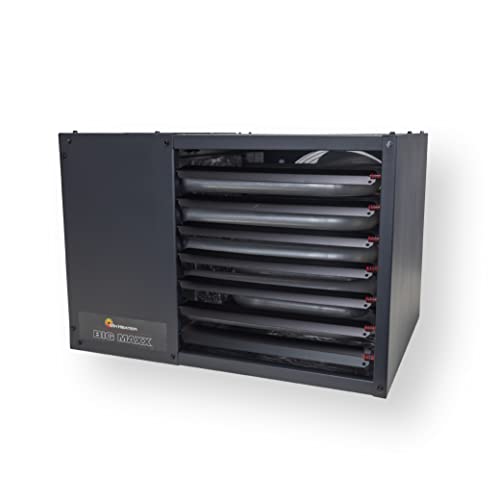
Rated Performance: Listed as an 80,000 BTU unit with coverage up to 2000 sq. ft. The purchase includes a LP conversion kit, mounting brackets, and is designed for unit heater installations.
Installation And Venting: Intended for wall or ceiling mounting with options for vertical or horizontal venting (category 1/3). Requires electrical connection (120 V) for fan and controls.
Application Notes: Although marketed for natural gas, the included LP conversion kit makes it relevant to propane applications. Suitable for garages or larger enclosed spaces where a permanent-mounted heater is preferred.
Dyna-Glo IR30PMDG-1 30,000 BTU Infrared Vent Free Wall Heater

Heating Method: Uses infrared technology to radiate heat to objects and people rather than convection heating the air first. Variable output from 6,000–30,000 BTU, rated for up to 1,000 sq. ft. in appropriate settings.
Fuel And Installation: Liquid Propane ready (no fuel conversion permitted). As a vent-free unit, it does not require external venting but does require compliance with local codes and adequate fresh air in the conditioned space.
Best Use: Suited for localized radiant heating in garages, basements, and living spaces where direct warmth is preferred and vent-free operation is permitted.
Buying Guide: Choosing A High BTU Propane Heater
This buying guide covers key considerations when selecting a high-BTU propane heater: output, heating method, installation, safety, fuel supply, and application-specific factors.
1. Match BTU Output To Space And Use
- Calculate space heat needs by volume and insulation quality; large open shops often require higher BTU ratings and higher airflow.
- High-BTU units like 100k–125k BTU are designed for large, open, or outdoor areas. Smaller enclosed spaces may be overheated by such units.
- Consider variable-output or modulating units for better control and fuel economy when heating fluctuating loads.
2. Heating Method: Forced-Air vs Infrared vs Blue Flame
- Forced-Air Heaters (e.g., 60k and 125k forced-air models) move heated air quickly and are ideal for spot heating large spaces. They can stir dust and need proper ventilation.
- Infrared Heaters (e.g., Dyna-Glo infrared) heat objects and people directly, offering efficient perceived warmth in drafty or partially open spaces.
- Blue-Flame/Convective Heaters warm the air and are suitable for whole-room comfort where even air temperature is desired.
3. Indoor Use, Venting, And Local Codes
- Vent-free units are efficient but may be restricted in some jurisdictions due to indoor combustion byproducts. Check local building codes and CO/ventilation requirements.
- Direct-vent and vented unit heaters manage combustion exhaust outside, which is safer for enclosed spaces but requires proper installation and clearances.
- Permanent-mounted unit heaters (e.g., Big Maxx) require electrical connection and venting planning; portable forced-air units need adequate clearance and fresh air supply.
4. Fuel Supply And Conversion
- Confirm whether a unit is propane-ready or requires a conversion kit. Some natural gas models include LP conversion kits—verify included hardware and installation instructions.
- For extended runtime, consider bulk LPG supply or multiple tanks. Portable heaters commonly use 20 lb tanks; high-output units may need larger or piped supply.
- Check regulator specifications and hose length included for compatibility with your installation.
5. Safety Features And Certifications
- Look for tip-over protection, high-temperature limit switches, oxygen-depletion sensors (for indoor/vent-free units), and CSA or other recognized safety certifications.
- Forced-air and high-pressure burners should include overheat and flame-sensing features to reduce risk of malfunction.
- For outdoor burners, ensure the regulator is CSA approved and that heat shields are present to protect connections.
6. Installation, Portability, And Maintenance
- Portable units offer flexibility for job sites and temporary needs; permanent units offer better distribution for fixed spaces.
- Consider mounting options, clearance requirements, and whether professional installation is required to meet code.
- Routine maintenance includes cleaning heat exchangers, checking hoses and regulators, and verifying combustion performance annually.
7. Noise, Air Movement, And Comfort Preferences
- Forced-air units typically generate noise and airflow; models with quiet burner technology reduce noise but still move air.
- Infrared units provide quiet, still warmth and are perceived as comfortable even at lower air temperatures.
- Choose based on whether you prioritize quiet operation, rapid air movement, or direct radiant heat.
8. Application-Specific Comparisons
- For workshops and job sites, forced-air high-BTU heaters (60k–125k) move heat quickly and are robust for intermittent use.
- For permanent garage heating, vented unit heaters or converted natural gas unit heaters with LP kits offer controlled, continuous performance.
- For outdoor cooking or event heat, a high-pressure propane burner (100k) is appropriate but not suitable for enclosed space heating.
9. Cost Of Ownership And Fuel Efficiency
- High-BTU output increases fuel consumption; match sizing to reduce run-time and fuel waste.
- Variable-output models and radiant heaters often deliver more usable warmth per BTU in targeted heating scenarios.
- Consider serviceability and spare-part availability for long-term ownership.
Use this guide to compare output, fuel compatibility, installation requirements, safety features, and intended application when selecting a high-BTU propane heating solution. For enclosed spaces, prioritize proper venting or certified vent-free/radiant options and always follow local codes and manufacturer instructions.
Tips for Getting the Best HVAC Prices
- Prioritize Quality Over Cost
The most critical factor in any HVAC project is the quality of the installation. Don’t compromise on contractor expertise just to save money. - Check for Rebates
Always research current rebates and incentives — they can significantly reduce your overall cost. - Compare Multiple Quotes
Request at least three estimates before making your choice. You can click here to get three free quotes from local professionals. These quotes include available rebates and tax credits and automatically exclude unqualified contractors. - Negotiate Smartly
Once you've chosen a contractor, use the proven strategies from our guide — How Homeowners Can Negotiate with HVAC Dealers — to get the best possible final price.