
Finding the right A/C heater unit means balancing cooling power, supplemental heat, installation type, and energy use. The table below summarizes five top units across window and portable styles to help you compare capacity and coverage quickly.
| Product | Type | Recommended Coverage |
|---|---|---|
| Midea 8,000 BTU Smart Inverter Window Unit With Heat | Window (Inverter) | Up To 350 Sq. Ft. |
| Uhome 12,000 BTU Portable Air Conditioner With Heater | Portable | Up To 400 Sq. Ft. |
| LG 23,000 BTU Window Air Conditioner With Heat (230V) | Window (High Capacity) | Up To 1400 Sq. Ft. |
| ROVSUN 8,000 BTU Window Air Conditioner With Heat | Window (Smart) | Up To 350 Sq. Ft. |
| TURBRO 14,000 BTU Portable Air Conditioner & Heater | Portable (High Capacity) | Up To 600 Sq. Ft. |
Content Navigation
- Midea 8,000 BTU Smart Inverter Air Conditioner Window Unit With Heat
- Uhome 12,000 BTU Portable Air Conditioner With Heater Up To 400 Sq. Ft
- LG 23,000 BTU Window Air Conditioner With Heat, 230V
- ROVSUN 8,000 BTU Window Air Conditioner With Heat And Smart Control
- TURBRO 14,000 BTU Portable Air Conditioner & Heater With UV-C Light
- Buying Guide: How To Choose The Right A/C Heater Unit
Midea 8,000 BTU Smart Inverter Air Conditioner Window Unit With Heat

This window A/C heater combo uses inverter technology to deliver efficient cooling and supplemental heat for rooms up to 350 sq. ft. The unit features 5 modes — Heat, Auto, Cool, Dry, Fan — and a washable front filter for maintenance. Smart connectivity supports app control and voice assistants like Alexa and Google Assistant.
Key functional points include variable-speed inverter compressor for improved efficiency and quieter operation, an ECO energy saver setting for reduced energy use, and a 24-hour timer. The heat pump function operates when outside temperatures are above 41°F, making it suited as supplemental heating in mild cold conditions.
Installation is standard for window units; front-accessible controls and remote offer convenience. The product targets users who want energy-efficient seasonal comfort with smart features and lower running noise compared to traditional fixed-speed units.
Uhome 12,000 BTU Portable Air Conditioner With Heater Up To 400 Sq. Ft

Call 888-896-7031 for Free Local HVAC Quotes – Compare and Save Today!
The Uhome 4-in-1 portable A/C offers cooling, heating, dehumidifying, and fan modes in a single freestanding unit. Rated at 12,000 BTU for both cooling and heating, it targets medium rooms up to 400 sq. ft. The self-evaporating system reduces condensate disposal and lowers maintenance effort.
Performance highlights include three fan speeds, an LED display with programmable 24-hour timer, and automatic air swing for directional airflow. The unit reports noise around 52 dB and an airflow rating of 360 m³/hr, indicating a balance between power and acceptable sound levels for many living spaces.
Portable units require a window exhaust kit for venting warm air. This model suits occupants who need temporary or movable climate control with both heating and cooling in the same device, and who prefer plug-and-play installation without permanent window modifications.
LG 23,000 BTU Window Air Conditioner With Heat, 230V

This high-capacity window unit is designed for large rooms and open-plan spaces, with 23,000 BTU cooling and a supplemental heat feature. It is a 230V model intended for installations that can support higher-voltage appliances and is rated to condition areas up to roughly 1,400 sq. ft.
Operational features include low-noise performance (down to 50 dB in low mode), multiple fan speeds for cooling and heating, and remote control for convenience. The unit is intended as a steady climate control solution when installed in a suitable window or sleeve and when the electrical supply supports a 230V load.
Call 888-896-7031 for Free Local HVAC Quotes – Compare and Save Today!
Because of its higher capacity and voltage requirement, this product is appropriate for users needing whole-room performance from a window unit and who can accommodate professional or experienced DIY installation that meets electrical code and safety considerations.
ROVSUN 8,000 BTU Window Air Conditioner With Heat And Smart Control

The ROVSUN unit is an all-season window A/C offering 8,000 BTU cooling and 4,000 BTU heating capacity. It includes Wi-Fi connectivity and voice control compatibility with Alexa and Google Assistant, enabling remote scheduling and routines for temperature management.
Core features include 5 operating modes (Heat, Auto, Cool, Dry, Fan), three speed settings, an ECO energy-saver mode, and a washable front filter for simple upkeep. The 24-hour timer and programmable settings support energy-conscious operation.
This model suits users who prioritize smart home integration and want a compact window unit for small to mid-sized rooms. The lower heating capacity indicates it serves as supplemental heat rather than a primary heating source in cold climates.
TURBRO 14,000 BTU Portable Air Conditioner & Heater With UV-C Light
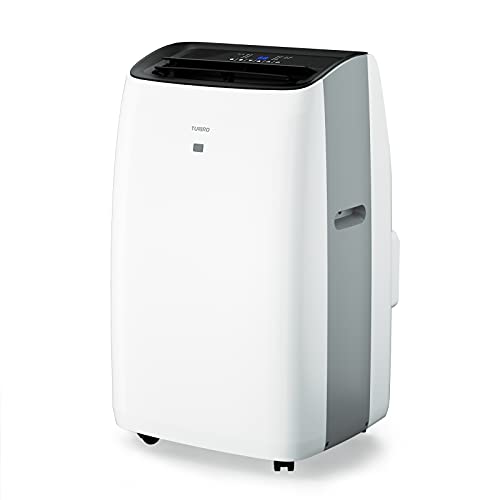
The TURBRO unit is a higher-capacity portable A/C with multi-function capabilities: cooling, heating, dehumidifying, fan, and a UV-C light feature for additional air sanitization. The manufacturer rates cooling performance suitable for up to 600 sq. ft. (using the newer DOE-equivalent 10,000 BTU rating approach).
Notable features include an auto function that cycles modes for energy efficiency, an integrated dehumidifier with high capacity, multiple fan speeds, and a 24-hour timer. The unit emphasizes air quality enhancement via UV-C and supports sleep mode and remote control operation.
This product targets users who want portable whole-room coverage and additional air cleaning features. Note that portable units require appropriate venting and a window kit; their flexibility is balanced against slightly higher noise and footprint compared with fixed window units.
Buying Guide: How To Choose The Right A/C Heater Unit
Selecting the right A/C heater unit means assessing room size, installation constraints, heating needs, energy efficiency, noise, and smart features. Below are practical considerations and comparison perspectives to guide your choice.
Coverage And BTU Capacity
- Match BTU To Room Size: Estimate room square footage and choose a unit whose cooling BTU rating aligns with that area. Underpowered units run continuously; oversized units cycle too often.
- Heating Capacity: Many A/C units provide supplemental heat via a heat pump or electric resistance. Window units with heat pumps are efficient in mild cold; portable units often use electric heating elements with different limits.
Installation Type: Window vs. Portable vs. RV/Rooftop
- Window Units: Typically more efficient, lower noise, and better for long-term window installations. Require proper window fit and, for high-voltage models, appropriate electrical supply.
- Portable Units: Offer mobility and require minimal installation aside from a window exhaust kit. Consider condensate handling, venting, and noise levels.
- Rooftop/RV Units: Purpose-built for vehicles and mobile living spaces; check 12V compatibility, run time on battery power, and rooftop mounting requirements.
Energy Efficiency And Operating Cost
- Inverter Technology: Inverter compressors adjust speed to meet demand, improving part-load efficiency and reducing energy bills compared with fixed-speed compressors.
- Energy Star And ECO Modes: Look for certifications and energy-saving modes for reduced operating costs.
Noise And Comfort
- Decibel Ratings: Units labeled around 50–55 dB are generally acceptable for living areas; consider lower noise if used in bedrooms.
- Airflow And Fan Speeds: Multiple speeds and adjustable louvers improve comfort and distribution.
Smart Features And Controls
- Wi‑Fi And Voice Control: Smart connectivity allows scheduling, remote control, and integration with home automation.
- Timers And Programmable Modes: 24-hour timers and auto modes improve convenience and efficiency.
Maintenance And Filter Access
- Washable Filters: Front-access washable filters simplify cleaning and help maintain efficiency.
- Drainage/Condensate Handling: Portable units may use self-evaporating systems, internal reservoirs, or continuous drain options—choose per your maintenance preference.
Heating Performance Considerations
- Heat Pump Vs. Electric Resistance: Heat pumps are more energy-efficient where outdoor temperatures remain moderate. Electric resistance heaters provide immediate heat but at higher energy cost.
- Supplemental Use: Many A/C heater combos are best as supplemental heating, not as primary heat in very cold climates. Check manufacturer guidance on operating temperature ranges.
Durability, Warranty, And Support
- Warranty Coverage: Review the warranty for compressor, parts, and labor. Longer or more comprehensive warranties reduce long-term risk.
- Service Network: Consider brands with accessible customer support and replacement parts availability.
Comparison Perspectives
- Small Rooms (≤350 sq. ft.): Compact window units with 8,000 BTU capacity or portable 10,000–12,000 BTU models provide effective comfort and lower energy use.
- Medium Rooms (350–600 sq. ft.): Portable 12,000–14,000 BTU units and larger window units balance power and mobility.
- Large Spaces (600+ sq. ft.): High-capacity window units or multiple distributed units deliver better performance than a single undersized portable unit.
- Energy-Focused Buyers: Inverter window units and Energy Star-rated models provide better seasonal efficiency.
- Smart Home Users: Units with Wi‑Fi and voice control add convenience and scheduling benefits for energy savings.
Use the above criteria to weigh trade-offs between installation permanence, efficiency, heating capability, and mobility. Assess electrical requirements and local climate to determine whether a unit will serve as supplemental heat or primary heating for your space.
Tips for Getting the Best HVAC Prices
- Prioritize Quality Over Cost
The most critical factor in any HVAC project is the quality of the installation. Don’t compromise on contractor expertise just to save money. - Check for Rebates
Always research current rebates and incentives — they can significantly reduce your overall cost. - Compare Multiple Quotes
Request at least three estimates before making your choice. You can click here to get three free quotes from local professionals. These quotes include available rebates and tax credits and automatically exclude unqualified contractors. - Negotiate Smartly
Once you've chosen a contractor, use the proven strategies from our guide — How Homeowners Can Negotiate with HVAC Dealers — to get the best possible final price.