
Choosing the right natural gas heater depends on space size, installation type, and safety features. The table below summarizes five recommended heaters selected for residential and outdoor applications, spanning unit heaters, wall-mounted and ventless blue flame models, and a patio option.
| Model | Type | Output (BTU) | Coverage |
|---|---|---|---|
| Mr. Heater Big Maxx MHU50NG | Unit Heater | 50,000 | Up To 1250 Sq. Ft. |
| Mr. Heater Big Maxx MHU80NG | Unit Heater | 80,000 | Up To 2000 Sq. Ft. |
| Mr. Heater MHVFBF30NGT | Wall Mount Blue Flame | 30,000 | Up To 1000 Sq. Ft. |
| ProCom MN300HBA-B | Ventless Blue Flame | 30,000 | Up To 1400 Sq. Ft. |
| Fire Sense 61445 | Patio Heater | 45,000 | Outdoor Patio Areas |
Content Navigation
Mr. Heater Big Maxx 50,000 BTU
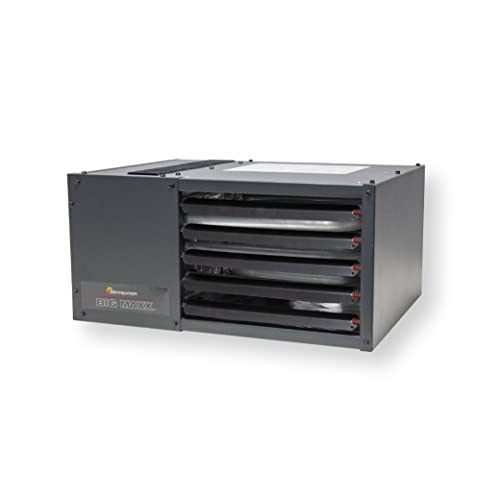
This 50,000 BTU unit heater is designed for larger garages, workshops, or commercial spaces. It lists the ability to heat up to 1250 square feet, making it suitable for single-zone applications where a centralized forced-air unit is not practical. The heater uses a powered exhaust which supports both vertical and horizontal venting, providing flexibility in installation routes.
Serviceability is addressed with outside access to the thermostat, A/C terminals, and gas connection, which can simplify maintenance and reduce downtime. As a category 1/3 vent-configured unit, it requires proper venting clearances and gas supply planning. Ideal for fixed installations where ducting and wall/ceiling mounting options are available.
Mr. Heater Big Maxx 80,000 BTU
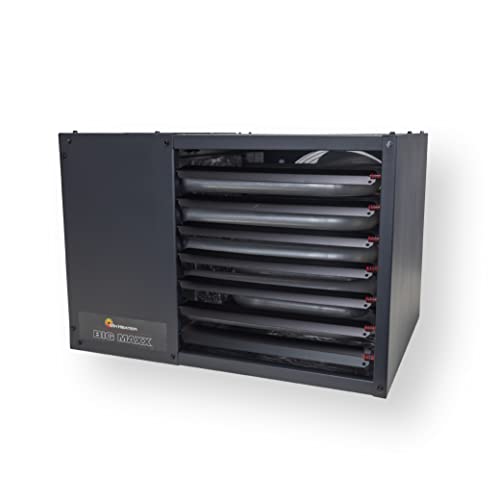
The 80,000 BTU Big Maxx is a higher-capacity unit intended for larger spaces up to 2000 sq. ft. It supports both category 1 vertical and category 3 horizontal venting and includes two angle brackets for mounting. The product ships with a liquid propane conversion kit but is configured for natural gas use out of the box.
Call 888-896-7031 for Free Local HVAC Quotes – Compare and Save Today!
Electrical requirements are modest at 120 V, 2.3 A, and the unit specifies a minimum clearance (8 ft. from floor to base) and installation parameters. This model is targeted at shops, warehouses, and large garages where a robust continuous output and flexible venting configuration are needed.
Mr. Heater 30,000 BTU Wall Mount
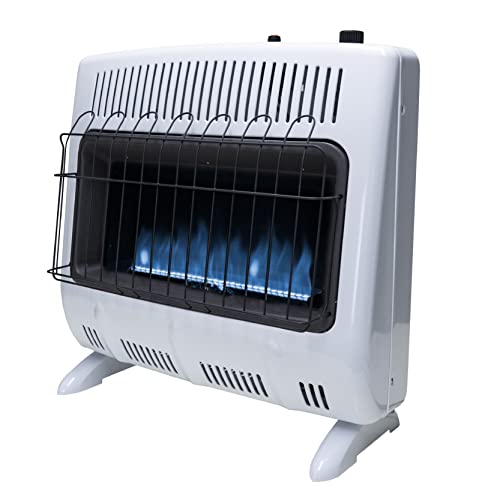
This vent-free blue flame wall heater provides up to 30,000 BTU and is suited for rooms, sunrooms, or additions up to approximately 1,000 sq. ft. It includes a built-in thermostat for temperature control and an electric ignition system powered by a supplied battery for reliable starts.
The blue flame design emphasizes convection heat, distributing warmth evenly without fans. The unit notes altitude performance up to 4,500 feet and reports high fuel efficiency with low gas consumption. As a vent-free appliance, it requires adherence to indoor air quality and clearances and is best used in well-ventilated spaces or as supplemental heat.
ProCom 30,000 BTU Ventless Heater

The ProCom 30,000 BTU ventless heater operates on natural gas with no electrical connection required. It offers three manual heat settings and a push-button piezo ignition, making it a straightforward option for spaces that need a simple, mechanical control setup.
Call 888-896-7031 for Free Local HVAC Quotes – Compare and Save Today!
Rated to heat up to 1400 sq. ft., this model includes an Oxygen Depletion Sensor (ODS) for automatic shut-off if combustion air is insufficient. The absence of electricity support makes it suitable for locations where power may be intermittent, but ventless operation requires evaluation of ventilation needs and compliance with local codes.
Fire Sense 45,000 BTU Patio Heater
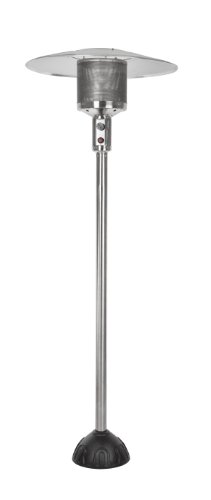
This stainless steel patio heater uses natural gas for an output of 45,000 BTU, optimized for outdoor entertaining areas. It features an electronic ignition for rapid startup and a tip-over protection system for safety during portable use.
Construction uses heavy-duty stainless steel and includes a connection line and mounting plate, aimed at durable outdoor service. As an outdoor-rated appliance, it avoids indoor combustion air concerns associated with ventless models and can provide an even radiative warmth for patios, decks, or covered outdoor seating.
Buying Guide: Choosing The Right Natural Gas Heater
Selecting a natural gas heater requires matching the appliance to the space, venting capability, and local code requirements. Below are core considerations to inform a purchase decision across residential and outdoor contexts.
Heating Capacity And Coverage
- BTU Output: Determine required BTUs by calculating the heated square footage and considering insulation, ceiling height, and climate. Higher BTU units (50k–80k) suit large garages and workshops; 30k models fit single rooms or additions.
- Room Type: Enclosed indoor spaces need properly vented or vent-free appliances sized for that room. Outdoor patio heaters should be chosen for radiant coverage rather than declared square footage.
Venting Type And Installation
- Vented Unit Heaters: Include powered exhaust or natural venting and are appropriate where combustion products must be routed outside. Requires planning for flue placement, clearances, and possibly professional installation.
- Ventless (Vent-Free) Heaters: Deliver combustion products directly into the room and maximize efficiency by not losing heat up a vent. They require adequate ventilation, adherence to local codes, and ODS safety features. Not permitted in some jurisdictions.
- Outdoor Heaters: Designed for open areas; avoid indoor use unless explicitly rated for it. Choose corrosion-resistant materials for longevity.
Safety Features
- ODS (Oxygen Depletion Sensor): Automatically shuts off if oxygen levels drop—critical for ventless models.
- Tip-Over Protection: Important for portable patio heaters to prevent fire risk.
- Automatic Shutoffs: Overheat, flame-failure, and ignition safety systems reduce risk during abnormal operation.
Controls And Convenience
- Thermostats: Built-in thermostats allow temperature regulation and can reduce fuel consumption compared with manual-only units.
- Ignition Type: Electronic or battery-powered ignition provides easier startup than continuous pilot systems. Manual piezo ignitions work without electricity.
- Maintenance Access: Units with outside access to controls and gas connections simplify service tasks and inspections.
Energy Efficiency And Fuel Considerations
- Fuel Type: Verify compatibility with natural gas supply pressure and line sizing. Some units offer LP conversion kits but are sold configured for a specific fuel.
- Operational Efficiency: Ventless models can approach very high room efficiency since they do not exhaust heated air, but indoor air quality trade-offs must be considered.
Compliance And Local Codes
- Check local building codes for restrictions on ventless appliances, required clearances, and installation permits.
- Professional installation is recommended for vented unit heaters and often required to meet code and warranty conditions.
Installation Logistics
- Clearances: Respect minimum clearances to combustibles and floor heights specified by the manufacturer.
- Venting Runs: Plan vent runs for unit heaters to avoid excessive elbows and ensure proper draft with powered exhausts where applicable.
- Gas Line Supply: Ensure gas line sizing and shutoff valves meet BTU demand and local rules.
Comparison Perspectives
- Large Indoor Spaces: Prefer vented unit heaters (50k–80k) for safer combustion product removal and robust output for workshops and warehouses.
- Single Rooms Or Additions: Wall-mounted vent-free blue flame units (around 30k BTU) provide even convection heat and are simpler to install where permitted.
- Outdoor Areas: Choose stainless steel patio heaters with tip-over protection and electronic ignition for reliable outdoor performance.
- Power Availability: If electricity is intermittent, ventless models with piezo ignition or units with battery ignition are options; powered exhaust units may require electrical service.
When evaluating models, cross-check manufacturer specifications, safety certifications, and local installation rules. Proper sizing, venting, and adherence to safety features are the primary drivers for a successful, code-compliant natural gas heating installation.
Tips for Getting the Best HVAC Prices
- Prioritize Quality Over Cost
The most critical factor in any HVAC project is the quality of the installation. Don’t compromise on contractor expertise just to save money. - Check for Rebates
Always research current rebates and incentives — they can significantly reduce your overall cost. - Compare Multiple Quotes
Request at least three estimates before making your choice. You can click here to get three free quotes from local professionals. These quotes include available rebates and tax credits and automatically exclude unqualified contractors. - Negotiate Smartly
Once you've chosen a contractor, use the proven strategies from our guide — How Homeowners Can Negotiate with HVAC Dealers — to get the best possible final price.