
Baseboard heater clearance rules affect safety, performance, and code compliance. This guide summarizes recommended clearances, compatible thermostats, and notable baseboard units and smart controls to consider when planning installation or upgrades. Below is a quick comparison table of the featured products for easy reference.
| Product | Type | Key Feature |
|---|---|---|
| Cadet F Series 36″ 120V | Hard-Wired Baseboard | All-Metal, Requires Thermostat |
| Cadet F Series 36″ 240V | Hard-Wired Baseboard | Multi-Watt, Convection |
| Mysa Smart Thermostat | Smart Thermostat For Baseboards | Wi‑Fi, HomeKit/Alexa/Google |
| KING K Series 4′ 120V | Hard-Wired Baseboard | Aluminum Ribbon Fin, Safety Cutout |
| Comfort Zone 1500W | Convection Baseboard Space Heater | Adjustable Thermostat, Safety Features |
Content Navigation
- Cadet F Series 36″ Electric Baseboard Heater 120V
- Cadet F Series 36″ Electric Baseboard Heater 240V
- Mysa Smart Thermostat For Electric Baseboard Heaters
- KING K Series 4′ Baseboard Heater 120V
- Comfort Zone 1500W Electric Baseboard Space Heater
- Buying Guide: Baseboard Heater Clearance And Selection Considerations
Cadet F Series 36″ Electric Baseboard Heater 120V
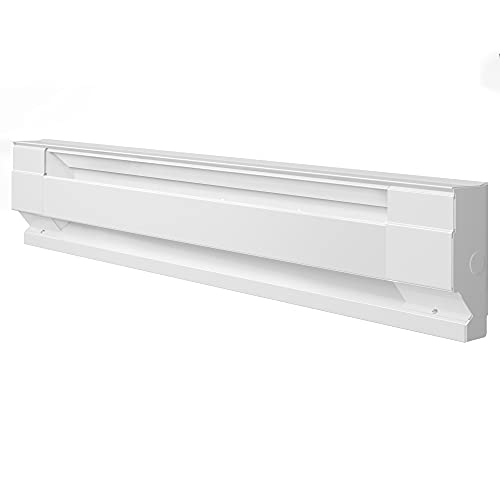
This Cadet F Series 36″ model is a hard-wired electric baseboard heater designed for 120V circuits. It lists features such as 25 gauge steel, a 20 gauge junction box with ground, and an all-metal, powder-coated
From a clearance perspective, fixed baseboards of this type typically need clear space above and in front to allow convection airflow. The metal construction and junction box options affect mounting and proximity to combustible trim—refer to local electrical and building codes for required distances from curtains, furniture, and combustible materials.
Cadet F Series 36″ Electric Baseboard Heater 240V
This Cadet 36″ 240/208V model provides multi-watt capability (750/563) and convection heating to circulate warm air. It includes universal wiring and pre-punched knockouts for straightforward hard-wiring.
Call 888-896-7031 for Free Local HVAC Quotes – Compare and Save Today!
For clearance planning, higher voltage and wattage units generate more heat and may require increased separation from draperies, furniture, and storage. Ensure the heater’s output matches room dimensions and that clearances specified by the manufacturer are observed to avoid heat accumulation behind walls or under window treatments.
Mysa Smart Thermostat For Electric Baseboard Heaters

The Mysa Smart Thermostat supports high/line voltage electric baseboards and fan-forced heaters. It lists compatibility limits (up to 1900W at 120V or 3800W at 240V) and requires at least four wires including a neutral or second live wire.
Thermostat placement interacts with clearance rules because wall-mounted controllers should be positioned to avoid direct radiant heat from the baseboard, which could skew temperature readings. The Mysa’s Wi‑Fi, HomeKit, Alexa, and Google compatibility enables remote monitoring of heating cycles, which can help manage runtime and reduce overheating risks when clearance is limited.
KING K Series 4′ Baseboard Heater 120V

The KING 4K1210BW K Series is a 4′ baseboard heater hard-wired for 1000W at 120V. It uses an aluminum ribbon fin element and features a full length safety cutout for thermal protection.
Call 888-896-7031 for Free Local HVAC Quotes – Compare and Save Today!
This design’s aluminum ribbon fin promotes efficient heat transfer but also requires unobstructed airflow upward from the unit. Recommended clearance from drapes and furniture should consider the heater length; longer units may distribute heat more evenly but still need clear front and upper zones for convection currents to develop properly.
Comfort Zone 1500W Electric Baseboard Space Heater

The Comfort Zone CZ600 baseboard heater lists features including adjustable thermostat, dent-proof end panels, overheat protection, tip-over switch, and a stay-cool body. It’s positioned as a convection unit for medium-sized rooms.
Portable or freestanding baseboard-style units still require attention to clearance for safe operation. The listed overheat protection and stay-cool body reduce risk when clearance is limited, but maintaining manufacturer clearance distances remains necessary to ensure proper airflow and prevent nearby materials from reaching unsafe temperatures.
Buying Guide: Baseboard Heater Clearance And Selection Considerations
This buying guide covers clearance rules, thermostat compatibility, installation, safety features, and comparison perspectives to help choose the right baseboard heater or smart control while complying with clearance requirements.
Tips for Getting the Best HVAC Prices
- Prioritize Quality Over Cost
The most critical factor in any HVAC project is the quality of the installation. Don’t compromise on contractor expertise just to save money. - Check for Rebates
Always research current rebates and incentives — they can significantly reduce your overall cost. - Compare Multiple Quotes
Request at least three estimates before making your choice. You can click here to get three free quotes from local professionals. These quotes include available rebates and tax credits and automatically exclude unqualified contractors. - Negotiate Smartly
Once you've chosen a contractor, use the proven strategies from our guide — How Homeowners Can Negotiate with HVAC Dealers — to get the best possible final price.
Clearance Basics
- Manufacturer Recommendations: Always follow the heater manufacturer’s specified clearances above, in front of, and to the sides of the unit. Those are the primary requirements.
- Typical Minimums: Common guidance suggests keeping combustible materials (draperies, linens, furniture) at least 6–12 inches away from the top and 6 inches from the front, but local codes and the product manual may require larger distances.
- Vertical Clearance: Keep curtains and window treatments a safe distance above the heater to avoid trapping heat behind the fabric; some codes require a specific distance between the top of the heater and the bottom of the window treatment or sill.
- Front Clearance: Maintain unobstructed space in front of the heater so convection currents can circulate; placing furniture directly in front reduces efficiency and may concentrate heat.
Electrical And Installation Considerations
- Hard-Wired Units: Fixed baseboards like Cadet and KING models require proper circuit sizing, junction boxes, and grounding. Use appropriately rated wiring and breakers per the unit’s voltage and wattage.
- Thermostat Compatibility: Smart thermostats such as Mysa require multi-wire connections (neutral or second live) and support specific wattage limits. Verify your wiring matches the thermostat’s requirements before purchase.
- Professional Installation: For hard-wired 240V systems or complex wiring, consider a licensed electrician to ensure code-compliant installation and proper clearances around electrical boxes.
Safety Features To Prioritize
- Overheat Protection: Units with internal thermal cutoffs reduce risk if airflow is blocked or clearance is insufficient.
- Safety Cutouts And Tip-Over Switches: While tip-over switches apply to portable units, baseboard models with full-length safety cutouts help protect against sustained overheating.
- Stay-Cool Surfaces: Some designs reduce surface temperature at the casing, lowering burn risk if touchable areas are near seating zones.
Room Size, Output, And Placement
- Heat Output Matching: Select wattage appropriate for the room’s square footage and insulation level. Higher-output units may require greater clearance due to increased surface temperatures.
- Multiple Units: In large rooms, distribute baseboard sections along exterior walls and maintain clearance at each section to ensure uniform heat and avoid hot spots.
- Under Windows: Baseboards are often mounted beneath windows to counter cold downdrafts; confirm window treatments are installed with enough gap above the heater to prevent trapped heat.
Thermostat And Control Choices
- Manual Thermostats: Simple and reliable, but avoid mounting them directly above the heater where readings will be higher than room average.
- Smart Thermostats: Devices like Mysa allow schedules, remote control, and energy tracking. Their placement should be out of direct heater influence for accurate temperature sensing.
- Zone Control: Use separate thermostats for distinct zones to optimize runtime and reduce overheating risk in partially obstructed areas.
Material And Finish Considerations
- Metal Construction: All-metal powder-coated cases handle heat well and are durable near traffic areas, but still require clearance from combustibles.
- Fin Elements: Aluminum ribbon or fin-type elements improve heat transfer and may reduce surface temperatures compared to bare element designs, affecting clearance recommendations.
Compliance And Codes
- Local Building Codes: Local jurisdictions may adopt specific spacing and installation rules. Always check local code and the product installation manual.
- Fire Safety Standards: Follow NFPA and other applicable safety guidance where referenced by local code for heater installation and clearance from combustible materials.
Comparison Perspectives
- Fixed Baseboards vs Portable Units: Fixed, hard-wired baseboards typically require professional installation and specific clearances tied to wiring and junction boxes. Portable or plug-style convection units are more flexible but still need spacing and may include tip-over safety.
- High-Wattage vs Low-Wattage: Higher wattage provides faster heating but increases the need for clearances and robust wiring. Lower wattage may be safer in tight spaces but could be insufficient for large or poorly insulated rooms.
- Smart Controls vs Manual: Smart thermostats improve control and efficiency, but require compatible wiring and careful placement to avoid skewed readings from the nearby heater.
Practical Tips For Safe Setup
- Measure and mark manufacturer-specified clearance zones on the wall and floor before installation.
- Keep combustible items such as curtains, bedding, and paper at recommended distances and avoid placing objects directly on or in front of the heater.
- Allow a consistent gap under window treatments and furniture to preserve airflow for convection-based units.
- When upgrading thermostats, verify wiring compatibility and load capacity to prevent overload or inaccurate control.