
Choosing the best gas heater for a bedroom requires weighing safety, venting, size, and fuel type. Below is a concise comparison of recommended units followed by detailed reviews and a practical buying guide to help you match a heater to your bedroom layout and needs.
| Product | Type | Recommended Use |
|---|---|---|
| ProCom BF10M-B Ventless Dual Fuel Blue Flame | Ventless Blue Flame (Natural Gas / LP) | Small bedrooms, wall or floor mount |
| Mr. Heater MHVFBF30NGT 30,000 BTU Vent Free | Vent-Free Natural Gas Wall Heater | Larger bedrooms, additions, cold rooms |
| Mr. Heater 4000–18,000 BTU Portable LP Heater | Portable Propane Heater (Indoor/Outdoor Rated) | Small to medium rooms, supplemental heat |
| Dreo 1500W PTC Ceramic Space Heater (Digital) | Electric PTC Ceramic | Bedroom electric alternative — no combustion |
| Dreo 25″ Fast Electric Heater With Remote | Electric Ceramic Tower | Quiet bedroom heating with thermostat control |
Content Navigation
- ProCom BF10M-B Ventless Dual Fuel Blue Flame Space Heater
- Mr. Heater MHVFBF30NGT 30,000 BTU Vent Free Blue Flame Natural Gas Heater
- Mr. Heater 4000 To 18000 BTU 3 Setting Portable LP Gas Heater
- Dreo Space Heater Portable Electric With Thermostat And Remote
- Dreo 1500W Fast Heating Portable Heaters With Remote
- Buying Guide: Choosing The Best Gas Heater For Bedroom
- 1. Vent-Free Versus Venting
- 2. Fuel Type And Supply
- 3. Heater Size And BTU Capacity
- 4. Safety Features And Indoor Air Quality
- 5. Installation And Mounting
- 6. Controls And Thermostat Accuracy
- 7. Noise, Air Movement, And Humidity Effects
- 8. Efficiency And Running Behavior
- 9. Regulatory And Local Code Considerations
- 10. When To Choose Electric Instead
- Comparison Perspectives
ProCom BF10M-B Ventless Dual Fuel Blue Flame Space Heater

This ventless blue flame heater is designed for small residential spaces and can operate on natural gas or liquid propane. With a maximum output of 10,000 BTU it is sized to heat up to about 300 sq. ft., suitable for many bedrooms. The unit provides manual Low-Med-High controls and includes both wall-mount hardware and base feet for floor placement, offering installation flexibility. The slim profile is emphasized for integration into living spaces.
Key features include natural gas/LP compatibility, manual heat setting control, and multiple mounting options. As a ventless heater it uses indoor combustion, which results in direct room heat but requires attention to ventilation, local codes, and carbon monoxide safety practices. Ideal where vent-free solutions are permitted and users want compact installation choices.
Mr. Heater MHVFBF30NGT 30,000 BTU Vent Free Blue Flame Natural Gas Heater
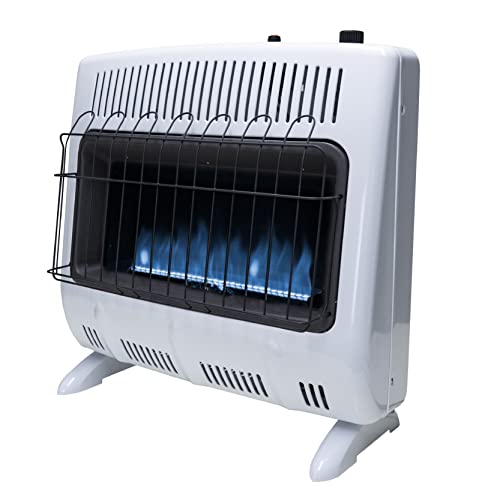
The Mr. Heater MHVFBF30NGT is a higher-capacity vent-free blue flame wall heater providing up to 30,000 BTU, designed to warm areas up to about 1,000 sq. ft. Its built-in thermostat and electric ignition simplify operation and temperature control. The blue flame design emphasizes convection heating for even warmth without forced air noise.
Call 888-896-7031 for Free Local HVAC Quotes – Compare and Save Today!
This unit is appropriate where larger bedroom spaces or connected additions need steady convection heat and where vent-free natural gas appliances are allowed. Important considerations include clearance requirements, the presence of an appropriate gas supply, and ensuring the space meets local codes and indoor air quality standards for vent-free combustion equipment.
Mr. Heater 4000 To 18000 BTU 3 Setting Portable LP Gas Heater
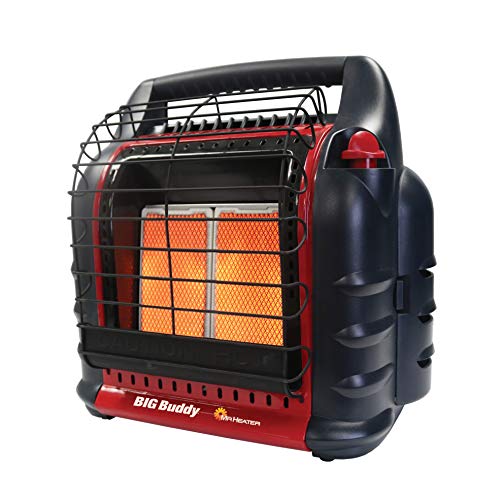
This portable propane heater offers selectable outputs of 4,000, 9,000, or 18,000 BTU and features a dual-tank connection option for extended runtime. It is designed for indoor and outdoor use, and includes a single control knob with a piezo igniter and an automatic safety shutoff in the event of tip-over.
Because it is portable and adjustable, it can serve as a supplemental bedroom heater where local regulations allow propane indoor use and where ventilation is adequate. The key strengths are portability and heat-level flexibility; users should verify fuel connections, clearance, and CO/CO2 monitoring when using propane inside living spaces.
Dreo Space Heater Portable Electric With Thermostat And Remote

This electric 1500W PTC ceramic heater is included as a non-combustion alternative to gas heaters for bedrooms. It combines a digital thermostat with a fine temperature increment (reported 1°F control range) and multiple safety sensors including tip-over and overheat protection. The unit emphasizes quick heat delivery and a compact footprint.
Call 888-896-7031 for Free Local HVAC Quotes – Compare and Save Today!
Electric heaters eliminate combustion-related indoor air concerns—no CO or combustion moisture—making them a useful comparison when safety or ventilation is a priority. The Dreo model also includes a 12-hour timer and remote control, helping maintain setback temperatures overnight.
Dreo 1500W Fast Heating Portable Heaters With Remote

This Dreo portable heater prioritizes fast warmth with a 70° oscillation range to distribute heat and a 1500W PTC ceramic core. It features multiple safety layers such as 24-hour auto-off, tip-over, and overheat protections, and is ETL-listed for indoor use. The wide-angle oscillation helps spread heat across a bedroom layout more evenly.
As an electric option, it provides a combustion-free comparison point for those deciding between gas and electric solutions based on ventilation, noise, and safety preferences.
Buying Guide: Choosing The Best Gas Heater For Bedroom
1. Vent-Free Versus Venting
Vent-Free (Blue Flame) heaters like the ProCom and Mr. Heater wall units deliver high efficiency because combustion products enter the room, creating immediate heat and humidifying air slightly. They are space-efficient and often suitable for bedrooms if permitted by codes and if the room is properly sized and ventilated.
Vented/Unit heaters (not typically used inside small bedrooms) exhaust combustion gases outdoors and are preferable where indoor air quality or stricter building codes disallow vent-free appliances.
2. Fuel Type And Supply
Decide between natural gas and propane (LP). Natural gas requires a gas line but offers continuous supply. Propane uses tanks and offers portability. Portable propane heaters (e.g., Mr. Heater 4k–18k BTU) can be moved between rooms but require safe tank handling and CO monitoring when used indoors.
3. Heater Size And BTU Capacity
Match BTU output to room size. As a rough guide: small bedrooms up to 300 sq. ft. can be served by 5,000–12,000 BTU vent-free units. Larger rooms or poorly insulated spaces may need 20,000–30,000 BTU. Oversized heaters can cycle less efficiently and may create uneven warmth.
4. Safety Features And Indoor Air Quality
- Carbon Monoxide (CO) Risk: Any combustion device creates CO risk. Install a battery-backed CO alarm and ensure compliance with local codes.
- Oxygen Depletion Safety (ODS): Many vent-free heaters include ODS or low-oxygen shutoff to prevent unsafe indoor air conditions.
- Tip-Over And Overheat Protection: Especially important for portable units.
- Clearance Requirements: Follow manufacturer minimum clearances to combustibles for wall and floor-mounted units.
5. Installation And Mounting
Wall-mounted vent-free heaters typically require fixed installation and sometimes professional gas hookup. Portable propane units require only tank and regulator setup but must be sited for stability and ventilation. Consider whether you need permanent installation or a temporary supplemental solution.
6. Controls And Thermostat Accuracy
Built-in thermostats and precise temperature control reduce wasted fuel and improve comfort. Electric heaters often provide finer temperature increments, while gas heaters typically offer reliable on/off thermostatic control. Remote or digital control can improve overnight convenience.
7. Noise, Air Movement, And Humidity Effects
Blue flame convection heaters are typically quieter than fan-forced units but may add slight humidity due to combustion products. Fan-assisted or electric ceramic heaters provide forced air circulation that can distribute heat faster but may produce noise.
8. Efficiency And Running Behavior
Vent-free gas heaters are nearly 100% efficient at the unit level because combustion heat stays indoors. However, whole-home efficiency depends on insulation and distribution. Portable propane units consume stored fuel; factor in tank capacity and run-time needs.
9. Regulatory And Local Code Considerations
Some regions restrict vent-free heaters in bedrooms or require specific clearances, alarms, or permits. Verify local building codes, landlord rules, and insurance requirements before installing a vent-free gas appliance in sleeping areas.
10. When To Choose Electric Instead
If indoor air quality, absence of a gas line, or code restrictions are concerns, electric PTC ceramic heaters are practical bedroom alternatives. They avoid combustion gases, produce no CO, and commonly include multiple safety features and precise thermostatic control.
Comparison Perspectives
Small Bedroom, Minimal Installation: ProCom BF10M-B is compact and can be floor or wall-mounted, suitable for spaces up to ~300 sq. ft. where vent-free units are allowed.
Larger Bedrooms Or Additions: The Mr. Heater 30,000 BTU wall unit provides higher output for bigger areas but requires adequate clearance and gas supply.
Temporary Or Portable Heat: The Mr. Heater 4k–18k portable propane unit provides flexible heat levels and placement, but indoor propane use mandates careful ventilation and monitoring.
Safety-Focused Or No-Gas Scenarios: Dreo electric options offer precise thermostats, ETL-listed safety features, and zero combustion byproducts, making them strong alternatives for bedrooms where gas is undesired or restricted.
Tips for Getting the Best HVAC Prices
- Prioritize Quality Over Cost
The most critical factor in any HVAC project is the quality of the installation. Don’t compromise on contractor expertise just to save money. - Check for Rebates
Always research current rebates and incentives — they can significantly reduce your overall cost. - Compare Multiple Quotes
Request at least three estimates before making your choice. You can click here to get three free quotes from local professionals. These quotes include available rebates and tax credits and automatically exclude unqualified contractors. - Negotiate Smartly
Once you've chosen a contractor, use the proven strategies from our guide — How Homeowners Can Negotiate with HVAC Dealers — to get the best possible final price.