
Propane forced air heaters offer high heat output for garages, workshops, and job sites, but indoor use requires careful attention to ventilation, clearance, and safety features. Below is a comparison of five propane forced-air heaters selected for performance and safety features commonly relevant for indoor or semi-enclosed spaces.
| Product | Brand | Key Feature |
|---|---|---|
| Mr. Heater MH60QFAV 60,000 BTU | Mr. Heater | QBT Quiet Burner, 30k–60k BTU |
| Mr. Heater 125,000 BTU F271390 | Mr. Heater | Quiet Burner, 10 ft hose & regulator |
| Flame King 60,000 BTU Portable Heater | Flame King | 1500 sq ft Coverage, safety shutoffs |
| Mr. Heater MH170QFAVT 170,000 BTU | Mr. Heater | 125k–170k BTU, high-output for large spaces |
| Dura Heat GFA125A 70k–125k BTU | Dura Heat | Variable output, long runtime on 100 lb cylinder |
Content Navigation
Mr. Heater MH60QFAV 60k BTU

Key Features: QBT Technology (Quieter Burner), Variable 30,000–60,000 BTU, runtime up to 14 hours on a 20 lb tank at low setting.
This model uses Quiet Burner Technology (QBT) to reduce operational noise, a benefit for indoor-adjacent spaces where noise matters. The variable output enables dialing heat to demand, which can reduce fuel use and control temperature more precisely. The listed runtime on a 20 lb tank at low setting helps estimate fuel needs for enclosed spaces, though continuous indoor operation requires strict ventilation planning. Built-in safety controls and proven brand support are strengths to consider when evaluating indoor suitability.
Mr. Heater 125k BTU F271390

Key Features: Quiet Burner Technology, 10 ft hose & regulator, high-temperature limit switch.
Call 888-896-7031 for Free Local HVAC Quotes – Compare and Save Today!
This higher-output option provides robust heating for larger enclosed or semi-enclosed spaces. The inclusion of a 10 ft hose and regulator simplifies installation flexibility for exterior tank placement. Quiet Burner reduces noise compared with older forced-air designs, and the high-temperature limit switch adds a thermal safety layer. Because of the higher BTU rating, this unit is best for well-ventilated garages or commercial spaces rather than tightly sealed living areas.
Flame King 60k BTU Portable Heater

Key Features: Heating Coverage ~1500 sq ft, built-in safety fuel shutoff, fire detection, tilt shutoff, auto piezo ignition, gas control button.
Flame King emphasizes safety with a suite of shutoff systems including fuel shutoff, tilt and fire detection shutoffs. The listed coverage of approximately 1500 square feet gives a practical sense of expected output. Auto piezo ignition and simple gas control improve usability. For indoor or semi-enclosed use, the safety features are meaningful, but attention to ventilation and combustion byproduct management remains essential. This unit may suit workshops and garages with active ventilation.
Mr. Heater MH170QFAVT 170k BTU

Key Features: 125,000–170,000 BTU, heats up to 4,250 sq ft, high-temperature limit switch, thermoelectric safety valves, Quiet Burner Technology.
Call 888-896-7031 for Free Local HVAC Quotes – Compare and Save Today!
This heavy-duty model is designed for very large spaces and job sites. The variable high output range supports rapid warm-up for expansive garages, warehouses or workshop bays. Multiple safety features including thermoelectric safety valves and a limit switch enhance protection against overheating and fuel flow issues. Given the significant BTU capacity, match this unit only to suitably ventilated, large-volume indoor spaces or semi-enclosed areas to avoid accumulation of combustion products.
Dura Heat GFA125A 70k–125k BTU
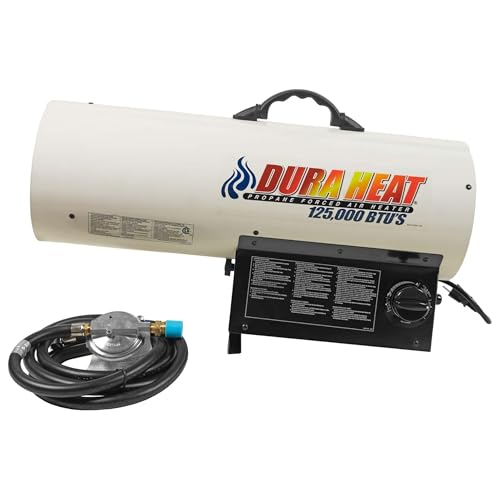
Key Features: Variable output 70,000–125,000 BTU, simple operation, operates 17–30 hours on 100 lb propane cylinder.
Dura Heat’s adjustable output provides flexibility to tune heat to space size and fuel availability. Long runtime on a large cylinder benefits extended operation in less-accessible job sites or garages. Simpler controls may appeal if you prefer fewer features and straightforward operation. As with other propane forced air units, verify ventilation and clearances, and use only where carbon monoxide and combustion byproduct risks can be properly mitigated.
Buying Guide: Choosing A Propane Forced Air Heater For Indoor Use
Using a propane forced air heater indoors requires careful selection based on the space, ventilation capability, safety features, and regulatory compliance. Below are the core considerations to evaluate from multiple comparison angles.
Tips for Getting the Best HVAC Prices
- Prioritize Quality Over Cost
The most critical factor in any HVAC project is the quality of the installation. Don’t compromise on contractor expertise just to save money. - Check for Rebates
Always research current rebates and incentives — they can significantly reduce your overall cost. - Compare Multiple Quotes
Request at least three estimates before making your choice. You can click here to get three free quotes from local professionals. These quotes include available rebates and tax credits and automatically exclude unqualified contractors. - Negotiate Smartly
Once you've chosen a contractor, use the proven strategies from our guide — How Homeowners Can Negotiate with HVAC Dealers — to get the best possible final price.
Heat Output And Space Size
- Match BTU To Volume: Calculate cubic feet (floor area × ceiling height) and choose a unit whose BTU output suits that volume. Higher BTU units heat faster but need more ventilation.
- Variable Output: Units with variable BTU ranges (e.g., 30k–60k) allow finer control and can reduce fuel use and overshoot in smaller spaces.
Ventilation And Indoor Safety
- Ventilation Needs: Propane combustion generates CO2, water vapor, and carbon monoxide. Ensure mechanical or natural ventilation adequate to prevent hazardous buildup.
- CO Monitoring: Always install a certified carbon monoxide detector when operating combustion heaters indoors or in attached garages.
- Safety Shutoffs: Prefer models with tilt, flame, and high-temperature shutoff to reduce hazards from tipping, flame failure, or overheating.
Noise, Comfort, And Work Environment
- Quiet Burner Tech: Useful in workshops and semi-enclosed living-adjacent spaces; reduces distraction while maintaining output.
- Air Movement: Forced-air units move a lot of air; consider drafts and placement relative to workstations.
Fuel Supply And Runtime
- Tank Type: Smaller 20 lb tanks offer portability but shorter runtimes; 100 lb cylinders extend runtime but require safe placement outside and proper hose/regulator length.
- Hose & Regulator Included: Models that include a 10 ft hose/regulator simplify safer exterior tank placement and installation options.
Installation, Clearance, And Local Codes
- Clearance Requirements: Follow the manufacturer’s specified clearances to combustibles for safe placement indoors.
- Local Building Codes: Some jurisdictions restrict use of unvented combustion heaters indoors; check local codes and insurance requirements.
- Professional Setup: For large hardwired or modified installations, seek professional HVAC or licensed technician support.
Maintenance And Durability
- Serviceability: Choose brands with accessible parts and service documentation to support long-term maintenance.
- Construction: Rugged steel and durable components suit jobsite use; stainless finishes resist corrosion in damp environments.
Comparison Perspectives
- Small Garage/Workshop: Consider a 60k variable-output unit with Quiet Burner (e.g., Mr. Heater MH60QFAV or Flame King 60k) for balance of size, noise, and control.
- Medium To Large Bay: 70k–125k models like the Dura Heat GFA125A or Mr. Heater 125k provide extended coverage while offering variable control and included regulators.
- Large Industrial Space: High-output units such as the Mr. Heater MH170QFAVT fit large spaces but demand the strictest ventilation and safety compliance.
- Noise-Sensitive Environments: Prioritize Quiet Burner Technology to reduce interruptions while maintaining forced-air performance.
Practical Safety Checklist Before Use
- Install and test a carbon monoxide detector and smoke alarm in the space.
- Ensure adequate ventilation—either a fresh-air inlet or periodic airing to avoid gas accumulation.
- Maintain clearance from combustibles and keep flammable materials well away from the heater.
- Use the correct regulator and hose length for safe tank placement outside the enclosed space when possible.
- Follow the manufacturer’s maintenance schedule and inspect fuel connections regularly for leaks.