
Quick Overview: This guide reviews selected forced air electric heaters that operate on 120V or are common alternatives for home garages, workshops, and small rooms. The table summarizes each model’s primary use and notable features to help you compare options quickly.
| Product | Type / Voltage | Key Feature |
|---|---|---|
| Dura Heat EUH1465 Electric Forced Air Heater | Portable / 120V | 1500W PTC Ceramic, Pivoting Base |
| NewAir NGH160GA00 Portable Garage Heater | Portable / 120V | Cool-To-Touch Design, 200 CFM Fan |
| Mr. Heater 1500W Portable Ceramic Forced Air | Portable / 120V | 1500W, Heats Up To ~170 Sq Ft |
| DEWALT DXH1000TS Forced Air Electric Heater | Jobsite / Dual-Voltage Options (Higher Amp) | Dual Output, Thermal Protection |
| Dura Heat EWH5510 Electric Forced Air Heater (Large) | Hard-Wired / 240V | High Capacity Garage Heater, Remote Thermostat |
Content Navigation
- Dura Heat EUH1465 Electric Forced Air Heater With Pivoting Base
- NewAir NGH160GA00 120V Portable Garage Heater
- Mr. Heater 1500W Portable Ceramic Forced Air Electric Heater
- DeWalt DXH1000TS Forced Air Electric Heater
- Dura Heat EWH5510 Electric Forced Air Heater With Remote Control
- Buying Guide: Choosing The Right Forced Air Electric Heater
Dura Heat EUH1465 Electric Forced Air Heater With Pivoting Base
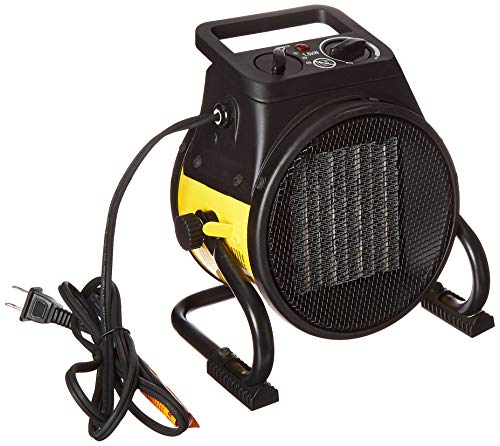
This forced air heater is a compact 120V unit delivering 1500W via a PTC ceramic element. The product’s rugged steel construction targets garage and workshop use, while the pivoting base lets you direct airflow where needed. Controls include heat and fan-only settings to act as both heaters and circulators. Safety and portability make it suitable for small enclosed spaces. The unit’s feature set emphasizes quick warmth, durable build, and simple operation without hard-wiring.
NewAir NGH160GA00 120V Portable Garage Heater

The NewAir NGH160GA00 is a 120V portable forced-air heater designed with multiple safety features, including a cool-to-the-touch exterior, internal thermostat, and automatic shut-off to reduce overheating risk. The unit provides two heat modes, a tilting head for directional warmth, and an ergonomic handle for portability. A 200 CFM fan and a ceramic heating plate aim for rapid heat delivery in small garages and workspaces. The design balances safety, mobility, and straightforward controls for on-demand spot heating.
Mr. Heater 1500W Portable Ceramic Forced Air Electric Heater

Call 888-896-7031 for Free Local HVAC Quotes – Compare and Save Today!
This model provides 1500 watts at 120 volts, rated around 5,118 BTU and suitable for rooms roughly up to 170 sq ft depending on insulation. The unit uses a ceramic heating element with forced-air circulation to distribute warmth quickly. The compact footprint and intended portability make it appropriate for small job sites, workshops, or supplemental zone heating. Features focus on delivering steady output from a standard 120V circuit while remaining transportable and easy to place for targeted warmth.
DeWalt DXH1000TS Forced Air Electric Heater

The DEWALT DXH1000TS targets jobsite and commercial applications with robust construction and a dual output design. While not a 120V-only product, it offers selectable higher-power configurations and a thermal protection system. The heater’s proprietary dual coil support is intended for dependable performance under heavy use. This model is relevant as an alternative when 120V portable options are insufficient and higher-capacity or hard-wired solutions are required on larger jobsites.
Dura Heat EWH5510 Electric Forced Air Heater With Remote Control

The Dura Heat EWH5510 is a high-capacity hard-wired garage heater that operates on higher voltage (240V, 5,000W) and is included as a relevant alternative for larger spaces where 120V units cannot meet heating demand. It features remote control with adjustable thermostat, LED display, and is intended for professional installation. This model highlights how forced-air electric heating scales from portable 120V units to permanently mounted high-output systems for garages and workshops needing broader coverage.
Buying Guide: Choosing The Right Forced Air Electric Heater
Voltage And Circuit Capacity: Verify whether your space supports 120V
Call 888-896-7031 for Free Local HVAC Quotes – Compare and Save Today!
Wattage And Coverage: Match heater wattage to room size. A 1500W (120V) forced-air heater generally suits small rooms or focused spot heating. Larger garages often need higher wattage or multiple units; consider 240V hard-wired options for whole-space heating.
Forced Air vs Convection: Forced-air heaters use a fan to distribute heat quickly and provide directional warmth. Convection heaters radiate heat more slowly and evenly. Choose forced air when you need rapid temperature rise or directional heating; choose convection for quiet, uniform warmth.
Safety Features: Look for overheat protection, cool-to-touch surfaces, tip-over switches, and automatic shut-off. These are important for workshops, garages, and spaces where dust or flammable materials may be present.
Portability And Mounting: Portable units are flexible and ideal for temporary heat. Ceiling- or wall-mounted forced-air units free floor space and can heat larger areas but typically require professional installation and higher voltage.
Airflow And Fan Capacity: Check the fan specification (CFM) for forced-air units; higher CFM moves more warm air faster. Directional louvers, tilting heads, or pivot bases let you target warmth where needed.
Thermostat And Controls: Integrated thermostats, adjustable heat settings, and remote controls improve comfort and efficiency. Digital displays and programmable thermostats help maintain set temperatures and reduce energy use.
Durability And Construction: Metal housings and heavy-gauge steel suit harsh jobsite environments; plastic-bodied units are lighter but may be less durable. Consider corrosion resistance and ingress protection when used in damp or dusty spaces.
Installation And Professional Requirements: Portable 120V units usually require no installation beyond plugging in. Hard-wired or ceiling-mounted heaters (often 240V) require proper electrical work and possibly permits; consult a licensed electrician.
Noise Level: Forced-air heaters have fans and may be noisier than convectors. If noise matters for your workspace, check manufacturer noise specifications or choose lower-speed fan settings.
Energy Use And Efficiency: Electric forced-air heaters convert nearly all input power to heat, but operating costs depend on wattage and runtime. Use thermostats and timers to avoid unnecessary energy use.
Comparison Perspectives:
- Small Room/Spot Heat: 120V, 1500W ceramic forced-air models offer portability and quick warmth.
- Whole Garage/Workshop: Consider hard-wired 240V forced-air or multiple 120V units for comprehensive coverage.
- Jobsite Durability: Look to heavy-duty models with thermal protection and metal housings for rugged conditions.
- Safety-First Environments: Choose cool-to-touch designs, automatic shut-off, and built-in thermostats to minimize risk.
Final Selection Tips: Identify the area you need to heat, confirm available electrical supply, prioritize safety features, and pick a forced-air model with the appropriate wattage and airflow for your space.
Tips for Getting the Best HVAC Prices
- Prioritize Quality Over Cost
The most critical factor in any HVAC project is the quality of the installation. Don’t compromise on contractor expertise just to save money. - Check for Rebates
Always research current rebates and incentives — they can significantly reduce your overall cost. - Compare Multiple Quotes
Request at least three estimates before making your choice. You can click here to get three free quotes from local professionals. These quotes include available rebates and tax credits and automatically exclude unqualified contractors. - Negotiate Smartly
Once you've chosen a contractor, use the proven strategies from our guide — How Homeowners Can Negotiate with HVAC Dealers — to get the best possible final price.