
Choosing a whole house electric tankless water heater involves matching capacity, electrical requirements, and flow needs to your home. The table below summarizes five relevant electric tankless units suited for whole-house or multi-point use.
| Product | Key Spec | Best For |
|---|---|---|
| WINTEMP 27kW 240V | Up To 6.3 GPM, WiFi, 27kW | Higher Hot Water Demand / Multiple Fixtures |
| Rheem RTEX-24 24kW 240V | Up To 5.9 GPM, 24kW, Dial Control | Strong Mid-Range Whole-House Flow |
| Rheem 18kW 240V Tankless | Up To 4.4 GPM, Digital Thermostatic Control | Moderate Demand, Accurate Temp Control |
| Orbek 18kW 240V | Up To 4.17 GPM, 18kW, ETL | 2–3 Points Of Use, Energy Efficiency |
| ThermoMate 18kW 208–240V | Self-Modulating, Digital Display, 18kW | Energy-Saving Whole-House Replacement |
Content Navigation
- WINTEMP 27kW 240V Whole House Tankless Heater
- Rheem RTEX-24 24kW Electric Tankless Heater
- Rheem 18kW 240V Tankless Electric Water Heater
- Orbek 18kW 240V Tankless Water Heater
- ThermoMate 18kW 208–240V On-Demand Heater
- Buying Guide: How To Choose A Whole House Electric Tankless Heater
- 1. Flow Rate (GPM) And Household Demand
- 2. Electrical Service And Breaker Requirements
- 3. Energy Efficiency And Self-Modulation
- 4. Maintenance And Longevity
- 5. Controls, Connectivity, And Temperature Precision
- 6. Certification And Safety
- 7. Climate And Inlet Water Temperature
- 8. Space, Mounting, And Plumbing Connections
- 9. Real-World Performance And Manufacturer Data
- 10. Professional Sizing And Installation
WINTEMP 27kW 240V Whole House Tankless Heater

Capacity And Output: The WINTEMP unit is rated at 27kW and claims up to 6.3 GPM depending on inlet temperature and household conditions. This positions it toward the higher end of electric tankless models for multi-fixture use.
Electrical And Installation Notes: Requires substantial electrical service: three 40A double-pole breakers and heavy-gauge wiring (3 x 8/2 AWG), and a recommended 250A household service. Check panel capacity and conduit routing before selection.
Control And Efficiency: Self-modulating control adjusts power by incoming water temperature and flow, aiming for stable output and efficient power use. Features an LED display and WiFi control for remote monitoring.
Use Cases: Suited for households with multiple simultaneous showers or appliances where higher flow rates are needed. Evaluate home electrical capacity and professional installation costs when considering this unit.
Call 888-896-7031 for Free Local HVAC Quotes – Compare and Save Today!
Rheem RTEX-24 24kW Electric Tankless Heater
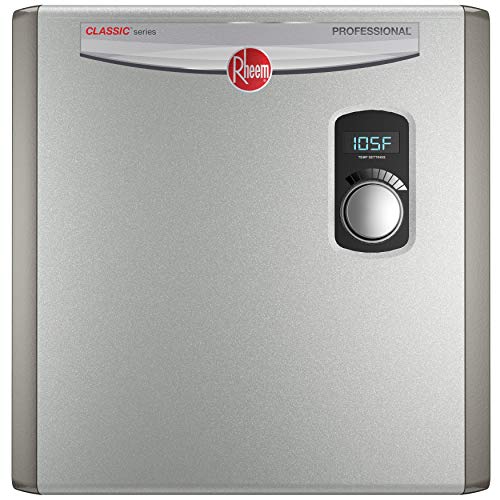
Capacity And Flow: The RTEX-24 is a 24kW model with a manufacturer-stated flow up to 5.9 GPM, making it a strong option for many whole-house applications in moderate climates.
Controls And Operation: Features an ON/OFF dial control with an adjustable digital temperature display. The unit uses self-modulating power control to match demand and maintain temperature.
Installation Considerations: Requires appropriate 240V circuit sizing and professional wiring. Wall-mounted design saves space and is common for retrofits replacing older tank systems.
Performance Notes: For homes with colder inlet water, expected GPM will be lower at high temperature rises. Factor in local inlet water temperature when estimating real-world performance.
Rheem 18kW 240V Tankless Electric Water Heater
Call 888-896-7031 for Free Local HVAC Quotes – Compare and Save Today!
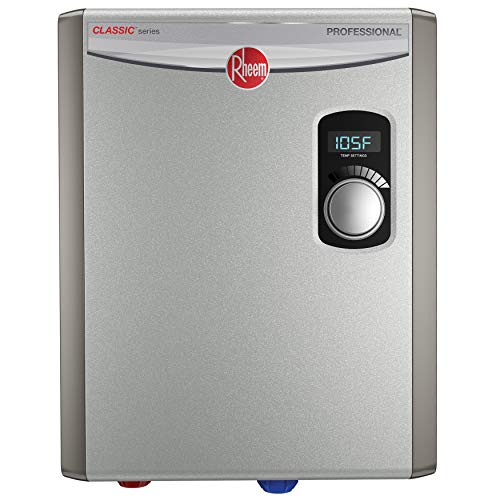
Capacity And Flow: This Rheem 18kW model lists a flow rate up to 4.4 GPM, suitable for smaller whole-house setups or homes with fewer simultaneous hot water demands.
Controls And Accuracy: Includes an external digital thermostatic control with LED display and +/-1 degree accuracy. Useful where precise temperature control is important for comfort or mixed plumbing.
Construction And Serviceability: Uses copper immersion heating elements that are field serviceable. The unit emphasizes durable components and advanced self-modulation to adjust power with demand.
Application: A solid fit for single-family homes with moderate hot water use or as a primary heater in warmer climates where the required temperature rise is lower.
Orbek 18kW 240V Tankless Water Heater

Capacity And Wiring Requirements: The Orbek 18kW requires two 240V/40A double-pole breakers and 8 AWG wiring. It reports up to 4.17 GPM for 2–3 points of use.
Efficiency And Design: Marketed for high energy efficiency with separation between water and electrical elements to reduce scale and corrosion. The manufacturer highlights quick heat-up times and potential energy savings versus tank heaters.
Installation Guidance: Requires 3/4″ NPT water connections. Confirm breaker sizing and wire gauges during planning, and consider local code for circuit protection and bonding.
Suitable Use: Designed for small-to-moderate whole-house use or homes with staggered demand across fixtures. Works well where space savings and fast delivery are priorities.
ThermoMate 18kW 208–240V On-Demand Heater
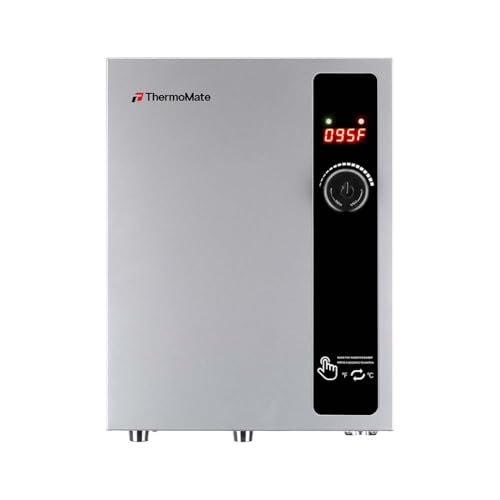
Performance And Response: ThermoMate advertises hot water in as little as three seconds with self-modulating technology to deliver 99.8% thermal efficiency. Requires significant breaker capacity (note manufacturer guidance for 80A breaker setup in some configurations).
Controls And Maintenance: Features digital temperature display Adjustable in 1°F increments and separation of heating elements from the water path to reduce scale accumulation.
Energy Saving Claims: Self-modulation reduces energy usage when flow is low and eliminates standby loss. Suitable where consistent output and long-term maintenance reduction are goals.
Fit For: Homes upgrading from older tank units seeking improved efficiency and stable temperature control without tank storage.
Buying Guide: How To Choose A Whole House Electric Tankless Heater
Selecting a whole house electric tankless water heater requires matching unit capability to household demand, electrical infrastructure, and local conditions. The following factors summarize key purchase considerations.
Tips for Getting the Best HVAC Prices
- Prioritize Quality Over Cost
The most critical factor in any HVAC project is the quality of the installation. Don’t compromise on contractor expertise just to save money. - Check for Rebates
Always research current rebates and incentives — they can significantly reduce your overall cost. - Compare Multiple Quotes
Request at least three estimates before making your choice. You can click here to get three free quotes from local professionals. These quotes include available rebates and tax credits and automatically exclude unqualified contractors. - Negotiate Smartly
Once you've chosen a contractor, use the proven strategies from our guide — How Homeowners Can Negotiate with HVAC Dealers — to get the best possible final price.
1. Flow Rate (GPM) And Household Demand
- Estimate Peak Demand: Add expected simultaneous fixture flows (example: shower ~1.5–2.5 GPM, kitchen sink ~1–2 GPM). Choose a unit with sufficient GPM at the temperature rise you need.
- Temperature Rise: Calculate inlet water temp (seasonal local average) and desired output temp. Higher required rise reduces real-world GPM capacity.
2. Electrical Service And Breaker Requirements
- Panel Capacity: Many whole-house electric tankless units require multiple high-amp double-pole breakers and heavy-gauge wiring. Confirm your main panel and service amperage.
- Installation Costs: Upgrading panels or adding subpanels can be a significant portion of total project cost. Factor professional electrician quotes into your decision.
3. Energy Efficiency And Self-Modulation
- Self-Modulating Controls: Units that adjust power based on flow and inlet temp reduce energy use and maintain stable output.
- Standby Loss: Tankless models have near-zero standby loss compared to tank heaters, but real savings depend on usage patterns.
4. Maintenance And Longevity
- Scale Management: Hard water increases scale. Models with separated heating elements or easier element access simplify maintenance.
- Serviceability: Field-serviceable elements and clear access reduce repair time and cost.
5. Controls, Connectivity, And Temperature Precision
- Digital Thermostatic Controls: Precise temperature control helps prevent scalding and improves comfort.
- Remote/WiFi Features: Remote monitoring and control can assist in diagnostics and convenience but verify security and app support.
6. Certification And Safety
- Certifications: Look for ETL, CSA, or UL certifications which indicate third-party testing for safety and performance.
- Local Code Compliance: Verify that the chosen model and installation meet local electrical and plumbing codes.
7. Climate And Inlet Water Temperature
- Colder Climates: Require higher kW ratings to achieve desired temperature rises at acceptable flow rates.
- Warmer Climates: Lower kW units may be sufficient and more cost-effective.
8. Space, Mounting, And Plumbing Connections
- Wall-Mounted Compact Units: Save floor space and are common for retrofits in utility closets or garages.
- Connection Sizes: Confirm NPT sizes and plumbing fittings for existing piping to minimize adapter needs.
9. Real-World Performance And Manufacturer Data
- Check Temperature Rise Charts: Compare manufacturer GPM vs. temperature rise charts against your local inlet temperature.
- Independent Reviews And Installation Reports: Look for verified installation feedback about actual performance under load.
10. Professional Sizing And Installation
- Electrical Inspection: Have an electrician confirm service capacity, breaker sizing, and wire gauge needs before purchase.
- Plumbing Considerations: Consider pressure regulation, flow restrictors, or mixing valves to optimize comfort and protect pipes.