
Choosing the right hanging shop heater depends on fuel type, mounting style, and shop size. Below is a quick comparison of five well-suited units to consider for ceiling or suspended installation in garages, workshops, and industrial spaces.
| Product | Type | Mounting | Key Feature |
|---|---|---|---|
| Reznor UDXC-60 | Natural Gas | Ceiling/Hanging | 60,000 BTU, high efficiency |
| TEMPWARE 7500W | Electric Fan-Forced | Ceiling/Hardwired | Adjustable louvers, ECO mode |
| Comfort Zone CZ220BK | Electric Fan-Forced | Ceiling/Hardwired | Robust steel construction |
| ALORAIR HydroX H100A | Hydronic Water-To-Air | Hanging/Water-Based | 100,000 BTU equiv., remote control |
| VEVOR 10000W | Electric High-Power | Wall/Ceiling Mount | Digital control, high wattage |
Content Navigation
- Reznor 60,000 BTU Gas Ceiling Heater
- TEMPWARE 7500W Ceiling Electric Heater
- Comfort Zone Ceiling Mount Garage Heater
- ALORAIR 100,000 BTU Hydronic Hanging Heater
- VEVOR 10000W Electric Wall/Ceiling Heater
- Buying Guide: How To Choose A Hanging Shop Heater
- 1. Fuel Type And Energy Infrastructure
- 2. Heating Capacity And Coverage
- 3. Mounting, Clearance, And Airflow
- 4. Controls, Timers, And Automation
- 5. Safety Features And Certifications
- 6. Durability And Environment
- 7. Efficiency And Operating Cost
- 8. Installation And Maintenance
- 9. Comparing Key Perspectives
- 10. Practical Selection Checklist
Reznor 60,000 BTU Gas Ceiling Heater

The Reznor UDXC-60 is a natural gas hanging unit designed for indoor commercial and residential spaces such as garages and workshops. It provides up to 60,000 BTU with two operating levels for variable output. The model lists an 83% thermal efficiency rating and includes threaded-nut suspension points for ceiling mounting. The design uses a low-static propeller fan for forced-air circulation and is intended for fixed installation with proper venting and gas hookups. This unit targets larger volumes and continuous operation scenarios where gas supply and professional installation are available.
TEMPWARE 7500W Ceiling Electric Heater
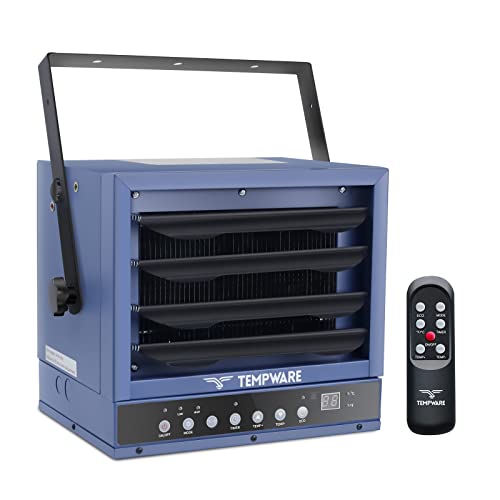
TEMPWARE’s 7500-watt electric unit is a hardwired ceiling heater with adjustable louvers and variable mounting angle for directional airflow. It features two heat settings and an ECO mode that responds to a built-in temperature sensor. The heater lists a maximum coverage claim suitable for larger garages and offers a 12-hour timer and full-function remote for control. Safety features include overheat protection and a thermostat range from 45°F to 95°F. This model is oriented to users who prefer high-output electric heating without combustion or venting.
Comfort Zone Ceiling Mount Garage Heater

Call 888-896-7031 for Free Local HVAC Quotes – Compare and Save Today!
The Comfort Zone CZ220BK is a fan-forced ceiling heater built from heavy-gauge steel for commercial durability. Its ceiling-mount configuration preserves floor space and the integrated louvers plus adjustable mounting angle allow targeted heat distribution. The unit emphasizes robust construction and thermal cut-out overheat protection. It is suitable for workshops and storage areas that need dependable convection heating and where off-floor mounting is preferred to protect the unit and conserve workspace.
ALORAIR 100,000 BTU Hydronic Hanging Heater

The ALORAIR HydroX H100A is a hydronic water-to-air heat exchanger designed for hanging installation and integration with a hot-water source such as an outdoor wood furnace or boiler. It claims industrial-grade materials with galvanized housing and copper piping, reusable air filter, and a centrifugal blower delivering high airflow. The system includes smart auto-temperature control and remote operation for automatic fan activation when water temperature reaches the set point. This approach suits shops with existing hydronic systems or those willing to install a water-based heat supply for efficient zoned heating.
VEVOR 10000W Electric Wall/Ceiling Heater

The VEVOR 10000-watt unit is a high-power electric heater that supports both wall and ceiling mount. It features digital controls, a precise temperature regulation system with around 2°F stability claim, and overheat automatic power-off protection. Constructed with SPCC cold-rolled steel, it emphasizes structural durability and even heat distribution via strong circulation. With multiple power levels, this model fits workshops requiring higher wattage electric heat without gas lines, and where hardwiring and sufficient electrical capacity are available.
Buying Guide: How To Choose A Hanging Shop Heater
Selecting the right hanging shop heater involves evaluating several objective factors. Below are the key considerations to match heater type and capacity to your space, safety needs, and installation constraints.
Call 888-896-7031 for Free Local HVAC Quotes – Compare and Save Today!
Tips for Getting the Best HVAC Prices
- Prioritize Quality Over Cost
The most critical factor in any HVAC project is the quality of the installation. Don’t compromise on contractor expertise just to save money. - Check for Rebates
Always research current rebates and incentives — they can significantly reduce your overall cost. - Compare Multiple Quotes
Request at least three estimates before making your choice. You can click here to get three free quotes from local professionals. These quotes include available rebates and tax credits and automatically exclude unqualified contractors. - Negotiate Smartly
Once you've chosen a contractor, use the proven strategies from our guide — How Homeowners Can Negotiate with HVAC Dealers — to get the best possible final price.
1. Fuel Type And Energy Infrastructure
- Electric Heaters: Simplest installation when 240V circuits are available; no combustion, no venting. Suitable for most residential garages and workshops but require adequate electrical service for high-watt models.
- Natural Gas/Propane Heaters: Provide high BTU output and lower operating cost where gas supply exists. Require gas hookups, combustion clearance, and often professional installation and venting considerations for indoor units.
- Hydronic (Water-To-Air): Integrates with boilers or outdoor furnaces; efficient for large or zoned systems. Requires plumbing, water source, and associated infrastructure.
2. Heating Capacity And Coverage
- Use BTU ratings for gas/hydronic units and wattage for electric to estimate coverage. Consider ceiling height, insulation level, and open vs. partitioned space.
- For large, poorly insulated shops, choose higher BTU/wattage or multiple units for even distribution.
3. Mounting, Clearance, And Airflow
- Hanging/Ceiling Mount: Maximizes floor space, protects units from damage, and spreads warm air from above. Check listed suspension points and hardware requirements.
- Adjustable Louvers & Angles: Useful to direct heat toward work areas or doors.
- Ceiling Height: Higher ceilings may require more powerful units or fans to push heat down to work level.
4. Controls, Timers, And Automation
- Thermostatic control and timers improve energy management and comfort by matching output to demand.
- Remote control, Wi‑Fi, or smart integration adds convenience for pre-heating or scheduling operations.
5. Safety Features And Certifications
- Look for overheat protection, thermal cut-out switches, tip-over switches (for portable), and ETL/UL listings for electrical safety.
- Gas units require proper venting and may need certified installers to meet local codes.
6. Durability And Environment
- Shop environments can be dusty, humid, or corrosive. Heavy-gauge steel, galvanized housings, and washable filters extend service life.
- IP rating and outdoor suitability matter if the unit will be exposed to open doors or semi-outdoor spaces.
7. Efficiency And Operating Cost
- Compare thermal efficiency ratings for gas units and note that electric units convert nearly all input to heat but may be more expensive to run depending on electricity rates.
- Hydronic systems can be efficient when paired with low-cost heat sources (wood boilers, etc.).
8. Installation And Maintenance
- Hardwired electric and gas units typically require professional installation to ensure safe connections and compliance with local building codes.
- Plan for periodic filter cleaning, fan inspection, and checking mounting hardware for vibration or loosening.
9. Comparing Key Perspectives
- Upfront Complexity: Electric units are often easiest; gas and hydronic models need utility connections and more complex setup.
- Long-Term Operating Costs: Gas and hydronic systems may offer lower operational cost per heat output in some regions; electric is predictable and zero-combustion.
- Control And Zoning: Hydronic and some electric models offer precise zoning; gas units tend to heat large volumes quickly but may be less suited to fine zoning without dampers.
- Noise And Comfort: Fan-forced units produce circulation noise; hydronic exchangers with centrifugal blowers may offer quieter operation at higher airflow.
10. Practical Selection Checklist
- Measure shop volume and note ceiling height.
- Verify electrical panel capacity or availability of gas lines.
- Decide on mounting preference (hanging vs. flush vs. wall).
- Prioritize safety certifications and professional installation if required.
- Choose features you will use: timers, remote, auto-temperature control, directional louvers.