
Choosing the right RV wall heater depends on installation type, power limits, safety features, and space constraints. The table below summarizes five top-rated wall heaters suitable for RVs and compact living spaces, including plug-in and hardwired models.
| Product | Type | Key Feature |
|---|---|---|
| Heat Storm HS-1500-PHX-WIFI Infrared Heater | Wall mounted (hard-mount) | Wi‑Fi control, digital thermostat |
| Suburban Wall Mount RV Electric Heater (2691ABK) | Wall mounted (RV-specific) | Slim profile, adjustable thermostat |
| Dreo IP24 Electric Space Heater (Bathroom/RV) | Wall mounted (plug/ALCI or hardwire) | ALCI plug, IP24 splash rating |
| ENVI Plug-in Electric Panel Wall Heaters | Plug-in panel | Fan-less silent convection, low-wattage |
| GiveBest 800W Plug-in Wall Space Heater | Plug-in outlet heater | Compact, rotating plug, ECO mode |
Content Navigation
- Heat Storm HS-1500-PHX-WIFI Infrared Heater, Wifi Wall Mounted
- Suburban Wall Mount RV Electric Heater, Energy Efficient (2691ABK)
- Dreo Smart Wall Heater, IP24 Electric Space Heater with ALCI Plug
- Envi Plug-in Electric Panel Wall Heaters For Indoor Use
- GiveBest 800W Plug-in Wall Space Heater With Remote
- Buying Guide: How To Choose An RV Wall Heater
Heat Storm HS-1500-PHX-WIFI Infrared Heater, Wifi Wall Mounted

This wall-mounted infrared heater is designed to save floor space while delivering radiant heat. It includes a Wi‑Fi enabled control that allows temperature adjustments from a smartphone. The unit comes with a touchscreen digital thermostat and a remote for manual control.
- Key Features: Wi‑Fi control, tip-over safety shutoff, touchscreen with digital thermostat, remote included.
- Installation: Intended as a wall-mounted unit; mounting hardware and clearance should be checked against RV cabinetry and power availability.
- Suitability: Best for owners who want remote scheduling and smart-home integration in a compact form.
Infrared elements often heat objects and occupants directly rather than rapidly changing air temperature. For small cabinets or dinette areas where directed warmth is desired, the HS-1500 provides an efficient footprint while keeping the floor clear.
Suburban Wall Mount RV Electric Heater, Energy Efficient (2691ABK)

The Suburban 2691ABK is a purpose-built RV wall heater with a slim profile that minimizes intrusion into living space. The unit is less than 5 inches thick and is designed for discreet placement on RV walls.
Call 888-896-7031 for Free Local HVAC Quotes – Compare and Save Today!
- Key Features: Slim profile, adjustable thermostat, variable heat settings, single-speed internal fan for gentle air distribution.
- Installation: Wall-mounted with mounting bracket options for RV interiors; follows common RV wiring and venting practices.
- Suitability: Ideal for RV installations where maximizing interior space and maintaining OEM-style integration are priorities.
Because Suburban models are often used in recreational vehicles, this heater aligns with common RV power setups and fitment constraints. The internal fan offers circulation, which can warm air faster than purely radiant units in enclosed compartments.
Dreo Smart Wall Heater, IP24 Electric Space Heater with ALCI Plug

The Dreo IP24 model combines safety-focused features with smart controls. An ALCI plug and IP24 splash rating make it suitable for moist environments like bathrooms and some RV wet-bath setups. It supports app and voice control while offering manual touch controls and remote operation.
- Key Features: ALCI plug, IP24 rating, overheat protection, touch panel, remote, Dreo app and Alexa compatibility, 30° manual adjustment of airflow.
- Installation: Offers flexible mounting options; ALCI plug can simplify plug-in installations where hardwiring isn’t desired.
- Suitability: Appropriate for RV owners who prioritize safety around water sources and want smart-home connectivity.
The IP24 rating and ALCI protection are practical for RV bathrooms and wet areas. For confined RV spaces, the directional airflow and thermostat accuracy help maintain a consistent cabin temperature without frequent cycling.
Envi Plug-in Electric Panel Wall Heaters For Indoor Use
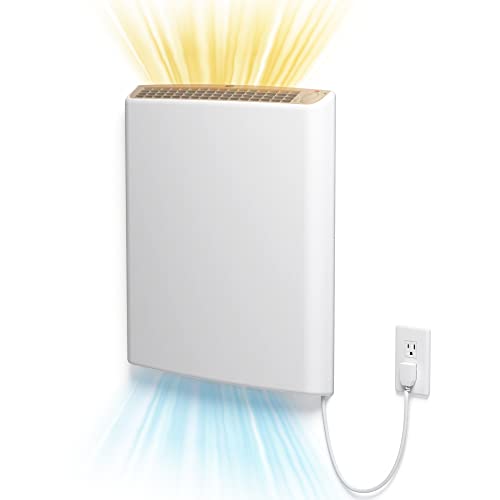
ENVI panel heaters rely on quiet, fan-less convection called “Stack Convection.” They operate at a low surface temperature and are advertised to run 24/7 for supplemental heat without the noise of blower fans.
Call 888-896-7031 for Free Local HVAC Quotes – Compare and Save Today!
- Key Features: Energy-efficient low-wattage design, cool operating surface (~90°F), wall-sense safety sensor that cuts power if removed, silent fan-less operation.
- Installation: Plug-in design intended for quick mounting; minimal installation time is required.
- Suitability: Useful for users seeking a silent, low-maintenance panel to provide steady background heat in living areas or sleeping spaces.
Panel heaters like this are often chosen to maintain baseline comfort while other heating systems are off. In RV contexts with limited electrical capability, match the unit’s wattage to the available circuit and inverter capacity to avoid overloads.
GiveBest 800W Plug-in Wall Space Heater With Remote

The GiveBest 800W plug-in heater is engineered for tight spaces and outlets commonly found in RVs. Its 180° rotating plug provides flexible fitment in awkward outlet orientations, and ECO mode adapts power use to room temperature.
- Key Features: 180° rotating plug, two heat settings (400W/800W), ECO mode, ±1°F thermostat accuracy, 12-hour timer, low-noise operation.
- Installation: Simple plug-in mounting; no hardwiring required.
- Suitability: Intended for small compartments, bunks, or bathrooms where a compact outlet heater is preferred.
Compact plug-in heaters can be convenient for renters or for users who prefer portable units. Verify the RV outlet amperage and whether the outlet is on a shared circuit before continuous use to prevent tripping breakers.
Buying Guide: How To Choose An RV Wall Heater
Choosing the best wall heater for an RV requires balancing power, safety, installation, and the interior layout. This guide highlights key purchase considerations and comparison perspectives to help pick the right solution.
Installation Type: Hardwired vs Plug-in
Hardwired/Wall-Mounted units often integrate neatly and provide higher continuous power, but they require professional or experienced installation and may need venting or specific clearances.
Plug-in/Panel units offer easy installation and portability. They are suited for renters, less permanent setups, or units where electrical capacity is limited. Confirm outlet amperage and ALCI protection if used near water.
Power And Electrical Limits
RV electrical systems commonly operate on limited inverter or shore power. Check the heater’s wattage and expected draw. Lower wattage (400–800W) models are friendlier to smaller inverters, while 1200–1500W units need higher capacity.
Consider variable settings, ECO modes, and timers to reduce continuous draw. Where possible, run the heater on shore power rather than inverter or generator to preserve battery life.
Safety Features
Look for overheat protection, tip‑over switches (for portable units), and ALCI/GFCI protection when used near showers or sinks. IP ratings (like IP24) indicate splash resistance and can be important for wet-bath situations.
Wall-sense sensors or tamper detection reduce the risk of accidental removal. Fan-less designs reduce dust circulation and may be safer for allergy sufferers.
Heat Delivery: Convection Vs Radiant
Convection Heaters warm the air and typically use a fan or natural convection flow. They warm enclosed air more uniformly but may be slightly noisier if fan-assisted.
Radiant/Infrared Heaters warm people and surfaces directly and can feel immediate even if air temperature remains lower. They’re effective for targeted zones.
Size, Profile, And Placement
Measure wall cavities and clearances. Slim profiles under 5 inches, recessed models, or plug-in panels preserve interior space. Consider where airflow will be unobstructed and maintain manufacturer-specified clearances from cabinetry.
Control Options And Thermostat Accuracy
Electromechanical thermostats offer simplicity; digital thermostats and smart controls provide scheduling, remote control, and finer temperature resolution. ±1°F accuracy and timers help sustain comfort while conserving power.
Noise Considerations
Fan-assisted heaters increase circulation speed but may generate audible noise. Fan-less convection panels provide silent operation suitable for sleeping areas or media spaces.
Durability And Build Quality
Look for corrosion-resistant materials and flame-retardant housings in RV environments where vibration and humidity are factors. Manufacturer reputation for RV-suitable products and warranties are useful comparison points.
Multiple Comparison Perspectives
- Off-Grid/Low-Power Users: Favor low-wattage, ECO-mode plug-ins or panel heaters that operate within inverter limits.
- Smart-Home Integrators: Choose Wi‑Fi or app-controlled models with scheduling and voice control for remote management.
- Wet Areas/Bathrooms: Prioritize IP-rated units and ALCI/GFCI protection to meet safety needs.
- Space-Conscious Layouts: Select slim-profile or rotating-plug models to minimize intrusion into walkways or storage.
- Noise-Sensitive Environments: Opt for fan-less convection panels to keep sleeping and living spaces quiet.
When comparing models, list the installation constraints of your RV, electrical capacity, and where you want heat concentrated. Match those needs to heater features like wattage, safety ratings, and control options to identify the best fit for your setup.
Tips for Getting the Best HVAC Prices
- Prioritize Quality Over Cost
The most critical factor in any HVAC project is the quality of the installation. Don’t compromise on contractor expertise just to save money. - Check for Rebates
Always research current rebates and incentives — they can significantly reduce your overall cost. - Compare Multiple Quotes
Request at least three estimates before making your choice. You can click here to get three free quotes from local professionals. These quotes include available rebates and tax credits and automatically exclude unqualified contractors. - Negotiate Smartly
Once you've chosen a contractor, use the proven strategies from our guide — How Homeowners Can Negotiate with HVAC Dealers — to get the best possible final price.