
Small point-of-use water heaters deliver near-instant hot water for sinks, RVs, and compact spaces. Below is a quick comparison of five reliable 2.5 gallon mini tank electric heaters selected for durability, recovery speed, safety features, and ease of installation.
| Product | Brand | Key Features |
|---|---|---|
| BOSCH Tronic 3000 T ES2.5 | BOSCH | 2.5 gal, 120V plug-in, 98% thermal efficiency, glass-lined tank |
| KENUOS 2.5 Gallon Mini Tank | KENUOS | 1500W, 1/2″ NPT fittings, T&P valve, adjustable 86–150°F |
| BISELONG BI-2.5 Mini Tank | BISELONG | 304 stainless steel tank, 1500W L-shaped element, smart inverter |
| ThermoMate ES250 | ThermoMate | 1440W, adjustable 50–149°F, thick polyurethane insulation, porcelain enamel |
| Ganggend 2.5 Gallon Electric | Ganggend | 1500W, digital display, pressure release valve, rapid 6-minute heat |
Content Navigation
BOSCH Electric Mini-Tank ES2.5
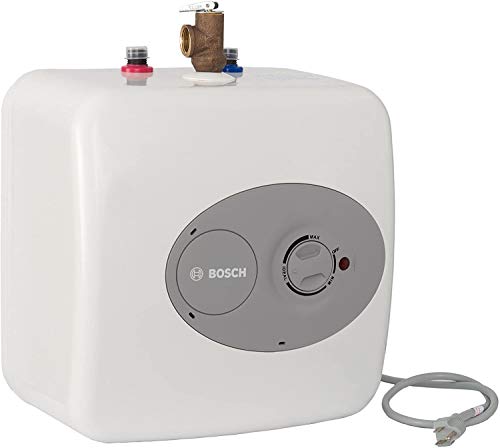
The BOSCH Tronic 3000 T ES2.5 is a point-of-use mini-tank designed for under-sink installation. It connects to a standard 120V outlet with a 36–37″ cord for independent installation without hardwiring.
Key technical points reference the listed features: 2.5 gallon capacity, 98% thermal efficiency, and a glass-lined tank for corrosion resistance. Dimensions are compact enough for shelf, wall, or floor mounting.
Installation flexibility makes this unit suitable where an isolated hot water supply is needed. The unit specification indicates 12A operation at 120VAC, and the build emphasizes long service life through premium materials.
KENUOS 2.5 Gallon Mini Tank

Call 888-896-7031 for Free Local HVAC Quotes – Compare and Save Today!
KENUOS supplies a 2.5-gallon under-sink heater with 1500W heating power and a mechanical knob for temperature adjustment from 86°F to 150°F. The unit includes 1/2″ NPT fittings and a T&P valve for pressure relief.
The tank uses 304 stainless steel and UL-certified construction. Safety features mentioned are dry-fire protection and overheat safeguards, with an ABS outer casing for additional protection.
The product highlights quick recovery—claimed hot water in 5–8 minutes—driven by an L-shaped stainless steel heating tube designed to maximize heat exchange efficiency inside the tank.
BISELONG 2.5 Gallon BI-2.5
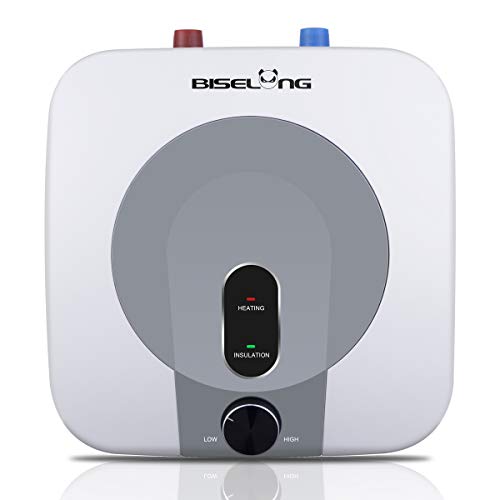
BISELONG’s BI-2.5 emphasizes a 304 stainless steel tank with laser welding and a 1500W L-shaped element for faster heat-up. The manufacturer notes a thermal efficiency near 98% and a max temperature of 149°F.
The unit includes a built-in smart chip or inverter to automatically maintain set temperature and reduce reheating cycles. Compact square design aims to fit under sinks, in RVs, or food trucks.
Call 888-896-7031 for Free Local HVAC Quotes – Compare and Save Today!
Listed recovery claims and temperature management point to efficient standby control and suitability when a small, insulated hot water reserve is required close to the fixture.
ThermoMate 2.5 Gallon ES250

ThermoMate’s ES250 is UL-listed and rated for 1440W on 120V circuits. It advertises a wide adjustable temperature range from 50°F to 149°F and enhanced insulation via 30mm CFC-free polyurethane for improved temperature retention.
Construction includes a porcelain enamel glass-lined tank and an Incoloy 800 heating element described as corrosion resistant and efficient. The product emphasizes durability through multi-layer tank protection and anode rod design to limit scale buildup.
The ES250 targets users seeking long-term resistance to corrosion and improved insulation to limit reheating frequency for point-of-use applications.
Ganggend 2.5 Gallon Electric

Ganggend’s 2.5-gallon unit lists 1500W heating power with rapid heating claims—around 6 minutes to reach service temperature. The product includes a digital display for visual temperature control and a pressure relief valve for safety.
Construction is described with stainless steel and enamel coatings to improve corrosion and scaling resistance. The unit mentions leakproof design and insulation materials raising thermal efficiency to roughly 90%.
Digital readout and built-in safety valves make this model suitable for users who prefer visual feedback and integrated protection in a compact under-sink package.
Buying Guide: How To Choose A 2.5 Gallon Mini Tank Water Heater
Selecting the right mini tank heater requires assessing capacity, electrical compatibility, safety features, materials, and installation needs. Below are key considerations and comparison perspectives:
Capacity And Intended Use
- 2.5 Gallon Capacity is optimized for single-sink point-of-use applications, handwashing, and secondary fixtures in kitchens or bathrooms. It is not sized for showers or continuous high-flow tasks.
- Consider fixture flow rates—a standard sink faucet consumes 1–2 GPM (gallons per minute). A 2.5 gallon tank provides multiple short draws before refill and reheating.
Power, Voltage, And Circuit Requirements
- Most models operate at 110–120V and around 1440–1500W, requiring a dedicated 15A circuit in many installs. Confirm breaker capacity and outlet location.
- Plug-in options permit simple installs without hardwiring; verify cord length and whether the outlet is GFCI-protected where required.
Recovery Time And Heating Element Design
- L-Shaped Elements increase water contact area to speed heating and recovery.
- Higher wattage within safe circuit limits yields faster recovery—useful when consecutive uses occur.
Tank Material And Corrosion Resistance
- Stainless Steel (304) and glass/porcelain enamel linings enhance corrosion resistance and long-term durability.
- Look for anode rods or multi-layer tanks to reduce scaling and extend service life.
Insulation And Standby Loss
- Thicker polyurethane insulation reduces standby heat loss and lowers reheating frequency. This improves efficiency in idle periods.
- Thermal efficiency percentages cited by manufacturers (e.g., ~90–99%) indicate relative performance but verify insulation thickness and testing claims where possible.
Safety Features And Compliance
- T&P (temperature & pressure) relief valves, overheat protection, dry-fire protection, and UL listing are important safety attributes.
- Manufacturers that include pressure relief valves and certified construction help ensure safer operation and code compliance.
Control And Monitoring
- Mechanical knobs offer simple control; digital displays provide precise temperature readouts. Consider which interface suits your needs.
- Smart or inverter controls can maintain set temperatures and reduce cycling, improving perceived response time.
Installation Flexibility
- Check for wall, floor, or shelf mounting options and the included fittings (1/2″ NPT common). Some models include diverter valves or stainless connections to simplify hookup.
- Measure cabinet space and clearances for venting and electrical routing before purchase.
Maintenance And Longevity
- Consider ease of servicing the anode rod or heating element, availability of replacement parts, and manufacturer support.
- Seamless-welded tanks and quality coatings reduce leak risk; maintenance frequency depends on water hardness and usage.
Comparison Perspectives
- Best For Durability: Units with stainless steel tanks or porcelain-lined tanks and robust heating elements reduce corrosion risk.
- Best For Fast Recovery: Models using 1500W elements with L-shaped designs and efficient insulation heat fastest between draws.
- Best For Installation Ease: Plug-in models with included fittings, T&P valves, and diverter hardware minimize the need for extra parts.
- Best For Safety/Monitoring: Units with UL listing, digital displays, and built-in overheat/dry-fire protection improve usable control and peace of mind.
Review the specific product specifications and installation requirements for the chosen model to ensure compatibility with your electrical circuit, cabinet space, and hot water needs. Properly sized and installed, a 2.5 gallon mini tank can provide reliable, near-instant hot water at a single sink or point-of-use location.
Tips for Getting the Best HVAC Prices
- Prioritize Quality Over Cost
The most critical factor in any HVAC project is the quality of the installation. Don’t compromise on contractor expertise just to save money. - Check for Rebates
Always research current rebates and incentives — they can significantly reduce your overall cost. - Compare Multiple Quotes
Request at least three estimates before making your choice. You can click here to get three free quotes from local professionals. These quotes include available rebates and tax credits and automatically exclude unqualified contractors. - Negotiate Smartly
Once you've chosen a contractor, use the proven strategies from our guide — How Homeowners Can Negotiate with HVAC Dealers — to get the best possible final price.