
Choosing a heater for a large shop requires balancing heat output, fuel type, installation, and safety. Below is a concise comparison of five high-capacity heaters suited for large garages, workshops, and commercial spaces. The short summary table highlights primary capacity and mounting type to help quick comparisons.
| Product | Heat Output / Coverage | Mounting / Fuel |
|---|---|---|
| Mr. Heater Big Maxx MHU80NG | 80,000 BTU — ~2,000 sq. ft. | Ceiling/Wall — Natural Gas |
| Mr. Heater MHU80LP Propane Unit | 80,000 BTU — up to 1,000 sq. ft. | Ceiling/Wall — Propane |
| Dyna Glo Delux KFA135DGD | 95,000 or 135,000 BTU — up to 3,200 sq. ft. | Portable/Kerosene Forced Air |
| Comfort Zone CZ260ER Ceiling Heater | 10,000 Watt — wide distribution | Ceiling — Electric Hard-Wired |
| CTSC 10000W Electric Garage Heater | 10,000 Watt — 3 heat settings, ETL listed | Ceiling — Electric Hard-Wired |
Content Navigation
- Mr. Heater F260560 Big Maxx MHU80NG Natural Gas Unit Heater
- Mr. Heater Propane Unit Heater 80,000 BTU/Hr. MHU80LP
- Dyna Glo Delux KFA135DGD 95,000 Or 135,000 BTU Kerosene Heater
- Comfort Zone Hard-Wired Digital Ceiling Mount Heater CZ260ER
- CTSC 10000W Electric Garage Heater With Digital Thermostat
- Buying Guide: Choosing The Right Large Shop Heater
- 1. Heat Output And Coverage
- 2. Fuel Type And Availability
- 3. Installation And Mounting
- 4. Ventilation And Safety
- 5. Control, Efficiency, And Features
- 6. Operational Costs And Fuel Supply
- 7. Noise, Airflow, And Workspace Impact
- 8. Maintenance And Durability
- 9. Compliance And Professional Installation
- 10. Comparison Perspectives
Mr. Heater F260560 Big Maxx MHU80NG Natural Gas Unit Heater
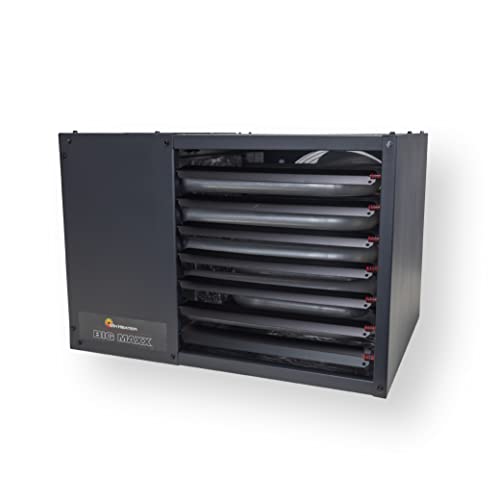
Key Features: Includes two angle brackets and LP conversion kit, 80,000 BTU performance, coverage up to 2,000 sq. ft., 120 V fan, specific clearance requirements, category 1/3 venting options.
This unit is designed for high-capacity, continuous heating in large spaces. The 80,000 BTU rating positions it for workshops and commercial bays. It supports vertical and horizontal venting categories relevant to permanent installations. Buyers should plan for professional natural gas hookup and heed the minimum 8 ft clearance prerequisite. The included LP conversion kit increases flexibility during installation, but thermostat, hose and regulator are not part of the package. The unit’s low amp draw (2.3A) limits electrical demands to fan operation, while the gas supply provides primary heat.
Mr. Heater Propane Unit Heater 80,000 BTU/Hr. MHU80LP

Key Features: 80,000 BTU, spark ignition with self-diagnostic control module, includes two angle brackets for ceiling mount, propane-fueled, suitable for shop spaces.
Call 888-896-7031 for Free Local HVAC Quotes – Compare and Save Today!
The propane version shares the same 80,000 BTU class as the natural gas model but uses portable fuel, which can be advantageous in locations without a gas line. The spark ignition and self-diagnostic module simplify start-up and troubleshooting. Mounting brackets are included for ceiling or overhead mounting, a typical orientation for shop unit heaters to optimize air distribution. This model is relevant where fuel logistics or temporary setups favor propane, and where users require a high-BTU, non-electric primary heat source. Consider ventilation and fuel storage best practices when deploying kerosene/propane-fired heaters indoors.
Dyna Glo Delux KFA135DGD 95,000 Or 135,000 BTU Kerosene Heater
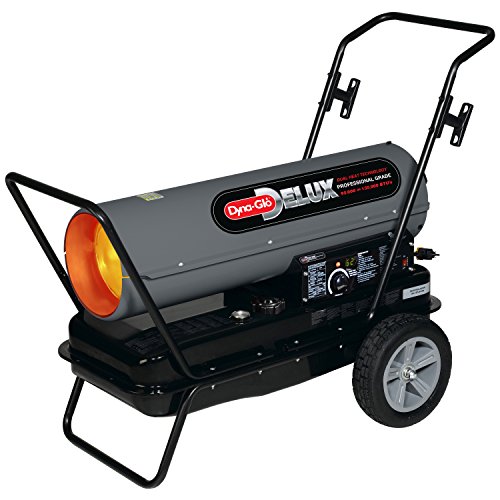
Key Features: Choice of 95,000 or 135,000 BTU outputs, forced air kerosene combustion, designed for large spaces, portable configuration with high heat capacity.
This forced-air kerosene unit provides some of the highest single-unit BTU outputs among portable heaters. It can reach up to 3,200 sq. ft. depending on output and insulation. The higher-BTU setting is aimed at very large or poorly insulated spaces where electric or gas hookups are impractical. As a combustion-based, portable heater, it requires consideration of fuel handling, exhaust ventilation, and regular maintenance of combustion components. It is suited to jobsite environments, large open shops, or temporary heating where mobility and raw output are primary factors.
Comfort Zone Hard-Wired Digital Ceiling Mount Heater CZ260ER

Key Features: 10,000 Watt hard-wired, fan-forced air distribution, digital thermostat, full-function remote, 12-hour timer, heavy-gauge steel body, enclosed motor, overheat protection.
Call 888-896-7031 for Free Local HVAC Quotes – Compare and Save Today!
This ceiling-mounted electric heater focuses on even air distribution across a large footprint using a fan-forced design and adjustable vents. The digital thermostat and timer enable precise scheduling and temperature control, while a full-function remote supports hands-off adjustments. The enclosed motor and fully sheathed elements increase durability in dusty workshop environments. As a 240V hard-wired solution, it removes combustion byproducts from the space but requires electric capacity and professional wiring. It suits insulated shops where clean electric heat and controlled distribution are priorities.
CTSC 10000W Electric Garage Heater With Digital Thermostat

Key Features: 10,000W with 3 heat settings (10,000W / 7,500W / Fan Only), digital thermostat, remote, timer, voltage display for troubleshooting, SPCC cold-rolled steel construction, ETL listed, overheating protection.
This model targets users who need adjustable power levels and diagnostic visibility. The voltage display helps diagnose installation voltage issues that can affect fan operation. Multiple heat settings and an ECO function let operators reduce energy consumption when full power is unnecessary. ETL listing and built-in safety features address electrical compliance and protection. As with other hard-wired electric units, installation should be performed by a qualified electrician and matched to a 240V circuit with appropriate amperage capability.
Buying Guide: Choosing The Right Large Shop Heater
Selecting a heater for a large shop depends on multiple variables. Below are key considerations and comparison perspectives to guide a balanced choice.
1. Heat Output And Coverage
BTU vs. Watts: Combustion units are rated in BTU (higher BTU for larger, colder spaces). Electric heaters are rated in watts (1,000W ≈ 3,412 BTU). Match capacity to the shop’s cubic footage, insulation level, and typical outdoor temperatures.
2. Fuel Type And Availability
- Natural Gas: Best for continuous, cost-efficient heating if a gas line exists and permanent installation is acceptable.
- Propane: Flexible and portable where gas lines are not available; requires safe storage and fuel management.
- Kerosene/Diesel: High output and portable for jobsites; plan for ventilation and combustion safety.
- Electric: Clean, easy to mount, no combustion exhaust, but requires sufficient electrical capacity and can cost more to run in some areas.
3. Installation And Mounting
Ceiling-mounted units free floor space and distribute heat broadly; portable forced-air units allow mobility. Hard-wired electric units require professional electrical work, while gas/propane units may need licensed gas hookups and specific venting clearances. Confirm clearance, mounting brackets, and structural support for ceiling installations.
4. Ventilation And Safety
Combustion heaters need exhaust ventilation, CO monitoring, and adherence to manufacturer clearance guidelines. Electric heaters remove combustion risks but require overheat protection, proper wiring, and sometimes enclosed motor protection for dusty shops. Check ETL/UL listings and built-in safety features like tip-over or overheat shutoff.
5. Control, Efficiency, And Features
- Thermostat & Timers: Enable set-and-forget operation and can reduce energy use.
- Variable Power Settings: Allow capacity matching during milder weather and reduce energy consumption.
- Diagnostics & Displays: Voltage displays or self-diagnostic modules speed troubleshooting and improve uptime.
- Remote & Wi‑Fi: Offer convenience for remotely adjusting settings.
6. Operational Costs And Fuel Supply
Compare ongoing fuel costs and local rates. Electric models are often simpler to operate but may be more expensive to run where electricity costs are high. Gas and propane can be efficient in BTU-per-dollar but need reliable supply or delivery logistics.
7. Noise, Airflow, And Workspace Impact
Fan-forced units move air and can create drafts and noise. Consider workflow—workbenches near the heater may experience directed airflow. Forced-air combustion units produce warm, high-velocity air useful for large, open bays.
8. Maintenance And Durability
Combustion heaters require periodic combustion chamber and fuel component checks. Electric heaters need less routine maintenance but inspect elements, motors, and wiring. Look for heavy-gauge housings and enclosed motors for dusty workshops.
9. Compliance And Professional Installation
Large heaters often require professional installation for gas lines, venting, or dedicated electrical circuits. Ensure local codes are followed and consider CO detectors and ventilation plans for combustion equipment.
10. Comparison Perspectives
- Highest Continuous Output: Kerosene/diesel forced-air units like the Dyna Glo provide very high BTU for large or poorly insulated spaces.
- Best For Permanent, Low-Run Costs: Natural gas ceiling units deliver continuous heat with lower fuel cost if a gas line is present.
- Best For Clean, Easy Operation: Electric ceiling heaters (Comfort Zone, CTSC) remove combustion concerns and provide precise controls but need 240V circuits.
- Best For Portable High-BTU: Propane unit heaters combine high output with portability where gas lines are absent.
When choosing, weigh immediate heating needs against long-term operational and installation costs, ventilation requirements, and the specific layout of your shop. Matching the heater’s features—mounting, controls, safety listings, and maintenance— to your environment will produce the best fit for efficiency and safety.
Tips for Getting the Best HVAC Prices
- Prioritize Quality Over Cost
The most critical factor in any HVAC project is the quality of the installation. Don’t compromise on contractor expertise just to save money. - Check for Rebates
Always research current rebates and incentives — they can significantly reduce your overall cost. - Compare Multiple Quotes
Request at least three estimates before making your choice. You can click here to get three free quotes from local professionals. These quotes include available rebates and tax credits and automatically exclude unqualified contractors. - Negotiate Smartly
Once you've chosen a contractor, use the proven strategies from our guide — How Homeowners Can Negotiate with HVAC Dealers — to get the best possible final price.