
Looking For The Best Iron Radiator Heater? This guide compares cast iron radiators and oil-filled electric radiator heaters to help you choose the right option for rooms, retrofit projects, or supplemental home heating. Below is a concise summary table of the five products reviewed, followed by individual product sections and a practical buying guide.
| Product | Type | Key Feature |
|---|---|---|
| Oswald Supply Cast Iron Radiator 25″ | Cast Iron Radiator | Free-Standing, Multiple Sizes |
| Oswald Supply Cast Iron Radiator 19″ | Cast Iron Radiator | Compact Steam/Hot Water Unit |
| De’Longhi Dragon Digital Oil Radiator | Oil-Filled Electric Radiator | Digital Controls & 24-Hour Timer |
| De’Longhi EW7707 Oil-Filled Heater | Oil-Filled Electric Radiator | ComfortTemp Efficiency & Thermal Slot Design |
| Dreo Oil Filled Radiator 1500W | Oil-Filled Electric Radiator | Remote, Digital Thermostat, Quiet Operation |
Content Navigation
- Oswald Supply Cast Iron Radiator 25 Inch
- Oswald Supply Cast Iron Radiator 19 Inch
- De’Longhi Dragon Digital Oil Filled Radiator
- De’Longhi EW7707 Oil Filled Radiator Heater
- Dreo Oil Filled Radiator 1500W With Remote
- Buying Guide For Iron And Oil Radiator Heaters
- 1. Heat Source And Compatibility
- 2. Heat Delivery And Thermal Mass
- 3. Installation And Mobility
- 4. Control, Scheduling, And Efficiency
- 5. Safety Features
- 6. Noise And Comfort
- 7. Size, Output, And Room Matching
- 8. Durability, Maintenance, And Lifespan
- 9. Aesthetics And Restoration
- 10. Cost Considerations (Operational)
Oswald Supply Cast Iron Radiator 25 Inch

This cast iron radiator unit from Oswald Supply is presented as a free-standing steam or hot water radiator. It measures approximately 25 inches in height with a depth of 4-7/16 inches and a length around 24.5 inches. The construction uses heavy cast iron sections, which are known for durability and long-term heat retention.
Feature Highlights: Sizes Available For Various Installations; Free-Standing Installation; Cast Iron Provides Very Quiet Operation; Efficient Radiator Replacement Option. Cast iron radiators work by storing thermal energy and radiating steady, even heat long after the boiler or supply shuts off.
Best Use Cases: Whole-room radiant warmth in older homes with boiler systems, restoration projects, or when replacing a noisy or inefficient unit. The solid cast iron design offers consistent surface temperatures and quiet operation compared with forced-air systems.
Oswald Supply Cast Iron Radiator 19 Inch

Call 888-896-7031 for Free Local HVAC Quotes – Compare and Save Today!
This 19-inch cast iron radiator model is a compact option suited to smaller rooms or installations where height is constrained. It keeps the same cast iron benefits—quiet operation, thermal mass, and compatibility with steam or hot water systems.
Feature Highlights: Multiple Sizes Available; Free-Standing Installation; Efficient Replacement Option; Quiet Cast Iron Operation. The smaller footprint makes this model suitable for bedrooms, small living spaces, or as a supplemental heat source where a larger radiator would be impractical.
Installation Notes: Cast iron radiators typically require compatibility checks with existing piping, valves, and boiler pressure ratings. Their weight and sections may necessitate two-person handling during installation. They are valued for steady heat output and longevity.
De’Longhi Dragon Digital Oil Filled Radiator
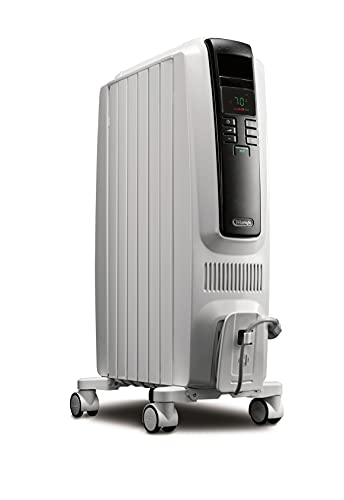
The De’Longhi Dragon Digital is an oil-filled electric radiator featuring a digital control panel and a 24-hour programmable timer. Its design increases radiant surface area to improve heat transfer efficiency and quick heat distribution.
Feature Highlights: Digital Control Panel With LED Display; 24-Hour Timer; Increased Radiant Surface Area (claimed 75% more than certain models); Faster Warm-Up Through Enhanced Convection. The closed oil reservoir provides maintenance-free operation and silent heating with no fan noise.
Call 888-896-7031 for Free Local HVAC Quotes – Compare and Save Today!
Performance Notes: Oil-filled radiators deliver residual heat after shutdown and are useful for bedrooms and living rooms where quiet, even warmth is preferred. The programmable timer and digital controls allow precise scheduling and temperature management for energy-conscious users.
De’Longhi EW7707 Oil Filled Radiator Heater

The De’Longhi EW7707 offers a practical oil-filled solution with simple controls and features aimed at maximizing efficiency. It uses De’Longhi’s ComfortTemp feature and a thermal slot design meant to move heat into the room while maintaining a lower surface temperature.
Feature Highlights: Simple Controls For Power And Temperature; ComfortTemp Energy Saving To Maintain Optimal Temperature And Power Levels; Thermal Slot Design To Maximize Heat Flow; Up To 20% Claim Of Greater Efficiency Versus Running At Max Without Thermostat. The unit emphasizes safety and consistent warmth.
Use Case: This model is appropriate for users who want straightforward operation and energy-saving automatic regulation. The lower surface temperature and slot design are beneficial for spaces with pets or children while delivering quiet heat distribution.
Dreo Oil Filled Radiator 1500W With Remote

The Dreo oil-filled radiator combines modern controls with safety features and a high-efficiency heating claim. It provides 1500W output with a digital thermostat, remote control, child lock, four modes, 24-hour timer, and multiple safety protections.
Feature Highlights: 360° Whole-Home Warmth Claim With 7 Advanced Fins For Faster Heat Dispersion; Triple Overheat Protection, Fire-Resistant Materials, Tilt Protection, Burn-Proof Plug, And ETL Listing; Personalized Comfort With Eco Mode And Precise Sensor Algorithms; Quiet Operation. These design points focus on efficient, even heating and household safety.
Practical Notes: Remote and digital thermostat functionality aid in convenient temperature adjustments. The combination of safety features and quiet operation makes it suitable for family rooms, bedrooms, and offices where consistent, hands-off heat is preferred.
Buying Guide For Iron And Oil Radiator Heaters
Choosing between a cast iron radiator and an oil-filled electric radiator depends on installation context, heating system compatibility, space constraints, and user priorities. Below are key considerations and comparison perspectives to guide a purchase.
1. Heat Source And Compatibility
- Cast Iron Radiators require a steam or hot-water boiler supply and plumbing connections. They are best for homes with existing hydronic systems or when replacing an in-place radiator.
- Oil-Filled Electric Radiators run on standard electricity and are plug-and-play. They are ideal for supplemental heating or when a hydronic system is not available.
2. Heat Delivery And Thermal Mass
- Cast Iron has high thermal mass: it stores heat and releases it slowly, providing long-lasting, even warmth after the supply is off.
- Oil-Filled Units heat the oil quickly and radiate warmth quietly; they retain residual heat but generally have a faster response and easier control via thermostats and timers.
3. Installation And Mobility
- Cast Iron radiators are heavy and typically require professional installation and plumbing modifications. They suit permanent heating systems.
- Oil-Filled Heaters are portable, require no permanent plumbing, and can be moved room-to-room. They are useful when temporary or zoned heating is needed.
4. Control, Scheduling, And Efficiency
- Digital controls and timers (like on the De’Longhi Dragon and some Dreo models) allow precise scheduling and temperature maintenance for energy savings.
- Mechanical thermostats are simpler but less precise. Look for features such as eco modes, programmable timers, and accurate temperature sensors to reduce energy use.
5. Safety Features
- For households with children or pets, prioritize low surface temperatures, tip-over protection, overheat shutoff, and ETL or similar safety listings.
- Cast iron radiators get hot on the surface; consider radiator covers or guards if occupant contact is likely.
6. Noise And Comfort
- Cast iron systems and oil-filled radiators are generally quiet because they do not use fans. Choose oil-filled electric models for near-silent operation in bedrooms or offices.
- Evaluate whether residual heat after shutdown and gradual temperature change suit your comfort preferences.
7. Size, Output, And Room Matching
- Match radiator output to room size and insulation. Oil-filled electric heaters often list wattage and recommended square footage; cast iron radiators are rated by BTU when part of a hydronic design—confirm compatibility with boiler output and room heat loss calculations.
- Smaller cast iron sections or shorter radiators are useful for compact rooms; taller or multiple sections increase capacity.
8. Durability, Maintenance, And Lifespan
- Cast iron radiators are durable and can last for decades with minimal maintenance but may need occasional painting or valve servicing.
- Oil-filled electric heaters are maintenance-free regarding the heat medium (sealed oil) but have electrical components and controls that may fail earlier than a cast iron element. Choose models with reliable warranties and safety certifications.
9. Aesthetics And Restoration
- Cast iron radiators can be restored and painted to match decor and are often chosen for period homes for their vintage appearance.
- Modern oil-filled units prioritize function over decorative appeal but are available in neutral finishes to blend with interiors.
10. Cost Considerations (Operational)
- Operating costs depend on energy source: electric heaters draw grid power; cast iron connected to gas or oil boilers will run according to fuel and boiler efficiency.
- Features like programmable timers, thermostats, and eco modes help manage runtime and energy consumption for electric models.
Comparison Perspectives To Weigh:
Tips for Getting the Best HVAC Prices
- Prioritize Quality Over Cost
The most critical factor in any HVAC project is the quality of the installation. Don’t compromise on contractor expertise just to save money. - Check for Rebates
Always research current rebates and incentives — they can significantly reduce your overall cost. - Compare Multiple Quotes
Request at least three estimates before making your choice. You can click here to get three free quotes from local professionals. These quotes include available rebates and tax credits and automatically exclude unqualified contractors. - Negotiate Smartly
Once you've chosen a contractor, use the proven strategies from our guide — How Homeowners Can Negotiate with HVAC Dealers — to get the best possible final price.
- Installation Effort vs. Portability: Permanent hydronic comfort versus plug-and-play mobility.
- Thermal Mass vs. Quick Response: Cast iron retains heat long-term; oil-filled units provide faster room warm-up and controllability.
- Long-Term Durability vs. Feature Set: Cast iron is mechanically simple and long-lived; electric heaters offer digital controls, timers, and safety electronics.
- Safety And Household Needs: Choose a low-surface-temperature or guarded solution if contact risk is high.