
Choosing the right radiator-style heater for home use depends on room size, safety features, and energy efficiency. Below is a concise summary of the five selected oil-filled and cast-style radiators featured in this guide, followed by individual product sections and a practical buying guide.
| Product | Type | Key Feature |
|---|---|---|
| De’Longhi Oil Filled Radiator Heater EW7707CM | Oil-Filled Portable | ComfortTemp automatic temperature control |
| Dreo Oil Filled Radiator | Oil-Filled Portable | 7 fins, digital controls, child lock |
| PELONIS Radiator Heater | Oil-Filled Portable | Multiple heat levels, LCD, 10-hour timer |
| Amazon Basics Portable Oil Radiator Heater | Oil-Filled Portable | Three heat settings, 7 fins, ETL-certified |
| De’Longhi Dragon Digital Radiator TRD40615E | Oil-Filled Portable | Digital controls, 24-hour timer, increased radiant surface |
Content Navigation
De’Longhi Oil Filled Radiator Heater EW7707CM

This unit is an oil-filled radiator designed for indoor portable use with 1500W power. Controls are simple for adjusting power level and temperature, and the ComfortTemp feature is intended to maintain a set temperature while reducing energy use compared to running at max thermostat continuously. The exclusive thermal slot design aims to maximize heat flow while keeping surface temperatures relatively low.
Safety and convenience attributes include built-in protections typical of portable radiators and a focus on efficient convective and radiant heat delivery. Suitable for bedrooms and offices where gentle, sustained warmth is desirable.
Dreo Oil Filled Radiator Heater

The Dreo radiator operates at 1500W and emphasizes rapid, even heat distribution via seven advanced fins. The product description highlights improved dispersion and efficiency metrics versus competitors, aiming for quiet whole-room warmth.
Call 888-896-7031 for Free Local HVAC Quotes – Compare and Save Today!
Safety features include triple overheat protection, tilt protection, and fire-resistant materials. Usability features include a digital thermostat, remote control, child lock, and an ECO mode for automated temperature adjustments to reduce fluctuation and improve energy efficiency.
PELONIS Radiator Heater With Remote

PELONIS offers multiple heat options (900W/1500W) and five preset temperature levels for customized control. The unit includes an LCD screen, programmable thermostat, remote, and a 10-hour timer to tailor runtime to occupancy patterns.
Portability is supported by four swivel caster wheels for easy room-to-room movement. Built-in safety features include overheat protection and a tip-over switch that shuts the heater off if knocked over, plus a power indicator light.
Amazon Basics Portable Oil Radiator Heater

This Amazon Basics model provides three heat settings—High (1500W), Medium (1000W), and Low (600W)—and seven oil-filled steel fins for consistent, long-lasting heat. It is designed to heat rooms up to approximately 144 sq ft while operating quietly because it lacks a fan.
Call 888-896-7031 for Free Local HVAC Quotes – Compare and Save Today!
ETL certification and over-heat protection are included. The long-lasting radiator effect helps maintain warmth after the unit is switched off, which can be beneficial for energy management in certain usage patterns.
De’Longhi Dragon Digital Radiator TRD40615E
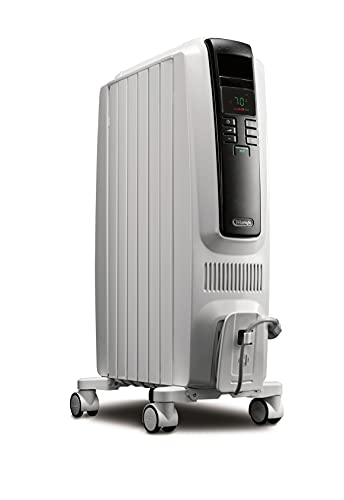
The De’Longhi Dragon features a digital control panel with an LED display and a 24-hour programmable timer for scheduled operation. Its design increases radiant surface area to enhance heat transfer and improve convection distribution.
Quick heat-up and digital programmability are emphasized for homes needing timed heating cycles. The product also lists safety and energy-saving design elements common to De’Longhi’s radiator line.
Buying Guide For Home Radiator Heaters
This buying guide covers core considerations when selecting a radiator heater for home use. It compares performance, safety, controls, portability, and energy management to help match a model to your room and lifestyle.
Heating Capacity And Room Size
- Wattage And Coverage: Most portable oil-filled radiators are rated at 1500W, suitable for small to medium rooms. Check manufacturer guidance on square footage coverage.
- Heat Distribution: Look for features that promote convection and increased radiant surface area for more even warmth across a room.
Control Options And Programmability
- Manual Vs Digital Controls: Digital controls and timers provide more precise temperature regulation and scheduling than basic rotary switches.
- Remote And App Control: Remote controls are convenient for adjusting settings without moving; some models may include smart features or ECO modes for efficiency.
Safety Features
- Overheat Protection: Essential to shut power off if components exceed safe temperatures.
- Tip-Over Switch: Automatically cuts power if the unit is knocked over—important for homes with pets or children.
- Cool-To-Touch Surfaces: Look for low surface temperature designs or thermal slot placements to reduce burn risk.
Energy Efficiency And Operating Cost
- Thermostat And ECO Modes: A programmable thermostat and ECO mode can limit runtime and keep the unit from running at full power continuously, lowering energy use.
- Thermal Inertia: Oil-filled fins retain heat after shutdown—this can reduce runtime and overall energy consumption in cyclical use.
Noise And Comfort
- Fanless Operation: Oil-filled radiators typically operate silently, making them suitable for bedrooms, offices, and nurseries.
- Air Drying: Radiator heaters warm via convection and radiation which generally do not excessively dry indoor air compared to some forced-air systems.
Durability And Build
- Fin Count And Design: More fins or improved fin geometry increase surface area and convection efficiency but may increase size and weight.
- Materials And Certification: ETL/UL listings indicate independent safety testing; metal fins and durable casings help long-term durability.
Portability And Installation
- Wheels And Handles: Swivel casters or built-in handles ease room-to-room movement for portable units.
- Space And Placement: Consider footprint and clearance requirements; maintain recommended distances from walls and fabrics for safety and airflow.
Multiple Comparison Perspectives
- Performance vs Size: Higher wattage yields faster heat but may not be necessary for well-insulated rooms; balance power with room size.
- Features vs Simplicity: Digital and remote controls add convenience and efficiency but increase complexity; manual units are simpler to operate and often more affordable.
- Safety vs Cost: Models with additional safety layers (tilt switches, multi-stage thermal cutoffs, fire-resistant components) can offer improved peace of mind in family households.
Use Case Recommendations
- Bedrooms And Nurseries: Choose quiet, low-surface-temperature units with timers and thermostats for overnight comfort.
- Living Rooms And Open Spaces: Select units with greater radiant surface area and strong convection for even warmth; consider supplemental air circulation if necessary.
- Small Offices And Dens: Compact, adjustable-wattage units can provide targeted warmth without overheating smaller spaces.
Maintenance And Lifespan
- Cleaning: Keep fins free of dust and ensure vents or thermal slots are not obstructed to maintain performance.
- Storage: Store upright in dry conditions if not used seasonally; do not attempt to open oil-filled units—these are sealed and designed to operate maintenance-free.
Use the considerations above to match a product’s features to your home layout, family needs, and energy preferences. Check safety certifications and customer guidance on placement and maintenance before use.
Tips for Getting the Best HVAC Prices
- Prioritize Quality Over Cost
The most critical factor in any HVAC project is the quality of the installation. Don’t compromise on contractor expertise just to save money. - Check for Rebates
Always research current rebates and incentives — they can significantly reduce your overall cost. - Compare Multiple Quotes
Request at least three estimates before making your choice. You can click here to get three free quotes from local professionals. These quotes include available rebates and tax credits and automatically exclude unqualified contractors. - Negotiate Smartly
Once you've chosen a contractor, use the proven strategies from our guide — How Homeowners Can Negotiate with HVAC Dealers — to get the best possible final price.