
Choosing a wall-mounted AC heater combines space-saving cooling with supplemental heating. Below is a quick comparison of five relevant wall-mount AC and heater systems selected for common residential uses, indoor comfort, and installation versatility.
| Product | Type | Key Feature |
|---|---|---|
| Heat Storm HS-1500-PHX-WIFI Infrared Heater | Electric Infrared Wall Heater | Wi‑Fi Control, Touch Thermostat |
| Keystone 14,000 BTU Wall Mounted Air Conditioner | Wall AC With Supplemental Heat | 14,000 BTU Cooling / Heat Mode |
| Cooper & Hunter 9,000 BTU Mini Split | Ductless Mini Split AC & Heat Pump | Inverter, 21.5 SEER2, Smart Port |
| COSTWAY 9000BTU Mini Split (Blast Series) | Ductless Mini Split AC & Heat Pump | Inverter, 5 Modes, AHRI Certified |
| OLMO 9,000 BTU Alpic Mini Split | Ductless Mini Split AC & Heat Pump | Pre-Charged, Whisper Technology |
Content Navigation
- Heat Storm HS-1500-PHX-WIFI Infrared Heater, Wifi Wall Mounted
- Keystone 14,000 BTU Wall Mounted Air Conditioner With Supplemental Heat
- Cooper & Hunter 9,000 BTU Single Zone Wall Mount Mini Split
- COSTWAY 9000BTU Mini Split Air Conditioner & Heater (Blast Series)
- OLMO 9,000 BTU 115V Single Zone Wall Mount Mini Split
- Buying Guide: Choosing A Wall Mount AC Heater
Heat Storm HS-1500-PHX-WIFI Infrared Heater, Wifi Wall Mounted

This unit is a wall-mounted infrared heater focused on supplemental heating for rooms where a dedicated furnace or heat pump may be unnecessary. The manufacturer notes the product is a wall mounted heater only, offering a space-saving profile suitable for bedrooms, kitchens, and offices.
Key listed features include Wi‑Fi enabled control for smartphone temperature adjustments, a touch screen with digital thermostat, and a remote. Safety features include a tip-over safety shut off, useful where occasional movement might be a factor. The design emphasizes saving floor space while providing direct radiant heat.
Because this is an infrared heater, it provides targeted radiant warmth rather than forced-air cooling, making it a useful supplemental heat source for spot-warming or rooms without ductwork.
Keystone 14,000 BTU Wall Mounted Air Conditioner With Supplemental Heat

Call 888-896-7031 for Free Local HVAC Quotes – Compare and Save Today!
The Keystone wall AC combines cooling and supplemental heating in a single wall-mounted package intended for large rooms up to the manufacturer’s stated coverage. The unit lists 14,000 BTU cooling capacity and 10,600 BTU supplemental heating capacity, plus dehumidifier and fan modes.
The product highlights a space-saving design and includes an interior trim kit for installation through a wall opening. The supplemental heating mode is specified as intended for mild conditions (between certain outdoor temperatures) and is not intended as a primary heating source.
Electrical requirements note a 230V/20-amp outlet, so planning for dedicated wiring is necessary. The manufacturer lists remote control and quiet, high-efficiency operation among its features.
Cooper & Hunter 9,000 BTU Single Zone Wall Mount Mini Split

This Cooper & Hunter unit is a ductless mini split providing both cooling and heating with inverter technology and high efficiency ratings (manufacturer lists 21.5 SEER2). The system arrives pre-charged with refrigerant and includes a 16 ft installation kit that comprises copper line set, communication wire, and drain extension.
Notable features listed include a smart port adapter for smartphone control via the brand’s mobile app and standard remote operation. The product description emphasizes heating performance down to low ambient temperatures and inverter-driven efficiency for part-load operation.
Call 888-896-7031 for Free Local HVAC Quotes – Compare and Save Today!
As a wall-mounted indoor unit paired with an outdoor condenser, this option works for whole-room conditioning where a single-zone ductless design is desired. Professional installation is typically recommended for refrigerant connections and mounting.
COSTWAY 9000BTU Mini Split Air Conditioner & Heater (Blast Series)

The COSTWAY “Blast Series” 9,000 BTU mini split is described as an AHRI-certified, inverter-driven system providing cooling and heating for spaces up to the stated square footage. The unit lists 5 operation modes (auto, cool, dry, heat, fan) and multiple fan speeds, plus sleep, ECO, and turbo functions.
Features include an energy-efficient compressor, remote control with timer, and quiet operation. The manufacturer highlights a low-noise profile and a smart timer from 0.5 to 24 hours. The listed refrigerant GWP and pre-charged status align with typical mini split offerings.
This option targets users who want a combined year-round climate solution with emphasis on efficiency, variable-speed operation, and a range of comfort modes in a compact wall-mount indoor unit paired with an outdoor condenser.
OLMO 9,000 BTU 115V Single Zone Wall Mount Mini Split
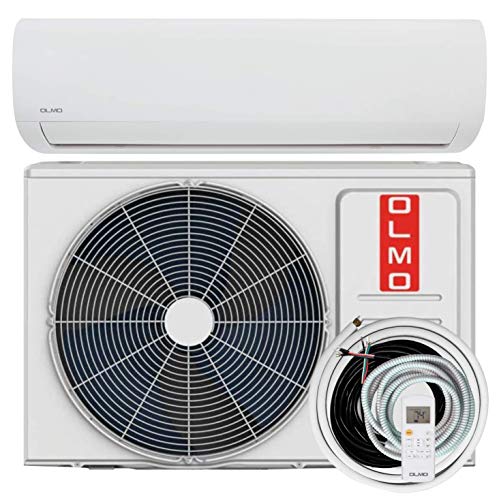
The OLMO Alpic mini split is a pre-charged ductless system with inverter technology and a listed 16.5 SEER efficiency. The manufacturer specifies whisper technology for quiet indoor operation and notes suitability for bedrooms, living rooms, and small additions.
Included with the system is a 16 ft installation kit with pre-flared insulated copper line set, communication wire, and drainage extension. The product listing emphasizes that professional installation is required and highlights UL listing and AHRI certification.
Heating capability down to the specified low ambient temperature is noted, consistent with mini split heat pump operation. This product is positioned as a balanced option for efficiency, quiet operation, and standard single-zone ductless performance.
Buying Guide: Choosing A Wall Mount AC Heater
Choosing the right wall-mounted AC heater depends on room size, installation constraints, energy goals, and whether you need cooling, heating, or both. Below are primary considerations and comparison perspectives to guide selection.
System Type & Functional Needs
- Infrared Wall Heaters: Good for targeted supplemental heat, rapid radiant warmth, and minimal installation. They do not provide cooling or whole-room forced-air circulation.
- Wall-Mounted AC Units (Pass-Through): Combine cooling and sometimes supplemental heat in one wall cabinet. Require an exterior wall sleeve or opening and may need 230V power for larger units.
- Ductless Mini Splits: Offer both cooling and efficient heating via inverter-driven heat pump technology. Consist of an indoor wall unit and outdoor condenser; require refrigerant line connections and usually professional installation.
Capacity & Room Size
- Match BTU capacity to room square footage and insulation levels. Oversizing increases cost and short-cycling risk; undersizing reduces comfort.
- Manufacturers state coverage (e.g., 9,000 BTU for ~250–450 sq ft, 14,000 BTU for larger rooms). Verify the stated room size and local climate.
Energy Efficiency & Performance
- For mini splits, check SEER/SEER2 and HSPF ratings; higher values indicate better efficiency in cooling and heating seasons.
- Inverter compressor technology provides variable-speed operation, improved part-load efficiency, and quieter performance.
- Infrared heaters have near-instant radiant warmth but differ from forced-air systems in perceived comfort and coverage.
Installation Requirements
- Electrical: Confirm voltage and breaker needs (some wall AC/heater units require 230V dedicated circuits).
- Mounting & Structural: Mini split indoor units mount on a wall bracket; outdoor condensers require either a pad, bracket, or wall bracket. Check weight limits and mounting hardware.
- Professional vs. DIY: Ductless mini split refrigerant connections typically require licensed HVAC technicians. Some wall heaters and pass-through wall ACs may be more DIY-friendly if local code allows.
Noise, Controls & Smart Features
- Noise: Look for “whisper” or dB ratings for indoor units when bedroom use is planned.
- Controls: Remote control, programmable timers, and touchscreen thermostats affect convenience.
- Smart Connectivity: Wi‑Fi or smart port adapters allow smartphone control and integration with home automation systems.
Durability, Warranty & Certification
- Check manufacturer warranties for indoor and outdoor components and compressor coverage.
- Look for UL listing, AHRI certification, and manufacturer statements about pre-charged refrigerant for ease of install.
- For outdoor brackets and mounting hardware, prioritize powder-coated, galvanized, or corrosion-resistant finishes and shock-absorbing vibration pads.
Comparison Perspectives
- Cost vs. Performance: Mini splits often cost more to install but yield higher seasonal efficiency and both cooling/heating capability. Infrared wall heaters are less expensive and simpler but limited to heating.
- Installation Complexity: Wall ACs that pass through an exterior wall may be intermediate in difficulty; mini splits require refrigerant connections and usually a professional.
- Space & Aesthetics: Wall-mounted indoor units free floor space and preserve windows. Outdoor condensers need a stable mounting solution—brackets or pads—to avoid vibration and corrosion.
Accessories & Mounting Options
- For outdoor condenser placement, consider heavy-duty wall brackets with weight ratings that exceed the condenser mass, vibration isolators, and leveling adjustments.
- Pre-flared, pre-charged installation kits can reduce installation complexity for mini splits, but check line length limits and ambient performance specifications.
- For pass-through wall AC units, interior trim kits and properly sealed sleeves matter for efficiency and weather resistance.
By aligning the system type with your heating and cooling needs, confirming installation requirements and local codes, and comparing efficiency and controls, you can select the most suitable wall-mount AC heater for your space.
Tips for Getting the Best HVAC Prices
- Prioritize Quality Over Cost
The most critical factor in any HVAC project is the quality of the installation. Don’t compromise on contractor expertise just to save money. - Check for Rebates
Always research current rebates and incentives — they can significantly reduce your overall cost. - Compare Multiple Quotes
Request at least three estimates before making your choice. You can click here to get three free quotes from local professionals. These quotes include available rebates and tax credits and automatically exclude unqualified contractors. - Negotiate Smartly
Once you've chosen a contractor, use the proven strategies from our guide — How Homeowners Can Negotiate with HVAC Dealers — to get the best possible final price.