
Ultrasonic cleaners with built-in heaters speed up cleaning and improve results for jewelry, tools, dental pieces, and industrial parts. Below is a quick comparison of five top models selected for performance, tank size, and heating capability.
| Model | Tank Volume | Ultrasonic Power | Heating | Best For |
|---|---|---|---|---|
| CREWORKS Professional Jewelry 2L | 2 L | 60W | 100W (68–176°F) | Jewelry, eyeglasses, retainers |
| CREWORKS 30L Industrial | 30 L (7.9 gal) | 600W | 600W (70–175°F) | Automotive parts, large tools |
| VEVOR 6L Professional | 6 L | 180W (3x60W) | 200W (adjustable) | Watches, small instruments, coins |
| H&B Luxuries 2.5L | 2.5 L | 160W (35kHz) | Heater to 149°F | Gun parts, carb, dental tools |
| CREWORKS 10L Cleaner | 10 L | 240W | 300W | Auto parts, mix of delicate and heavy items |
Content Navigation
- CREWORKS Professional Jewelry Cleaning Machine 2L
- CREWORKS 30L Ultrasonic Cleaner With Heater
- VEVOR Commercial Ultrasonic Cleaner 6L
- Industrial Grade Ultrasonic Cleaner 2.5L With Heater
- CREWORKS 10L Ultrasonic Cleaner With Heater
- Buying Guide: How To Choose An Ultrasonic Cleaner With Heater
- Tank Size And Capacity
- Ultrasonic Power And Frequency
- Heater Capacity And Temperature Range
- Controls And Special Modes
- Tank Material And Build Quality
- Transducer Layout And Distribution
- Accessories And Ease Of Use
- Chemicals And Solution Compatibility
- Safety Features
- Performance Versus Portability
- Common Use Cases And Matching Recommendations
- Maintenance And Lifecycle Costs
- Comparison Perspectives
- Final Selection Checklist
CREWORKS Professional Jewelry Cleaning Machine 2L

This compact ultrasonic cleaner by CREWORKS features a 2L tank, 60W ultrasonic power, and a 100W heater. The digital control panel allows temperature adjustment from 68 to 176°F and a timer up to 30 minutes. It’s designed for jewelry, glasses, retainers, and small lab or home items.
- Key Features: 60W ultrasonic cavitation, 100W heater, digital timer, user-friendly controls.
- Use Cases: Jewelry, dentures, glasses, small metal parts, and delicate items.
- Operation: Fill with water and optional detergent, set temp and time, run cleaning cycle.
The unit emphasizes quick cleaning of intricate surfaces and removes tarnish and grime without manual scrubbing. Its size suits countertop use and personal-care tasks where a built-in heater speeds breakdown of oils and residues.
CREWORKS 30L Ultrasonic Cleaner With Heater

The CREWORKS 30L model is an industrial-grade cleaner with 600W ultrasonic power and up to 600W heating. It uses a 40kHz cavitation frequency and offers a large 7.9-gallon basin for sizable or multiple parts.
Call 888-896-7031 for Free Local HVAC Quotes – Compare and Save Today!
- Key Features: High-power cavitation, wide application range, digital controls for time and temperature.
- Use Cases: Automotive parts, heavy tools, drill bits, and larger assemblies that require powerful cleaning action.
- Operation: Tank fill, optional cleanser, basket placement, set temp (70–175°F) and timer (1–30 min).
This cleaner prioritizes heavy-duty performance and throughput. The combination of powerful ultrasonic output and strong heating improves removal of carbon, grease, rust, and baked-on deposits commonly found on machine and auto components.
VEVOR Commercial Ultrasonic Cleaner 6L

The VEVOR 6L unit offers 40kHz frequency, 180W ultrasonic power delivered via three 60W transducers, and a 200W heater. The 304 stainless steel tank comes with a basket for small items.
- Key Features: 40kHz frequency, sandwich piezoelectric transducer design, 6L capacity, digital timer and heater.
- Use Cases: Watches, instruments, small mechanical parts, coins, and precision components.
- Operation: Apply suitable solution, place items in the basket, set temperature and timer, begin cycle.
The 6L capacity strikes a balance between personal and light-professional use. The multi-transducer layout targets uniform cavitation across the tank, which is useful when cleaning delicate assemblies or batches of small parts.
Industrial Grade Ultrasonic Cleaner 2.5L With Heater
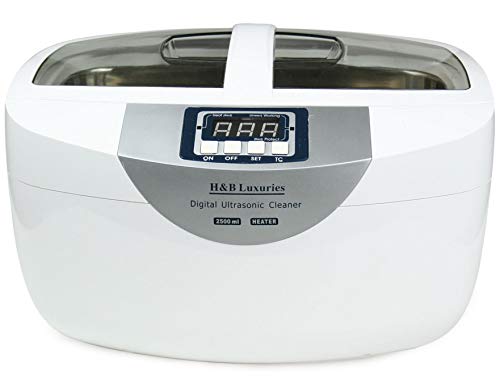
This H&B Luxuries unit provides a 2.5L stainless steel tank with 160W cleaning power at 35kHz and a heater capable of reaching about 149°F. The deeper tank fits longer dental instruments and tubes.
Call 888-896-7031 for Free Local HVAC Quotes – Compare and Save Today!
- Key Features: Strengthened transducer, deep tank dimensions, ABS waterproof basket, timer and heater controls.
- Use Cases: Dental equipment, gun parts, carburetor components, and elongated tools.
- Operation: Place items in basket, set time up to 45 minutes, activate heater and ultrasonic cycle.
The combination of lower frequency (35kHz) and higher wattage is effective for tougher grime and heavier contamination on more robust metal components, while the tank depth accommodates longer items that shallower units cannot.
CREWORKS 10L Ultrasonic Cleaner With Heater

The CREWORKS 10L model features 240W ultrasonic power, a 300W heater, plus Degas and Gentle modes. Toggle switches and knobs provide manual control over cycles and intensity.
- Key Features: Degas function to remove trapped air, Gentle mode to protect fragile items, knob controls, and a mid-size 10L tank.
- Use Cases: Mixed loads where both delicate jewelry and heavier machine parts may be cleaned using appropriate modes.
- Operation: Use Degas mode for new or foamy solutions, Gentle mode for fragile items, set temperature and time, then run.
This model is aimed at users who need flexibility—capable of handling a range of parts sizes and sensitivities. The degas function improves cavitation in freshly mixed solutions and porous items.
Buying Guide: How To Choose An Ultrasonic Cleaner With Heater
Selecting the right ultrasonic cleaner with a heater involves assessing capacity, power, frequency, temperature control, and intended applications. Below are key considerations to guide a purchase.
Tank Size And Capacity
Match tank volume to the items you clean. Small tanks (1–3L) suit jewelry, glasses, and dental appliances. Mid-size tanks (5–10L) handle watch parts, small automotive components, and batches. Large tanks (30L+) are for industrial or bulk cleaning of large parts.
Ultrasonic Power And Frequency
Power (watts) affects cleaning intensity. Higher wattage delivers stronger cavitation for stubborn soils. Frequency typically ranges 25–45kHz: lower frequencies (25–35kHz) create larger cavitation bubbles for heavy-duty cleaning, while higher frequencies (40kHz) produce gentler action suitable for delicate items.
Heater Capacity And Temperature Range
Heaters speed chemical action and dissolve greases more effectively. Look for models with adjustable temperature ranges. Common useful ranges include 70–175°F (20–80°C). Ensure the heater wattage is sufficient for the tank volume—larger tanks require stronger heaters to achieve and maintain target temperatures quickly.
Controls And Special Modes
Timer and temperature controls allow repeatable cycles. Additional modes like Degas (removes entrained air) and Gentle (reduced power) add versatility. Digital displays improve monitoring; manual knobs may be preferred for simple setups.
Tank Material And Build Quality
Stainless steel (often 304) is preferred for corrosion resistance and durability. Look for reinforced transducers, welded seams, and robust baskets to avoid damage or contamination transfer between cycles.
Transducer Layout And Distribution
Multiple transducers or sandwich transducer designs enhance uniform cavitation across the tank, reducing dead zones where cleaning is less effective. Consider models with distributed transducers for even results, especially for larger tanks.
Accessories And Ease Of Use
Baskets, lids, and removable trays reduce direct contact with the tank floor and prevent collisions between parts. Consider whether the unit is easy to drain, clean, and store, and if it provides nonslip handles for safe handling.
Chemicals And Solution Compatibility
Ultrasonic cleaning often requires detergents or specialized solutions. Choose cleaners and concentrations recommended for the application. Some materials (soft gemstones, certain coated parts) may be sensitive to strong detergents or heat—use gentle modes or lower temperatures accordingly.
Safety Features
Look for automatic shutoff, over-temperature protection, and stable control electronics. For workshop or shared environments, consider models with clear operating instructions and safeguards against accidental misuse.
Performance Versus Portability
Larger, industrial units deliver higher throughput and power but require more floor or bench space, electrical capacity, and often heavier handling. Smaller units are portable and suitable for personal or light-professional tasks.
Common Use Cases And Matching Recommendations
- Jewelry And Optics: Low-power 40kHz models with gentle modes and moderate heating perform well.
- Dental And Medical Instruments: Mid-size tanks with adequate depth and degas options help remove biofilms and residues.
- Automotive And Heavy Parts: Large tanks, high wattage, lower frequency 35–40kHz, and powerful heating speed cleaning of grease and carbon deposits.
- Precision Instruments: Even transducer distribution and controlled temperatures reduce risk of damage.
Maintenance And Lifecycle Costs
Regularly change solution, clean tank interiors, and inspect transducers and wiring. Factor in the cost of replacement baskets, cleaning solutions, and potential service when comparing models.
Comparison Perspectives
Compare units across these axes: capacity (volume), cleaning power (W), frequency (kHz), heater wattage and range, and control sophistication. For mixed-use environments, favor models offering adjustable modes (Degas/Gentle) and consistent temperature control.
Tips for Getting the Best HVAC Prices
- Prioritize Quality Over Cost
The most critical factor in any HVAC project is the quality of the installation. Don’t compromise on contractor expertise just to save money. - Check for Rebates
Always research current rebates and incentives — they can significantly reduce your overall cost. - Compare Multiple Quotes
Request at least three estimates before making your choice. You can click here to get three free quotes from local professionals. These quotes include available rebates and tax credits and automatically exclude unqualified contractors. - Negotiate Smartly
Once you've chosen a contractor, use the proven strategies from our guide — How Homeowners Can Negotiate with HVAC Dealers — to get the best possible final price.
Final Selection Checklist
- Confirm tank size fits your largest items with allowance for baskets.
- Match ultrasonic power and frequency to soil type and item fragility.
- Verify heater range and wattage are adequate for desired temperatures.
- Look for durable stainless construction and good transducer distribution.
- Ensure included accessories (baskets, lids) meet your handling needs.
- Check safety features and ease of draining/maintenance.