
Finding the right upright propane heater means balancing heat output, safety features, installation type, and the intended space. Below is a quick comparison of five upright propane heaters selected for different uses—portable radiant units, vent-free wall models, and freestanding patio heaters—so you can match features to your needs.
| Product | Type | BTU Range | Ideal Use |
|---|---|---|---|
| Mr. Heater 4000-18000 BTU Portable LP Gas Heater | Portable Upright/Stand | 4,000–18,000 | Porch, garage, camping |
| Mr. Heater MHVFBF20LPT 20,000 BTU Blue Flame Vent Free | Vent-Free Wall Heater | 20,000 | Rooms, cabins, sunrooms |
| Dyna-Glo IR30PMDG-1 30,000 BTU Infrared Vent Free Wall | Infrared Wall Heater | 6,000–30,000 | Large rooms, workshops |
| Cuisinart Perfect Position Propane Patio Heater | Freestanding Patio Heater | 38,200 | Patios, decks, outdoor seating |
| OKF Propane Heater Indoor and Outdoor 6,000–18,000 BTU | Portable Upright/Indoor-Outdoor | 6,000–18,000 | Garage, camping, enclosed porches |
Content Navigation
- Mr. Heater 4000 To 18000 BTU Portable LP Gas Heater
- Mr. Heater MHVFBF20LPT 20,000 BTU Blue Flame Vent Free
- Dyna-Glo IR30PMDG-1 30,000 BTU Infrared Vent Free Wall Heater
- Cuisinart Perfect Position Propane Patio Heater
- OKF Propane Heater Indoor And Outdoor 6,000–18,000 BTU
- Buying Guide: How To Choose An Upright Propane Heater
Mr. Heater 4000 To 18000 BTU Portable LP Gas Heater
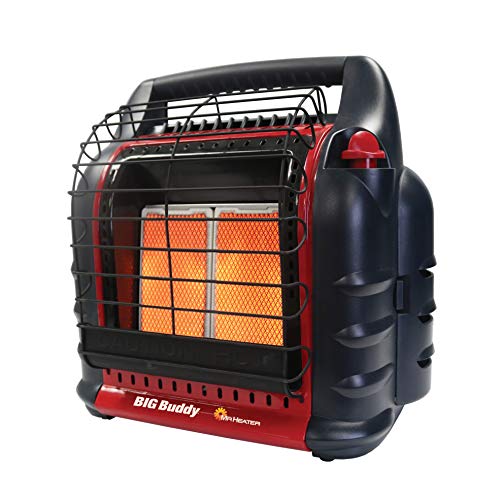
This model is a variable-output upright propane heater offering 4,000, 9,000, or 18,000 BTU settings. The single control knob uses a piezo sparking mechanism for straightforward ignition and operation. It supports use with larger tanks (up to 40 lbs) when configured with an additional hose and filter, expanding run time for extended use outdoors or in semi-enclosed spaces.
Safety is addressed with an automatic shutoff in case of tip-over. The unit’s coverage is rated up to 450 square feet at the highest setting, making it suitable for medium to large porches, garages, and campsite gatherings. Its portable upright form factor is designed for easy placement and directional heat delivery without permanent installation.
Mr. Heater MHVFBF20LPT 20,000 BTU Blue Flame Vent Free
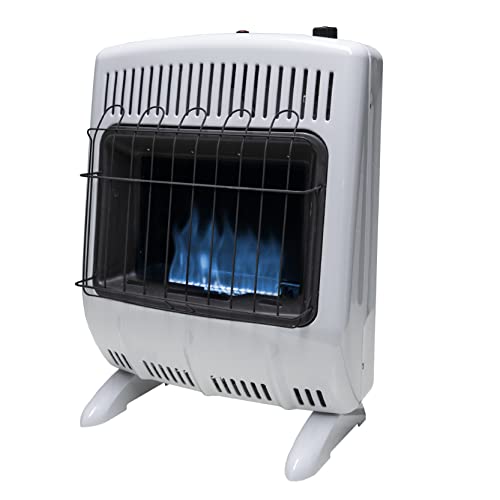
This vent-free wall heater delivers up to 20,000 BTU and is designed for spaces up to about 700 sq. ft., depending on insulation and climate. It uses a blue flame combustion method to heat room air directly and includes a thermostat for temperature control. The unit is rated for operation up to 4,500 ft elevation.
Call 888-896-7031 for Free Local HVAC Quotes – Compare and Save Today!
Key safety equipment includes an Oxygen Depletion Sensor (ODS) and factory automatic shutoff systems to interrupt fuel supply if low-oxygen conditions are detected. The unit uses a battery-powered electronic ignition and lists a specific fuel consumption rate for planning propane use. As a fixed wall heater, it is intended as a permanent room heating solution rather than a portable option.
Dyna-Glo IR30PMDG-1 30,000 BTU Infrared Vent Free Wall Heater

The Dyna-Glo model uses infrared heating to warm objects and people directly, rather than primarily heating ambient air. It offers a variable BTU range from 6,000 up to 30,000, expanding suitability from small to large rooms and workshops. The manufacturer indicates coverage up to about 1,000 sq. ft. at higher settings, though real-world results depend on insulation and room layout.
As a vent-free wall-mounted heater, this unit requires proper clearance and installation. Because it radiates heat efficiently to surfaces and occupants, it can feel warmer at lower air temperatures compared to purely convective systems. It is sold as liquid propane ready, and conversion restrictions may apply, so check local codes and installation guidance before use.
Cuisinart Perfect Position Propane Patio Heater

This upright freestanding patio heater emphasizes directional control with a swivel arm that allows you to aim heat left or right. It produces 38,200 BTU through a cone-shaped burner and reflective heat shield, optimizing downward and outward distribution for outdoor seating zones.
Call 888-896-7031 for Free Local HVAC Quotes – Compare and Save Today!
The design includes a hidden tank compartment and a built-in drink table for convenience. As a large-output patio model, it’s best suited for outdoor use where open-air dispersion and clearance are acceptable. The swivel arm also folds for more compact storage. Installation is minimal, but ensure stable placement to avoid tip-over hazards common to tall freestanding heaters.
OKF Propane Heater Indoor And Outdoor 6,000–18,000 BTU

The OKF upright heater provides three heat modes—6,000, 12,000, and 18,000 BTU—covering small enclosed spaces up to larger covered patios. It uses a pulse ignition system for reliable starts and includes a regulator and hose to connect to a standard 20 lb propane tank.
Safety features include an Oxygen Depletion Sensor (ODS) and tip-over protection to cut fuel flow if unsafe conditions are detected. The manufacturer notes long run times on low setting and positions the unit for both indoor and outdoor use when local codes allow. Its compact upright form makes it portable while offering multi-mode heat control for varied settings.
Buying Guide: How To Choose An Upright Propane Heater
Selecting the right upright propane heater requires matching technical features to your intended use. Below are key considerations and comparison perspectives to guide a well-informed purchase.
1. Purpose And Installation Type
- Portable Upright/Stand Heaters (tank-top or freestanding): Best for flexible, temporary heating—camping, garages, porches. Look for reliable ignition, sturdy base, and tip-over protection.
- Vent-Free Wall Heaters: Designed for permanent indoor heating. Provide consistent room warmth and often include thermostats. Require compliance with local building codes and adequate oxygen-safety systems (ODS).
- Patio/Freestanding Heaters: High BTU output for open-air spaces. Prioritize stability, coverage pattern, and wind resistance.
2. BTU Output And Coverage
Match BTU ratings to space size and insulation. As a rough guide:
- 4,000–9,000 BTU: small areas, personal warmth, tents, small garages.
- 12,000–18,000 BTU: medium indoor rooms, covered porches, larger garages.
- 20,000–38,000+ BTU: full-room heating, large cabins, outdoor seating areas.
Remember that infrared/ radiant heaters warm objects and occupants directly and can feel more effective at lower air temperatures than purely convective units.
3. Safety Features
- Tip-Over Shutoff: Essential for portable and tall freestanding heaters to cut gas if the unit falls.
- ODS (Oxygen Depletion Sensor): Required on many indoor propane heaters to prevent operation in low-oxygen environments.
- Automatic Shutoffs: For flame failure or abnormal combustion; verify manufacturer testing and certifications.
- Stable Base And Materials: For outdoor patio heaters, wind resistance and low center of gravity minimize tip risks.
4. Ignition And Fuel Connections
Piezo or pulse ignition systems eliminate matches and batteries for reliable starts. Confirm whether a heater requires conversion for natural gas or is LP-only. Check included accessories: regulator, hose length, and compatibility with 20 lb or larger tanks if long run times are needed.
5. Venting, Indoor Use, And Local Codes
Vent-free units are efficient indoors but are subject to local codes and manufacturer guidance. Verify allowable locations (bathrooms, bedrooms, mobile homes) and altitude limitations. Vent-free infrared units radiate heat differently than blue flame models; choose based on comfort preference and room layout.
6. Portability, Storage, And Maintenance
- Portable tank-top heaters offer easy transport but check burner guards and weather resistance.
- Freestanding patio heaters may include hidden tanks and foldable components for storage.
- Routine maintenance—cleaning burners, checking hoses/regulators, and inspecting ignition components—prolongs service life and maintains safety.
7. Efficiency And Heating Style
Radiant/Infrared Heaters heat people and objects directly, offering perceived warmth with lower ambient temperatures. Convective/Blue Flame Heaters warm room air and may distribute heat more evenly over time. Choose infrared for targeted comfort and convective for overall room temperature control.
Tips for Getting the Best HVAC Prices
- Prioritize Quality Over Cost
The most critical factor in any HVAC project is the quality of the installation. Don’t compromise on contractor expertise just to save money. - Check for Rebates
Always research current rebates and incentives — they can significantly reduce your overall cost. - Compare Multiple Quotes
Request at least three estimates before making your choice. You can click here to get three free quotes from local professionals. These quotes include available rebates and tax credits and automatically exclude unqualified contractors. - Negotiate Smartly
Once you've chosen a contractor, use the proven strategies from our guide — How Homeowners Can Negotiate with HVAC Dealers — to get the best possible final price.
8. Comparison Perspectives
- Indoor Permanent Heat vs. Portable Flexibility: Wall-mounted vent-free units like the Mr. Heater 20,000 BTU provide consistent indoor heating, while portable units offer on-demand, movable heat.
- High Output vs. Directional Control: Patio models produce high BTUs for open spaces; models with swivel or directional features (e.g., Cuisinart) allow focused warmth where people gather.
- Safety Systems vs. Simplicity: More safety systems add protection but may require specific installations or batteries; simpler tank-top units trade off permanent mounting for convenience.
9. Practical Selection Checklist
- Define the primary use: indoor room, garage, patio, camping.
- Measure the space and choose a BTU range aligned with coverage guidance.
- Confirm local codes for vent-free indoor use and altitude limits.
- Prioritize safety features: ODS, tip-over shutoff, and regulator quality.
- Check included accessories and ignition type for convenience.
- Plan for fuel type and tank size compatibility for desired run times.