
Finding the right natural gas garage heater depends on ceiling height, square footage, venting options, and whether you need wall, ceiling, or direct-vent installation. The table below summarizes the five selected heaters that fit common garage and workshop needs — from high-output unit heaters to space-saving wall models.
| Product | Type | BTU | Coverage |
|---|---|---|---|
| Mr. Heater Big Maxx MHU80NG | Unit Heater | 80,000 BTU | Up To ~2,000 Sq. Ft. |
| Dyna-Glo IR30NMDG-1 | Infrared Wall Heater | 30,000 BTU | Up To ~1,000 Sq. Ft. |
| Modine Hot Dawg HD45AS0111 | Garage Unit Heater | 45,000 BTU | Mid-Size Garages |
| Reznor UDXC-45 | Ceiling/Unit Heater | 45,000 BTU | Commercial/Residential Workshops |
| Comfort Glow 25,000 BTU Wall Heater | Direct Vent Wall | 25,000 BTU | Up To ~825 Sq. Ft. |
Content Navigation
Mr. Heater Big Maxx MHU80NG Natural Gas Heater
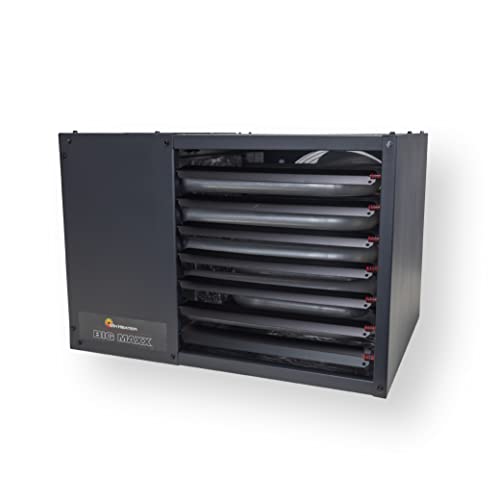
This 80,000 BTU unit heater is built for larger garages, workshops, and pole buildings. The unit ships with two angle brackets and an LP conversion kit; thermostat, hose, and regulator are not included. It is intended for natural gas operation and offers both vertical and horizontal venting (Category 1 vertical, Category 3 horizontal).
Key installation and performance points include a minimum 8 ft. clearance from floor to base, 120 V electrical input, and a modest electrical draw (~2.3 amps). The manufacturer lists an approximate coverage of up to 2,000 square feet, which depends on insulation and ceiling height.
Useful for garages with ducting or where a powerful central unit is preferred. Consider that venting requirements and adequate clearances must be met, and an external thermostat and gas line sizing are necessary for reliable operation.
Dyna-Glo IR30NMDG-1 30,000 BTU Wall Heater

Call 888-896-7031 for Free Local HVAC Quotes – Compare and Save Today!
The Dyna-Glo IR30NMDG-1 is an infrared natural gas wall heater that radiates heat to objects and surfaces first, similar to sunlight. This method can feel warmer at lower air temperatures because it heats people and tools directly rather than relying solely on convection.
Rated for 30,000 BTU and suitable for spaces up to ~1,000 square feet depending on insulation and layout, this model is offered as natural-gas-ready (no fuel conversion permitted). Infrared heat works well in garages with open doors and higher ceilings where forced-air might lose efficiency.
Installation is typically wall-mount with direct combustion venting. Verify clearance requirements and vent routing before purchase. Infrared units are valued for targeted warmth and rapid comfort for active workspaces.
Modine Hot Dawg HD45AS0111 45,000 BTU Heater
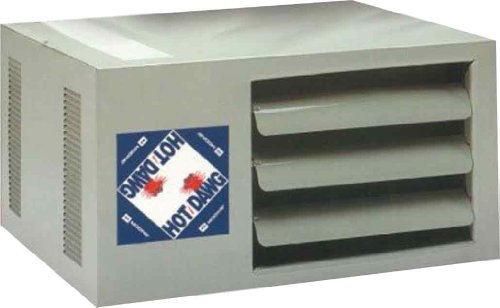
The Modine Hot Dawg offers a compact, low-profile unit designed for residential and light commercial use. At 45,000 BTU, it provides quiet operation with a straightforward design intended to blend into garage or shop ceilings.
Certified for residential, commercial, and industrial use, this model emphasizes reliable, quiet performance. Its neutral finish and compact footprint make it an unobtrusive option for garages where ceiling or wall space is limited but effective forced-air heat is needed.
Call 888-896-7031 for Free Local HVAC Quotes – Compare and Save Today!
As with other unit heaters, proper venting and clearances are required. This model is often chosen where consistent forced-air distribution is preferred over localized infrared radiation.
Reznor UDXC-45 45,000 BTU Indoor Gas Heater

The Reznor UDXC-45 is a versatile indoor gas heater that supports ceiling or wall mounting with suspension points. It’s rated at 45,000 BTU and offers two output levels (approx. 26,145 BTU low fire and 37,350 BTU high fire per manufacturer data) to match variable demand and milder weather.
Designed with an emphasis on high performance and 83% thermal efficiency, this model suits garages, workshops, and small warehouses. The unit uses a quiet forced-air propeller fan and is intended for indoor installations where a compact hung unit is desirable.
Mounting hardware choices and gas line sizing are installation considerations. The UDXC series supports threaded-nut retainers at suspension points for flexible placement; confirm local codes and required venting or termination options for safe operation.
Comfort Glow 25,000 BTU Direct Vent Wall Heater

This direct vent wall heater provides sealed combustion with a matchless piezo ignition and safety pilot that includes a built-in pressure regulator to stop gas flow if the pilot goes out. Rated at 25,000 BTU, it’s designed to heat up to ~825 square feet depending on conditions.
The space-saving design mounts easily to walls and keeps combustion isolated from indoor air, improving indoor air quality compared to ventless units. Because it’s direct-vent, plan for a small penetration to the exterior for intake and exhaust piping.
Direct-vent wall models are often chosen for garages where preserving indoor air and moisture control are priorities, and where floor or ceiling-mounted unit heaters are impractical.
Buying Guide: How To Choose A Natural Gas Garage Heater
Selecting the right heater involves matching capacity, installation, and operational needs. Below are the primary considerations to compare models and ensure safe, efficient performance in your garage or workshop.
Heating Capacity And Square Footage
- BTU Rating: Estimate required BTUs based on square footage, ceiling height, insulation, and local climate. Uninsulated or high-ceiling garages need substantially more BTUs.
- Multiple Units: For uneven layouts or very large shops, multiple smaller units placed strategically often provide more uniform comfort than one large unit.
Heating Method: Forced-Air vs Infrared vs Direct Vent
- Forced-Air Unit Heaters (e.g., Mr. Heater, Modine, Reznor): Good for general space heating and circulation. Require venting and clearances.
- Infrared Heaters (e.g., Dyna-Glo, some ProCom models): Radiant heat warms objects and people directly; efficient for open doors, high ceilings, or targeted work areas.
- Direct-Vent Wall Heaters (e.g., Comfort Glow): Seal combustion from indoor air — useful where indoor air quality or moisture is a concern.
Installation And Venting
- Venting Type: Check whether a unit is direct vent, requires category venting, or is ventless. Proper venting is essential for safety and efficiency.
- Mounting Options: Ceiling-mounted units free floor space; wall units may be easier to install in some garages. Verify mounting hardware and suspension points.
- Clearances: Manufacturers specify minimum clearances to combustibles and to the floor; confirm these before installing shelving or storage nearby.
Efficiency And Operating Costs
- Thermal Efficiency: Higher percentages mean more of the gas energy converts to usable heat. Compare efficiency figures if available.
- Two-Stage Output: Units with multiple output levels (high/low) can reduce cycling and operate more economically in milder conditions.
Safety And Certifications
- Sealed Combustion: Direct-vent or sealed-burn systems reduce indoor combustion byproducts.
- Safety Pilots & Controls: Features like automatic shutoff if the pilot goes out or overheat protection are important for unattended operation.
- Local Codes: Ensure the unit and installation comply with local building and gas codes; some jurisdictions require professional installation.
Noise, Clearance, And Airflow
- Fan Noise: Forced-air units have fans; check user reports or specs for noise if the garage adjoins living spaces.
- Airflow Direction: Positioning and louvers determine how well heat is distributed. Some units allow directional airflow adjustments.
Maintenance And Longevity
- Service Access: Choose a unit with easy access to burners and controls for routine checks and cleaning.
- Parts And Replacement: Established brands and certified installers help ensure replacement parts and service are available long-term.
Comparison Perspectives
- Large Workshop: Favor high-BTU ceiling-mounted unit heaters with forced-air distribution (e.g., Mr. Heater Big Maxx) for whole-space warmth.
- Targeted Workbench Area: Infrared wall heaters (e.g., Dyna-Glo) provide faster perceived warmth at the workstation.
- Air Quality Concerns: Direct-vent wall heaters (e.g., Comfort Glow) keep combustion sealed from the space and help maintain indoor air quality.
- Mixed Use/Residential Attached Garage: Units with quiet operation and sealed combustion or low emissions are preferable (e.g., Modine Hot Dawg, select Reznor models).
Before purchasing, measure your space, verify venting options, and consult local codes or a licensed HVAC technician for gas line sizing and safe installation. Matching the heater style to your garage layout and usage pattern yields the most comfortable and economical results.
Tips for Getting the Best HVAC Prices
- Prioritize Quality Over Cost
The most critical factor in any HVAC project is the quality of the installation. Don’t compromise on contractor expertise just to save money. - Check for Rebates
Always research current rebates and incentives — they can significantly reduce your overall cost. - Compare Multiple Quotes
Request at least three estimates before making your choice. You can click here to get three free quotes from local professionals. These quotes include available rebates and tax credits and automatically exclude unqualified contractors. - Negotiate Smartly
Once you've chosen a contractor, use the proven strategies from our guide — How Homeowners Can Negotiate with HVAC Dealers — to get the best possible final price.