
Finding the right propane wall heater for a garage requires balancing heat output, venting type, safety features, and installation options. The table below summarizes the key specs of the selected propane wall heaters to help you compare quickly.
| Product | Type | Max BTU | Coverage (Approx.) | Key Safety/Control |
|---|---|---|---|---|
| Mr. Heater MHVFBF20LPT | Vent-Free Blue Flame | 20,000 | Up To 700 Sq. Ft. | Thermostat, ODS |
| Dyna-Glo 30,000 Blue Flame | Vent-Free Blue Flame | 30,000 | Up To 1,000 Sq. Ft. | Variable Heat |
| Dyna-Glo IR30PMDG-1 | Vent-Free Infrared | 30,000 | Up To 1,000 Sq. Ft. | Infrared Radiant |
| ProCom ML300TBA-B | Vent-Free Blue Flame | 30,000 | Up To 1,400 Sq. Ft. | Thermostat Control |
| Dyna-Glo Signature 20,000 | Vent-Free Blue Flame | 16,000–20,000 | Up To 700 Sq. Ft. | Thermostatic |
Content Navigation
- Mr. Heater 20,000 BTU Blue Flame Vent Free Propane Heater
- Dyna-Glo 30,000 BTU Liquid Propane Blue Flame Wall Heater
- Dyna-Glo IR30PMDG-1 30,000 BTU Infrared Vent Free Wall Heater
- ProCom ML300TBA-B 30,000 BTU Blue Flame Ventless Heater
- Dyna-Glo Signature Series 20,000 BTU Blue Flame Thermostatic Heater
- Buying Guide: How To Choose A Propane Wall Heater For Your Garage
Mr. Heater 20,000 BTU Blue Flame Vent Free Propane Heater
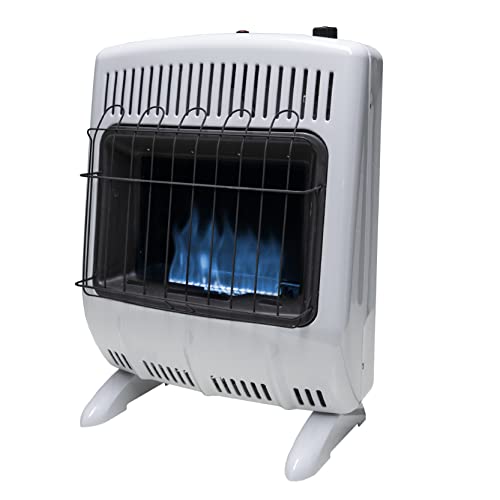
The Mr. Heater MHVFBF20LPT is a vent-free blue flame wall heater that delivers up to 20,000 BTU and is intended for spaces around 700 sq. ft. It includes a thermostat for precise temperature control and a battery-powered electronic ignition for easier starts. The heater is rated to operate at elevations up to 4,500 ft and consumes about 0.926 lbs of propane per hour at full output.
Safety features include a factory-installed Oxygen Depletion Sensor (ODS) that shuts the unit off if oxygen levels fall. The model’s vent-free design promotes convective heating by warming air throughout the garage. For garages with moderate insulation and typical ceiling height, this unit provides balanced, steady warmth while maintaining common vent-free safety systems.
Dyna-Glo 30,000 BTU Liquid Propane Blue Flame Wall Heater

This Dyna-Glo model is a liquid propane ready, vent-free blue flame wall heater with a variable output of 24,000–30,000 BTU. Its blue flame technology convects heat to warm the air, functioning similarly to a central heating system’s air warming. The manufacturer lists up to 1,000 sq. ft. coverage depending on insulation and garage layout.
Call 888-896-7031 for Free Local HVAC Quotes – Compare and Save Today!
Because the unit is designed for wall mounting, it is a common choice for garages seeking strong convective heating without ductwork. Note that Dyna-Glo specifies fuel readiness without conversion; follow local codes and the product manual for proper installation and gas hookup to ensure safe operation.
Dyna-Glo IR30PMDG-1 30,000 BTU Infrared Vent Free Wall Heater

The Dyna-Glo IR30PMDG-1 uses infrared radiant technology rather than convection. With a variable output up to 30,000 BTU, it radiates heat that warms objects and people first, similar to sunlight. Manufacturers note effective coverage up to 1,000 sq. ft. depending on layout and thermal losses.
Infrared radiant heat can feel warmer at lower air temperatures because it heats surfaces directly, making it advantageous for garages where doors open frequently or spaces have high ceilings. As a vent-free product, follow safety guidelines and ensure proper clearance and installation per the manual and local codes.
ProCom ML300TBA-B 30,000 BTU Blue Flame Ventless Heater

The ProCom ML300TBA-B is a compact blue flame ventless heater with a maximum output of 30,000 BTU. ProCom lists heating capability up to 1,400 sq. ft. in optimized conditions. It offers high/medium/low thermostat control and includes wall-mount hardware plus base feet for optional floor placement.
Call 888-896-7031 for Free Local HVAC Quotes – Compare and Save Today!
This unit emphasizes a slim profile for versatile installation. For garages that require stronger heat and flexible placement, the included thermostat control supports maintaining set temperatures. Ensure installation follows local safety and venting rules for vent-free appliances and that the garage oxygen levels and ventilation meet code requirements.
Dyna-Glo Signature Series 20,000 BTU Blue Flame Thermostatic Heater

The Dyna-Glo Signature Series is a vent-free blue flame wall heater with adjustable output between 16,000 and 20,000 BTU and thermostatic control for maintaining set temperatures. It is intended for spaces up to about 700 sq. ft. and operates by convecting heat into the air.
Thermostatic control supports energy-conscious operation in a garage by cycling the unit to maintain comfort. The vent-free design simplifies installation compared to direct vent systems, but local regulations may restrict vent-free heating in garages—verify local codes and ventilation needs before installation.
Buying Guide: How To Choose A Propane Wall Heater For Your Garage
Choosing a propane wall heater for a garage requires evaluating type, capacity, safety, installation, and operating conditions. Below are the key considerations and comparison perspectives to help you decide.
1. Vent-Free vs. Direct-Vent vs. Radiant
- Vent-Free (Blue Flame): Heats air by convection; efficient, simple to install, and space-friendly. Suitable for well-ventilated garages with code allowance.
- Direct-Vent: Sealed combustion draws air from outside and exhausts outside. Better for garages attached to living spaces or where indoor combustion air is a concern.
- Infrared Radiant: Heats objects and people directly, useful in high-ceiling garages or where doors open frequently. Radiant can feel warmer at lower ambient air temps.
2. BTU Output And Coverage
Select a heater with appropriate BTU rating based on garage size, insulation, ceiling height, and climate. As a rule of thumb:
- Small, insulated garage (~200–400 sq. ft.): 10,000–20,000 BTU may suffice.
- Medium garage (~400–800 sq. ft.): 20,000–30,000 BTU often recommended.
- Large or poorly insulated garage (>800 sq. ft.): 30,000 BTU+ or multiple units, or consider radiant heaters.
3. Safety Features
- Oxygen Depletion Sensor (ODS): Shuts unit off if oxygen falls below safe levels—important for vent-free units.
- Tip-over/Overheat Protection: Relevant for portable or floor-placed heaters.
- Sealed-Burn/Direct Vent: Preferred for attached garages or when combustion air concerns exist.
- Always follow local codes and install CO detectors when using combustion heaters in enclosed spaces.
4. Controls And Thermostats
Thermostatic controls deliver regulated comfort and fuel savings. Look for electronic ignition for easier starts and variable heat settings for flexible output. Manual-only models may be less convenient for frequent temperature changes.
5. Fuel Connection And Conversion
Confirm whether the unit is Liquid Propane Ready or requires conversion kits. Some models do not permit fuel conversion. Ensure proper regulator sizing and that the propane supply (cylinder or buried line) meets input requirements.
6. Installation And Clearance
- Wall-mount models require structural support and clearance from combustibles. Check the manual for exact clearances.
- Direct vent units need proper vent routing; plan for exterior penetration.
- Consider placement relative to garage doors and work areas to avoid drafts that reduce effectiveness.
7. Operating Environment Factors
- Elevation: Some units have reduced performance at higher elevations; check manufacturer elevation ratings.
- Insulation: Better insulation reduces required BTUs and runtime.
- Door Usage: Frequently opened doors favor radiant heaters that warm people directly rather than convective heat lost to drafts.
8. Maintenance And Longevity
Regular inspection of burners, pilot assembly, and gas connections is important. Vent-free units require periodic cleaning of orifices and checks on ODS sensors. Direct-vent systems may demand less frequent indoor cleaning but need vent pipe inspection.
9. Code And Safety Compliance
Always verify local building codes and ordinances for using vent-free propane heaters in garages. Many jurisdictions restrict or have special rules for vent-free combustion appliances in attached garages or sleeping-areas. Install CO and smoke detection per local code.
Comparison Perspectives
- Efficiency: Vent-free units convert nearly all fuel to heat for the space, but combustion products remain indoors; direct-vent units remove exhaust to outdoors.
- Comfort Type: Convective (blue flame) evenly warms air; radiant warms people/objects directly and can be more comfortable in drafty garages.
- Installation Complexity: Vent-free is simpler; direct-vent requires routing and possibly more labor and materials.
- Fuel Consumption: Higher BTU units consume more fuel; choose a model that balances runtime needs and propane supply logistics.
Use the product features, your garage layout, ventilation capability, and local codes to choose between blue flame vent-free, infrared radiant, or direct-vent options. For attached garages or stricter code environments, favor sealed direct-vent systems or consult local permitting authorities before purchase.
Tips for Getting the Best HVAC Prices
- Prioritize Quality Over Cost
The most critical factor in any HVAC project is the quality of the installation. Don’t compromise on contractor expertise just to save money. - Check for Rebates
Always research current rebates and incentives — they can significantly reduce your overall cost. - Compare Multiple Quotes
Request at least three estimates before making your choice. You can click here to get three free quotes from local professionals. These quotes include available rebates and tax credits and automatically exclude unqualified contractors. - Negotiate Smartly
Once you've chosen a contractor, use the proven strategies from our guide — How Homeowners Can Negotiate with HVAC Dealers — to get the best possible final price.