
Quick Guide: Below are five IBC tote heaters selected for performance, insulation, and thermostat control. The table summarizes key attributes to help you compare models at a glance.
| Product | Capacity Fit | Thermostat | Shell / Insulation |
|---|---|---|---|
| WXHDYBLANKET Full Cover IBC Tote Heater Blanket | 275–330 Gallon | Optional Adjustable Controller, Self-Regulate 150°F | Heavy PVC, 0.4″ Insulation, IP67 |
| Powerblanket 275-Gallon Super-Rugged PRO | 275 Gallon | Adjustable To 145°F | Insulated Removable Top, Rugged Construction |
| Powerblanket TH250 Industrial 250 gal Tote Heater | 250 Gallon | Adjustable To 145°F | D-15 Vinyl Shell, Insulated Top |
| Powerblanket TH350G Extreme 350 gal Tote Heater | 350 Gallon | Adjustable To 145°F | D-15 Vinyl Shell, Insulated Top |
| Powerblanket 330 Gallon DEF Tote Heater | 330 Gallon | Internal Preset Thermostat To 70°F (DEF) | Industrial Gray Vinyl, Insulated Lid |
Content Navigation
- WXHDYBLANKET-ETL 275-330 Gallon Full Cover IBC Tote Heater Blanket
- Powerblanket 275-Gallon Insulated IBC Tote Heater Super-Rugged PRO
- Powerblanket TH250 Industrial Grade 250 Gal IBC Tote Heater
- Powerblanket TH350G Industrial 350 Gal Insulated IBC Tote Heater
- Powerblanket 330 Gallon Industrial DEF Tote Heater With Thermostat
- Buying Guide: How To Choose An IBC Tote Heater
- Capacity Fit And Sizing
- Temperature Range And Control
- Insulation And Heat Retention
- Power And Performance
- Weather Resistance And Materials
- Installation, Straps, And Accessibility
- Safety Certifications And Protection
- Application-Specific Considerations
- Energy Use And Operating Costs
- Maintenance And Lifespan
- Comparison Perspectives
WXHDYBLANKET-ETL 275-330 Gallon Full Cover IBC Tote Heater Blanket

This full-cover tote heater is designed for 275–330 gallon IBC tanks and emphasizes rapid heat-up and protection against heat loss. The unit is 120V, 1400W and offers a self-regulating 150°F limit. Inside there is a 0.4-inch insulation layer intended to concentrate heat and reduce energy loss.
Features include four unit straps to connect multiple blankets, two webbing straps for storage, and a heavy PVC outer shell for low-temperature durability. The blanket is rated IP67 waterproof and carries an ETL certificate. The manufacturer lists a full-wrap size range of 3.3 ft to 14.6 ft to accommodate various tote dimensions.
Powerblanket 275-Gallon Insulated IBC Tote Heater Super-Rugged PRO

The Powerblanket PRO model provides a full-wrap design with an insulated removable top to reduce heat loss and maintain consistent temperatures. It is engineered for extreme environments, with performance claims down to -60°F (-51°C).
Call 888-896-7031 for Free Local HVAC Quotes – Compare and Save Today!
The integrated thermostat is adjustable from ambient to 145°F (±5°F), giving control for a range of materials that require gentle or higher-temperature maintenance. This PRO model is listed as delivering 25% more power than standard Powerblanket tote heaters for faster recovery and better hold in severe cold.
Powerblanket TH250 Industrial Grade 250 Gal IBC Tote Heater

This industrial-grade tote heater is built with a D-15 vinyl shell and includes an insulated top to retain heat and minimize hot/cold spots. The thermostat is adjustable from ambient up to 145°F (±5°F), enabling target temperature control based on stored contents.
The TH250 emphasizes targeted and distributed heating to prevent stratification inside the tote. The weather-resistant construction is oriented for outdoor and indoor industrial use where consistent heat distribution is required.
Powerblanket TH350G Industrial 350 Gal Insulated IBC Tote Heater
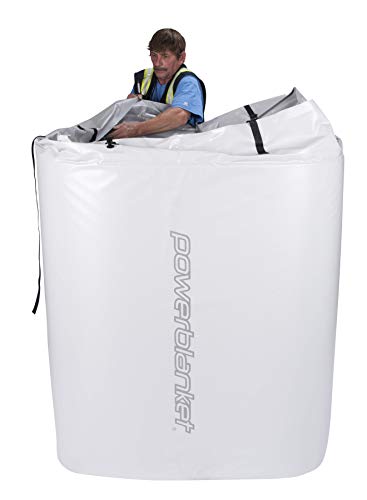
The TH350G is a larger-capacity Powerblanket offering similar core features to the TH250 but sized for 350-gallon applications. It uses a D-15 vinyl shell and an insulated top to reduce heat loss and maintain uniform temperatures across the tank.
Call 888-896-7031 for Free Local HVAC Quotes – Compare and Save Today!
Thermostat control ranges from ambient up to 145°F (±5°F). The design aims to eliminate hot and cold spots through distributed heating elements, making it suitable for larger IBCs with materials sensitive to freezing or viscosity changes.
Powerblanket 330 Gallon Industrial DEF Tote Heater With Thermostat

This model is configured specifically with DEF (diesel exhaust fluid) in mind and is built to fit 330-gallon IBCs. The blanket offers a full-wrap design with insulated removable top and is made from industrial-grade gray vinyl with heavy-duty straps for secure attachment.
An internal preset thermostat is listed to maintain DEF-specific temperature targets from ambient up to about 70°F (±10°F), aligning with DEF storage recommendations. The construction is intended for sustained performance in adverse weather conditions.
Buying Guide: How To Choose An IBC Tote Heater
Selecting an IBC tote heater requires weighing capacity, temperature control, insulation, durability, and safety features to match your application. Below are the primary considerations and comparison perspectives.
Capacity Fit And Sizing
Ensure the heater is rated for your IBC size (e.g., 250, 275, 330, 350 gallon). A snug fit improves heat transfer and reduces energy consumption. Full-wrap designs with removable tops usually accommodate a range of heights and allow easier access to the tote opening.
Temperature Range And Control
Identify the target temperature needed for your stored material. DEF has lower target temperatures (around 70°F), while some chemicals or viscosity-sensitive fluids may require higher setpoints. Choose models with adjustable thermostats for flexibility. Self-regulating elements offer built-in limits to prevent overheating.
Insulation And Heat Retention
Look for blankets with substantial insulation layers and insulated tops. These features reduce required wattage and help maintain consistent internal temperatures. Thicker internal insulation and well-sealed tops minimize stratification and cold spots in the tote.
Power And Performance
Wattage and element distribution affect recovery time and ability to maintain temperature in low ambient conditions. Higher power or models marketed for extreme cold (e.g., rated to -60°F) deliver better performance but may require more robust power supply and higher initial energy draw.
Weather Resistance And Materials
Exterior shell material and water resistance matter for outdoor installations. Vinyl shells, heavy PVC, and IP67 ratings provide differing levels of protection. Consider UV resistance and tear strength if the unit will face sun, wind, or abrasion.
Installation, Straps, And Accessibility
Quick-attach straps and removable tops make installation and maintenance easier. Models offering integrated storage straps can be folded away when not in use. Ensure straps secure the blanket evenly to avoid gaps that reduce thermal efficiency.
Safety Certifications And Protection
ETL, UL, or other certifications indicate third-party testing for electrical and heating safety. Ground-fault circuit interrupter (GFCI) protection is important for outdoor and wet environments. Check for self-regulating features that limit maximum surface temperature.
Application-Specific Considerations
- DEF Storage: Use blankets with preset or adjustable thermostats tuned for DEF (around 70°F) to prevent degradation.
- Extreme Cold Environments: Select models rated for very low ambient temperatures and higher wattage for quick recovery.
- Viscous Fluids: Uniform heating and insulated tops reduce viscosity and improve pumpability.
- Chemical Compatibility: Confirm exterior materials and straps resist contact with the stored product and any maintenance chemicals.
Energy Use And Operating Costs
Compare wattage to expected duty cycles. Full-wrap, insulated models typically require less continuous energy than poorly insulated alternatives because they retain heat better. Consider thermostatic control to reduce runtime and overall energy use.
Maintenance And Lifespan
Choose durable outer materials and check for replaceable components. Removable tops, modular straps, and serviceable thermostats simplify repairs. Verify warranty terms and availability of replacement parts.
Tips for Getting the Best HVAC Prices
- Prioritize Quality Over Cost
The most critical factor in any HVAC project is the quality of the installation. Don’t compromise on contractor expertise just to save money. - Check for Rebates
Always research current rebates and incentives — they can significantly reduce your overall cost. - Compare Multiple Quotes
Request at least three estimates before making your choice. You can click here to get three free quotes from local professionals. These quotes include available rebates and tax credits and automatically exclude unqualified contractors. - Negotiate Smartly
Once you've chosen a contractor, use the proven strategies from our guide — How Homeowners Can Negotiate with HVAC Dealers — to get the best possible final price.
Comparison Perspectives
- Performance vs. Energy Use: High-wattage, extreme-cold models heat faster but may draw more power; insulated designs help balance this trade-off.
- Control vs. Simplicity: Adjustable thermostats provide flexibility for multiple materials; preset units reduce complexity for single-use cases like DEF.
- Durability vs. Cost: Industrial-grade shells and certifications increase resilience for outdoor use, which may justify higher initial investment for long-term reliability.