
Finding a propane heater on clearance requires balancing output, safety features, and installation type. Below is a concise selection of reliable propane heaters across portable, wall-mounted, vent-free, and forced-air categories to help you choose the best option for your space and needs.
| Product | Type | Heat Range |
|---|---|---|
| Mr. Heater Portable Buddy MH9BX | Portable Radiant | 4,000–9,000 BTU |
| Mr. Heater 4,000–18,000 BTU Unit | Adjustable Portable | 4,000–18,000 BTU |
| Mr. Heater MHVFBF20LPT | Vent-Free Blue Flame Wall | Up To 20,000 BTU |
| Dyna-Glo 30,000 BTU Wall Heater | Vent-Free Blue Flame Wall | 24,000–30,000 BTU |
| Mr. Heater MH60QFAV 60,000 BTU | Portable Forced-Air | 30,000–60,000 BTU |
Content Navigation
- Mr. Heater Portable Buddy MH9BX
- Mr. Heater 4,000-18,000 BTU Unit
- Mr. Heater 20,000 BTU Vent Free Wall Heater
- Dyna-Glo 30,000 BTU Wall Heater
- Mr. Heater 60,000 BTU Forced-Air Heater
- Buying Guide: How To Choose A Propane Heater On Clearance
- 1. Match Heater Type To Application
- 2. Assess BTU Output And Coverage
- 3. Prioritize Safety Features
- 4. Fuel Compatibility And Tank Requirements
- 5. Installation, Venting, And Clearance
- 6. Noise, Portability, And Runtime
- 7. Warranty, Certification, And Local Codes
- 8. Compare Operating Costs And Efficiency
- 9. Clearance-Specific Checks
Mr. Heater Portable Buddy MH9BX
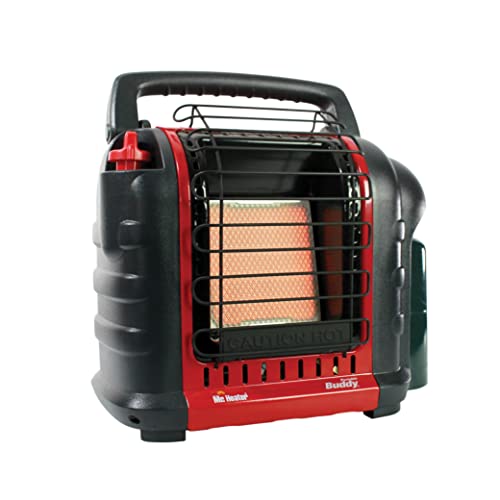
Product Type: Portable radiant propane heater. This model uses infrared technology to heat objects and people directly rather than relying solely on air temperature.
Key Features: Adjustable output from 4,000 to 9,000 BTU, suited for up to 225 sq. ft.; enhanced tip-over safety switch with audible engagement; reliable Piezo igniter for matchless ignition.
This heater is optimized for close-range, localized heating such as in campers, small workshops, or patios. The radiant design produces a sun-like warmth that feels immediate at short distance. Safety features focus on tip-over protection and safe ignition; it is commonly used where portability and direct heat are priorities.
Mr. Heater 4,000-18,000 BTU Unit
Call 888-896-7031 for Free Local HVAC Quotes – Compare and Save Today!
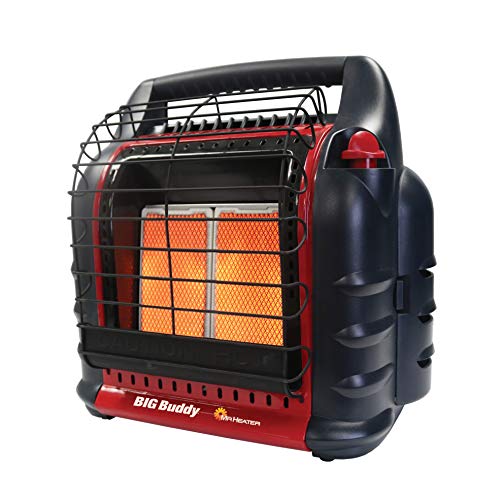
Product Type: Variable-output propane tank heater with dual-tank capability. Designed for flexibility across settings and environments.
Key Features: Three heat settings (4,000 / 9,000 / 18,000 BTU); coverage up to 450 sq. ft. on higher output; single control knob with Piezo sparker; automatic tip-over shutoff; compatible with larger propane tanks (up to 40 lb) when using additional hose and filter.
This model is useful when you need adjustable range from personal warmth to whole small-room coverage. The dual-tank connection option and high 18,000 BTU setting make it suitable for larger tents, porches, or workshop spaces where temporary but stronger heat is required.
Mr. Heater 20,000 BTU Vent Free Wall Heater
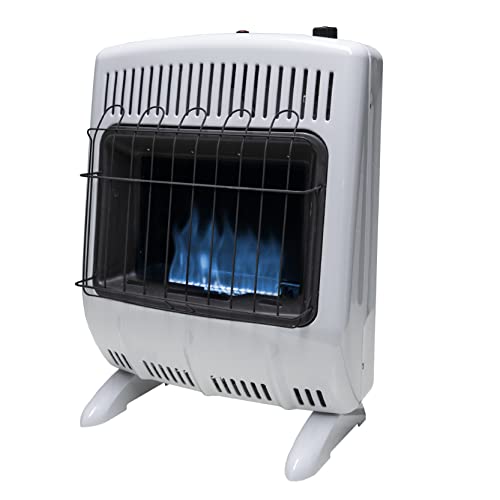
Product Type: Vent-free blue flame wall heater for indoor rooms such as additions, sunrooms, and cabins.
Key Features: Up to 20,000 BTU coverage for rooms up to 700 sq. ft.; built-in thermostat with battery-powered electronic ignition; Oxygen Depletion Sensor (ODS) for automatic shutoff; designed to operate reliably at elevations up to 4,500 ft.
Call 888-896-7031 for Free Local HVAC Quotes – Compare and Save Today!
As a fixed wall unit, this heater offers continuous comfort without ducting. The vent-free design convects room air and is effective in well-ventilated living areas. The ODS and thermostat provide safety and regulation suitable for primary supplemental heating in enclosed spaces where venting is impractical.
Dyna-Glo 30,000 BTU Wall Heater

Product Type: High-output vent-free blue flame wall heater designed to heat larger rooms or open areas.
Key Features: Variable output between 24,000 and 30,000 BTU; intended for liquid propane use; convective blue flame technology mimics central heating by warming the air; wall-mount installation to save floor space.
This wall-mounted unit targets larger zones or open-plan spaces where higher BTU is necessary. The convective blue flame produces steady ambient warmth rather than direct radiant heat, and the wall-mount configuration is useful where permanent installation is desired.
Mr. Heater 60,000 BTU Forced-Air Heater

Product Type: Portable forced-air propane heater built for job sites, large garages, and workshop heating.
Key Features: Variable output 30,000–60,000 BTU; QBT technology for reduced noise; runs up to 14 hours on a 20 lb tank at low setting; forced-air design distributes heat across larger open areas.
This unit is built for rapid, high-volume heating where airflow distribution is essential. Forced-air heaters are effective at raising ambient temperature quickly for large, semi-enclosed spaces, but they require proper ventilation and clearance per manufacturer guidelines for safe operation.
Buying Guide: How To Choose A Propane Heater On Clearance
When shopping clearance or discounted propane heaters, verify core specifications and safety features rather than solely relying on price. The following considerations ensure the unit fits your space, fuel type, and safety expectations.
1. Match Heater Type To Application
- Portable Radiant Heaters: Best for close-range, direct warmth — ideal for camping, small patios, and spot heating.
- Portable Adjustable Heaters: Good for flexibility; select variable BTU models to adapt to different room sizes and usage patterns.
- Vent-Free Wall Heaters (Blue Flame): Suitable for indoor supplemental heat when venting is not feasible; ensure adequate ventilation and ODS safety feature.
- Forced-Air Heaters: Intended for large garages, workshops, and job sites where quick whole-space heating is needed.
2. Assess BTU Output And Coverage
- Estimate space size in square feet; use manufacturer coverage as a guideline but account for insulation, ceiling height, and outdoor exposure.
- Choose adjustable-output models if you need to vary heat between mild and cold conditions.
3. Prioritize Safety Features
- Tip-Over Protection: Essential for portable units used in unstable environments.
- Oxygen Depletion Sensor (ODS): Required for vent-free indoor heaters to prevent unsafe oxygen levels.
- Automatic Shutoff: Useful for forced-air and high-output models to respond to overheating or flame failure.
4. Fuel Compatibility And Tank Requirements
- Confirm the unit is compatible with propane (LPG) if that is your intended fuel; some units are natural gas only.
- Check if adapters, hoses, or larger tank connections are required for extended run times or higher BTU settings.
5. Installation, Venting, And Clearance
- Wall-mounted and vent-free units need proper mounting and clearance from combustible materials; follow manufacturer instructions exactly.
- Forced-air models and larger portable units may require ventilation to prevent accumulation of combustion byproducts in enclosed spaces.
6. Noise, Portability, And Runtime
- Consider noise levels: forced-air units and high-output heaters can be loud; look for reduced-noise technology if noise matters.
- Assess portability factors such as weight, handles, and base design if moving the heater frequently is expected.
- Runtime on a standard tank varies by BTU output; higher BTU reduces runtime unless using a larger tank or dual-tank setup.
7. Warranty, Certification, And Local Codes
- Check manufacturer warranty coverage and parts availability when buying clearance items.
- Look for safety certifications (e.g., CSA, ANSI) and ensure installation and operation comply with local codes, especially for vent-free units.
8. Compare Operating Costs And Efficiency
- Higher BTU output increases fuel consumption. Compare fuel usage rates to estimate running costs for your typical usage.
- Consider radiant vs convective heating efficiency based on how you intend to use the heat (spot vs whole-room).
9. Clearance-Specific Checks
- Inspect clearance items for complete parts, intact safety labels, and unaltered components.
- Confirm the return policy and whether the manufacturer warranty still applies to clearance purchases.
By prioritizing the correct heater type, required safety features, and installation context, you can choose a propane heater on clearance that meets performance expectations without compromising safety. Review product listings carefully, and consult manufacturer manuals when installing or operating any propane heater.
Tips for Getting the Best HVAC Prices
- Prioritize Quality Over Cost
The most critical factor in any HVAC project is the quality of the installation. Don’t compromise on contractor expertise just to save money. - Check for Rebates
Always research current rebates and incentives — they can significantly reduce your overall cost. - Compare Multiple Quotes
Request at least three estimates before making your choice. You can click here to get three free quotes from local professionals. These quotes include available rebates and tax credits and automatically exclude unqualified contractors. - Negotiate Smartly
Once you've chosen a contractor, use the proven strategies from our guide — How Homeowners Can Negotiate with HVAC Dealers — to get the best possible final price.