
Choosing the right gas boiler heater involves matching capacity, fuel type, installation style, and controls to your home’s needs. The table below summarizes five relevant gas boiler and gas-fired heater products selected for whole-home heating, tankless hot water, and space heating applications.
| Product | Type | Key Feature | Fuel |
|---|---|---|---|
| Rinnai i060CN Condensing Gas Boiler | Wall-Mount Condensing Boiler | Integrated DHW Plate Heat Exchanger, Modulating Burner | Natural Gas |
| Rinnai i090CN Condensing Gas Boiler | Wall-Mount Condensing Boiler | Higher Output Model With Multizone Control | Natural Gas |
| Rinnai RXP199iN Tankless Water Heater | Condensing Tankless Water Heater | High Flow Up To 11.1 GPM, Indoor/Outdoor | Natural Gas Or Propane |
| TENGCHANG 18L LPG Propane Tankless Boiler | Tankless Propane Water Heater | 4.75 GPM, 90,000 BTU, Digital Display | Propane (LPG) |
| Mr. Heater Big Maxx MHU80NG | Unit Heater | 80,000 BTU Garage/Workshop Heater, Venting Options | Natural Gas |
Content Navigation
- Rinnai i060CN Condensing Gas Boiler, 60K BTU
- Rinnai i090CN Condensing Gas Boiler, 90K BTU
- NEW Rinnai RXP199iN Condensing Smart Sense Tankless Water Heater
- TENGCHANG 18L LPG Propane Tankless Water Heater, 90,000 BTU
- Mr. Heater F260560 Big Maxx MHU80NG Natural Gas Unit Heater, 80,000 BTU
- Buying Guide: How To Choose A Gas Boiler Heater
- 1. Application And System Type
- 2. Fuel Type And Availability
- 3. Capacity And Sizing
- 4. Efficiency And Operating Cost
- 5. Controls, Connectivity, And Integration
- 6. Installation, Venting, And Maintenance
- 7. Safety Features
- 8. Comparison Perspectives
- 9. Regulatory And Code Compliance
- 10. Parts And Serviceability
Rinnai i060CN Condensing Gas Boiler, 60K BTU
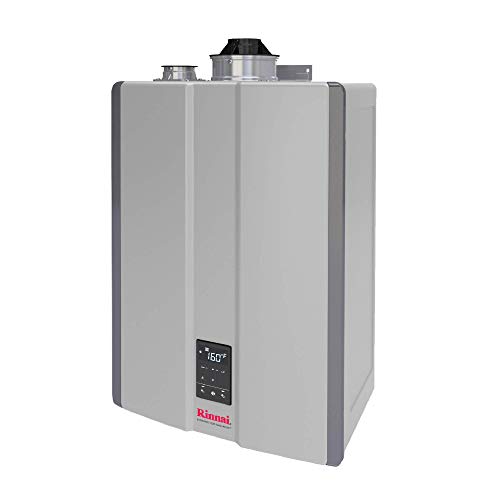
The Rinnai i060CN is a compact wall-mounted condensing boiler designed for whole-home heating and domestic hot water (DHW). It uses a stainless-steel heat exchanger and a modulating wire mesh burner to improve efficiency and match output to demand.
Key features include a built-in domestic hot water plate heat exchanger for showers and faucets, an integrated multizone control capability for connecting thermostats and control pumps, and a child-lock safety function that can shut off central heating. The digital display provides temperature and pressure readouts, and an outdoor reset sensor allows simplified parameter settings.
Operational ranges are controllable: central heating (CH) from 104°F to 180°F and DHW from 98°F to 140°F. The unit’s size and wall-mount design favor installations with limited floor space while providing efficient condensing operation for lower fuel consumption when properly installed and vented.
Rinnai i090CN Condensing Gas Boiler, 90K BTU
Call 888-896-7031 for Free Local HVAC Quotes – Compare and Save Today!
The Rinnai i090CN shares the same platform as the i060CN but offers higher output at 90K BTU for larger homes or higher DHW demand. It retains the stainless-steel heat exchanger and modulating burner for efficient combustion and load matching.
This unit offers the same multizone control capability for integrated thermostat and pump control, plus the built-in DHW plate heat exchanger. Safety features include the child-lock and automatic central heating shutoff. The digital interface and outdoor reset support easier commissioning and seasonal adjustments.
Because of its higher capacity, the i090CN is suited to homes with multiple bathrooms or greater hydronic heating demands. Proper system sizing, venting, and pump integration are key to realizing condensing efficiencies and stable DHW performance.
NEW Rinnai RXP199iN Condensing Smart Sense Tankless Water Heater

The Rinnai RXP199iN is a high-capacity condensing tankless water heater offering up to 11.1 GPM and 199,000 BTU. It’s designed for indoor or outdoor installation (with required vent cap) and supports both natural gas and propane in one model through Smart Sense gas control.
This model focuses on continuous DHW delivery for large households, with features such as a Quick Flush function for maintenance, a modern user interface, and high Uniform Energy Factor (UEF). The compact form factor delivers substantial flow rates while employing condensing technology to improve energy efficiency compared with non-condensing units.
Call 888-896-7031 for Free Local HVAC Quotes – Compare and Save Today!
For applications prioritizing hot water supply over space heating integration, the RXP199iN provides scalable performance. Installers should confirm venting, gas line sizing, and water flow requirements to match fixture counts and expected simultaneous demand.
TENGCHANG 18L LPG Propane Tankless Water Heater, 90,000 BTU

The TENGCHANG 18L is a propane-only tankless water heater rated at 90,000 BTU with a reported 4.75 GPM output. It emphasizes compact design and digital controls, suitable for point-of-use or smaller whole-house hot water applications on LPG.
Efficiency is achieved via advanced combustion and a high-efficiency heat exchanger. Safety features include overheat protection, flame-failure protection, dry combustion protection, and pressure-related protections. The unit operates over a broad water pressure range and provides a maximum temperature rise rating.
This product is applicable where propane is the available fuel and where electrical independence or simpler installations are desired. Note manufacturer guidance on draining to prevent freeze damage when not in use in cold climates.
Mr. Heater F260560 Big Maxx MHU80NG Natural Gas Unit Heater, 80,000 BTU
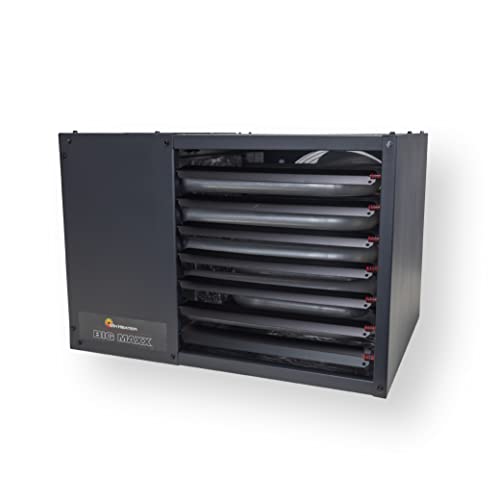
The Mr. Heater Big Maxx MHU80NG is a natural gas unit heater designed for garages, workshops, and light commercial spaces. Rated at 80,000 BTU, it’s built as a forced-air unit with category 1 vertical or category 3 horizontal venting.
Included components are angled mounting brackets and a liquid propane conversion kit (thermostat, hose, and regulator not included). The unit specifies minimum clearances and is intended for direct space heating rather than hydronic integration. Electrical requirement is minimal and performance is sized for areas up to about 2,000 sq. ft. depending on insulation and climate.
This heater is an option when centralized hydronic boilers are not practical or when open-space warm-air heating is preferred. It requires proper venting and clearances per local codes for safe operation.
Buying Guide: How To Choose A Gas Boiler Heater
Selecting the right gas boiler heater depends on system goals—space heating, domestic hot water, or both—and on fuel availability, installation constraints, and performance needs. Below are key considerations and comparison angles.
Tips for Getting the Best HVAC Prices
- Prioritize Quality Over Cost
The most critical factor in any HVAC project is the quality of the installation. Don’t compromise on contractor expertise just to save money. - Check for Rebates
Always research current rebates and incentives — they can significantly reduce your overall cost. - Compare Multiple Quotes
Request at least three estimates before making your choice. You can click here to get three free quotes from local professionals. These quotes include available rebates and tax credits and automatically exclude unqualified contractors. - Negotiate Smartly
Once you've chosen a contractor, use the proven strategies from our guide — How Homeowners Can Negotiate with HVAC Dealers — to get the best possible final price.
1. Application And System Type
- Hydronic Boiler (Condensing): Best for whole-home radiant or baseboard heating. Condensing models (Rinnai i060CN, i090CN) recover latent heat from exhaust, improving efficiency when return temperatures are low.
- Tankless Water Heater: Prioritizes continuous DHW flow for bathrooms and kitchens. High-flow units (RXP199iN) serve multiple fixtures; smaller tankless units are for point-of-use.
- Unit Heater: Forced-air, garage, or shop heating (Mr. Heater) where hydronic distribution is impractical.
2. Fuel Type And Availability
- Natural Gas vs Propane: Confirm supply and line capacity. Some models are gas-specific while others accept either fuel with proper configuration (Rinnai RXP199iN supports both with Smart Sense).
- Conversion Kits: Verify whether a conversion kit is included or required and if a licensed technician must perform conversions.
3. Capacity And Sizing
- BTU Output: Match BTU to heating load or DHW demand. Oversizing reduces efficiency and cycling; undersizing fails to meet comfort needs.
- GPM For Tankless: Calculate simultaneous fixture use to select appropriate GPM (flow rate) for tankless water heaters.
4. Efficiency And Operating Cost
- Condensing Efficiency: Condensing boilers and tankless condensing units can significantly reduce fuel use when system return temperatures stay low.
- Modulating Burners: Modulation adapts output to load, improving comfort and reducing short cycling.
5. Controls, Connectivity, And Integration
- Multizone Control: Useful for zoned hydronic systems to manage different temperature needs and improve efficiency.
- Digital Interfaces: Make setup and monitoring easier; features like outdoor reset help optimize performance for changing weather.
- Smart/WiFi Modules: Optional modules may allow remote monitoring but confirm compatibility with existing thermostats.
6. Installation, Venting, And Maintenance
- Venting Requirements: Condensing units require corrosive-resistant venting and proper condensate drainage. Ensure vents meet local codes.
- Clearances And Mounting: Wall-mount condensing boilers save floor space but require secure support and service access.
- Service Access: Consider filter, burner, and heat-exchanger access for cleaning and annual maintenance.
7. Safety Features
- Flame Failure And Overheat Protection: Prevent unsafe combustion conditions; common on tankless and condensing units.
- Oxygen Depletion Sensors And Shutoffs: Important for ventless and indoor unvented appliances; check local codes for allowed usage.
8. Comparison Perspectives
- Whole-Home Hydronic vs Forced-Air Unit: Hydronic systems provide even heat and integrate easily with radiant floors; forced-air unit heaters heat open spaces more quickly.
- Condensing vs Non-Condensing: Condensing units are typically more efficient but require condensate management and cooler return water for full benefit.
- High-Flow Tankless vs Storage Tank: Tankless saves space and avoids standby losses but requires sufficient gas and water flow; storage tanks provide simpler peak flow handling for short bursts.
9. Regulatory And Code Compliance
- Local Codes: Verify venting, combustion air, and installation regulations. Some jurisdictions restrict indoor ventless appliances.
- Permits And Professional Installation: Gas appliance installation generally requires licensed professionals to meet safety and warranty conditions.
10. Parts And Serviceability
- Replacement Parts Availability: Check availability of components such as thermocouples, thermopiles, and control modules for long-term serviceability.
- Manufacturer Support: Look into warranty terms and authorized service networks for timely maintenance and repairs.