
Finding a ceiling heater with a reliable thermostat helps maintain consistent temperatures, save energy, and protect equipment. Below is a concise comparison of five ceiling-mounted heaters that include or support thermostatic control, chosen for common garage, workshop, and utility-space needs.
| Product | Brand | Key Feature |
|---|---|---|
| Comfort Zone 10,000W Hard-Wired Garage Heater | Comfort Zone | Digital Thermostat, Remote, 12-Hour Timer |
| Comfort Zone 6,000W Digital Ceiling Heater (CZ225ER) | Comfort Zone | Digital Thermostat, Remote, Overheat Protection |
| DR. INFRARED DR-975 7500W Hardwired Heater | DR. INFRARED HEATER | Remote Controlled Thermostat, Wall/Ceiling Mount |
| TEMPWARE 7500W Electric Garage Heater | TEMPWARE | Built-In Thermostat, ECO Mode, Timer |
| Comfort Zone 7,500W Ceiling Heater (CZ230ERG) | BLACK+DECKER / Comfort Zone | Thermostat, Timer, Fan Setting, Ceiling Mount |
Content Navigation
- Comfort Zone 10,000W Hard-Wired Garage Heater
- Comfort Zone 6,000W Digital Ceiling Heater (CZ225ER)
- DR. INFRARED DR-975 7500W Hardwired Shop Heater
- TEMPWARE 7500W Electric Garage Heater With Thermostat
- Comfort Zone 7,500W Ceiling Heater (CZ230ERG)
- Buying Guide: Choosing The Right Ceiling Heater With Thermostat
- 1. Heating Capacity And Coverage
- 2. Thermostat Type And Control Options
- 3. Air Distribution And Mounting Angle
- 4. Installation Requirements
- 5. Safety Features
- 6. Build Quality And Environment
- 7. Energy Efficiency And Operating Cost
- 8. Serviceability And Warranty
- 9. Noise And Fan Operation
- 10. Placement And Zoning Considerations
Comfort Zone 10,000W Hard-Wired Garage Heater

This heavy-duty, ceiling-mounted unit is built for large garages and industrial spaces. It uses a fan-forced air system with adjustable directed airflow vents to reduce cold spots and distribute heat widely. The integrated digital thermostat provides precise temperature control and the included 12-hour timer and remote let users schedule and adjust settings remotely.
Construction features include a heavy-gauge steel body, fully sheathed heating elements, and an enclosed motor for dust resistance. Safety features include overheat protection. The heater requires hard-wired 240V installation, intended for professional or qualified DIY electrical work.
Comfort Zone 6,000W Digital Ceiling Heater (CZ225ER)

The CZ225ER is a mid-capacity ceiling-mounted fan-forced heater suited to smaller garages and workshops. It emphasizes wide air distribution using adjustable louvers and a fan-forced design to help eliminate chilly corners.
Call 888-896-7031 for Free Local HVAC Quotes – Compare and Save Today!
Key control features include a digital thermostat, remote control, and 12-hour timer. The unit is built from heavy-gauge steel for durability and requires hard-wired 240V installation. Overheat protection is included. This model is targeted at spaces where a balance of power and controllability is desired.
DR. INFRARED DR-975 7500W Hardwired Shop Heater

The DR-975 is a heavy-duty electric heater offering selectable power configurations and a remote-controlled thermostat with a temperature range of 50–85°F. It supports wall or ceiling mounting for flexible placement in shops or garages.
Installation requires hard-wired 240V connection and appropriate gauge wiring (recommended 8 AWG copper for certain configurations). The design focuses on robust heating capacity for larger or poorly insulated spaces. The remote thermostat gives on-the-fly adjustments without ladder access.
TEMPWARE 7500W Electric Garage Heater With Thermostat
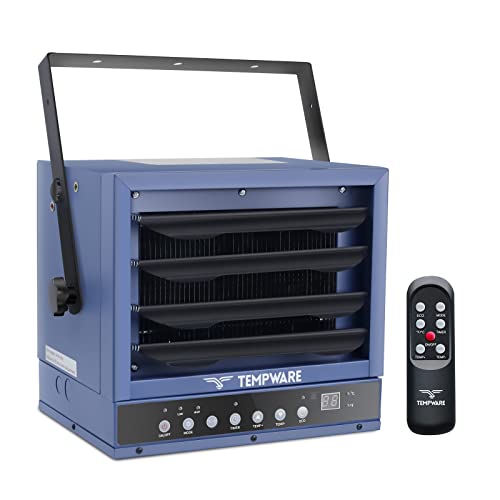
Designed for workshop and garage environments, this ceiling-mounted heater offers two heat settings, adjustable louvers, and a built-in thermostat with ECO mode. The ECO feature automatically adjusts operation based on ambient temperature to reduce energy use.
Call 888-896-7031 for Free Local HVAC Quotes – Compare and Save Today!
Additional controls include a 12-hour timer and a full-function remote. Safety features include overheat protection and adjustable mounting angle for targeted heating. The unit is intended for hard-wired 240V installation and is marketed toward larger single-bay spaces up to specified coverage.
Comfort Zone 7,500W Ceiling Heater (CZ230ERG)

This ceiling-mounted fan-forced heater is built for efficient space utilization in garages and small commercial areas. It features an integrated thermostat, timer, fan setting, and adjustable louvers to direct airflow where needed most.
Constructed from heavy-gauge steel, the unit emphasizes durability for poorly insulated spaces. The fan setting can provide circulation with reduced heat output when full heating isn’t required. Hard-wired 240V installation is typical for this class of heater, and overheat protection is provided.
Buying Guide: Choosing The Right Ceiling Heater With Thermostat
Selecting a ceiling heater thermostat system depends on space size, installation capability, control needs, and safety considerations. Below are key factors to compare when evaluating models.
1. Heating Capacity And Coverage
Match the heater’s wattage and BTU output to the volume and insulation of the space. Higher wattage units (6,000–10,000W) suit larger or poorly insulated garages; lower wattage units work for compact rooms. Manufacturers often estimate coverage area—use that as a baseline and increase capacity for high ceilings or low insulation.
2. Thermostat Type And Control Options
Digital thermostats offer more precise setpoints than mechanical thermostats. Remote-controlled thermostats and timers add convenience, letting you adjust settings without ladder access. Consider models with programmable timers or ECO modes for energy savings.
3. Air Distribution And Mounting Angle
Fan-forced heaters with adjustable louvers or directed vents distribute heat more evenly across the room. Ceiling-mounted units should include mounting brackets or adjustable angles to target heat toward work areas and minimize cold corners.
4. Installation Requirements
Most high-capacity ceiling heaters require hard-wired 240V installation. Verify that your electrical panel, circuit capacity, and wire gauge meet the manufacturer’s recommendations. Professional electrician installation is recommended for hard-wired 240V units and where local codes apply.
5. Safety Features
Look for overheat protection, fully sheathed elements, enclosed motors, and ETL or UL listing. Built-in sensors and automatic shutoff reduce fire risk. Ensure clearance and mounting instructions are followed to maintain safe operation.
6. Build Quality And Environment
Heavy-gauge steel housings withstand workshop conditions. For dusty environments, enclosed motors and sheathed elements help reliability. Corrosion-resistant finishes and durable grilles increase longevity in humid or variable-temperature spaces.
7. Energy Efficiency And Operating Cost
Thermostats, timers, and ECO modes reduce runtime and energy consumption. Fan-forced designs may reach setpoints faster, reducing overall run time. Evaluate expected run hours and local electricity costs to compare operational expense rather than only rated wattage.
8. Serviceability And Warranty
Check access to controls and internal components for maintenance. Review manufacturer warranty terms and available replacement parts. Remote thermostats and control panels should be replaceable if damaged.
9. Noise And Fan Operation
Fan-forced models produce operational noise. For quiet workshops, verify fan speed options or units with lower dBA ratings. Some models include a fan-only setting for circulation without full heat output.
10. Placement And Zoning Considerations
Ceiling placement is efficient for floor space, but consider zoning if you have separate work areas. Multiple smaller units with independent thermostats can be more economical than a single oversized unit if you selectively heat occupied zones.
Use this guide to weigh thermostat features, installation needs, and performance characteristics. Prioritize safety listings and installation compatibility with your electrical system when choosing a ceiling heater with a thermostat.
Tips for Getting the Best HVAC Prices
- Prioritize Quality Over Cost
The most critical factor in any HVAC project is the quality of the installation. Don’t compromise on contractor expertise just to save money. - Check for Rebates
Always research current rebates and incentives — they can significantly reduce your overall cost. - Compare Multiple Quotes
Request at least three estimates before making your choice. You can click here to get three free quotes from local professionals. These quotes include available rebates and tax credits and automatically exclude unqualified contractors. - Negotiate Smartly
Once you've chosen a contractor, use the proven strategies from our guide — How Homeowners Can Negotiate with HVAC Dealers — to get the best possible final price.