
Ventless gas heaters deliver immediate warmth without a chimney or venting system, making them popular for supplemental home heating. Below is a quick comparison of five notable ventless models selected for safety features, BTU output, fuel type, and coverage area to help you find a fit for bedrooms, living rooms, garages, or additions.
| Model | Type / Fuel | Max BTU | Coverage | Control |
|---|---|---|---|---|
| ProCom BF10M-B | Blue Flame / Natural Gas or LP | 10,000 | Up To 300 Sq. Ft. | Manual Low-Med-High |
| ProCom MN100TBA-B | Blue Flame / Natural Gas | 10,000 | Up To 500 Sq. Ft. | Thermostat |
| Mr. Heater MHVFBF30NGT | Blue Flame / Natural Gas | 30,000 | Up To 1,000 Sq. Ft. | Thermostat |
| ProCom MN300HBA-B | Blue Flame / Natural Gas | 30,000 | Up To 1,400 Sq. Ft. | Manual 3-Setting |
| Duluth Forge Ventless Fireplace Insert | Dual Fuel Insert / Natural Gas or LP | 26,000 | Up To 1,350 Sq. Ft. | Remote / Piezo Ignition |
Content Navigation
- ProCom BF10M-B Ventless Blue Flame Heater
- ProCom MN100TBA-B Ventless Blue Flame Thermostat
- Mr. Heater MHVFBF30NGT 30,000 BTU Wall Heater
- ProCom MN300HBA-B 30,000 BTU Natural Gas Heater
- Duluth Forge Ventless Dual Fuel Fireplace Insert
- Buying Guide For Ventless Indoor Gas Heaters
- Fuel Type And Availability
- BTU Output And Coverage
- Heat Delivery: Blue Flame vs Infrared
- Controls And Thermostat Options
- Safety Features
- Installation And Placement
- Room Size, Insulation, And Climate Considerations
- Efficiency And Operating Characteristics
- Aesthetic And Functional Features
- Regulatory And Indoor Air Quality Considerations
- Comparison Perspectives
ProCom BF10M-B Ventless Blue Flame Heater

Key Features: 10,000 maximum BTU, dual-fuel (natural gas or liquid propane), manual Low-Med-High control, suitable for up to 300 sq. ft., includes wall mount and base feet.
This compact blue flame ventless heater targets smaller rooms and offices where simple, reliable heat is needed. The dual-fuel capability offers installation flexibility where either natural gas or LP supply is available. The manual three-level control provides straightforward operation without thermostat complexity. Included mounting hardware and base feet allow both wall and floor placement. The design emphasizes a slim profile suited to discreet installation in living spaces.
ProCom MN100TBA-B Ventless Blue Flame Thermostat

Key Features: 10,000 maximum BTU, natural gas, thermostat control with High/Medium/Low settings, heats up to 500 sq. ft., slim profile, includes wall mount and base feet.
Call 888-896-7031 for Free Local HVAC Quotes – Compare and Save Today!
The MN100TBA-B adds thermostat control to the compact blue flame format, improving temperature regulation over simple manual models. Rated to heat larger small spaces (up to 500 sq. ft.), it can serve as a main heat source for modest rooms or supplemental heat in colder areas. Installation options mirror other ProCom compact units. The thermostat-based control improves comfort consistency and reduces manual adjustments.
Mr. Heater MHVFBF30NGT 30,000 BTU Wall Heater
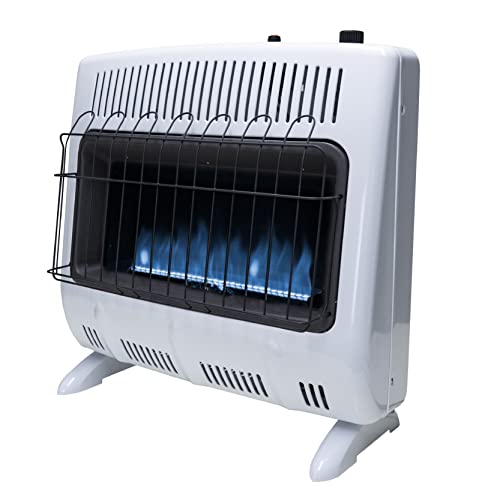
Key Features: Up to 30,000 BTU, natural gas, thermostat control with electric ignition, efficient blue flame burner, suitable for up to 1,000 sq. ft., rated for altitudes up to 4,500 feet.
This higher-capacity 30,000 BTU vent-free wall heater targets larger rooms, sunrooms, and cold additions. The built-in thermostat and electric ignition simplify operation and allow more precise comfort control. The blue flame design emphasizes convection heating, distributing warm air throughout the space. Its higher output and altitude rating make it suitable for a variety of environments where substantial supplemental heat is needed.
ProCom MN300HBA-B 30,000 BTU Natural Gas Heater

Key Features: 30,000 maximum BTU natural gas only, heats up to 1,400 sq. ft., manual 3 heat settings, piezo ignition, includes oxygen depletion sensor (ODS) for automatic shut-off.
Call 888-896-7031 for Free Local HVAC Quotes – Compare and Save Today!
The MN300HBA-B is a high-output natural gas option designed for larger interiors. It operates without electricity using a piezo ignition and offers three manual heat settings for simplicity. The inclusion of an oxygen depletion sensor (ODS) provides an important safety layer by shutting off the burner if oxygen levels drop. This model is suited where robust heat is required and electrical power is not desirable or available.
Duluth Forge Ventless Dual Fuel Fireplace Insert

Key Features: 26,000 BTU, dual fuel (natural gas or liquid propane), heats up to 1,350 sq. ft., decorative ceramic logs, piezo ignition with battery-assisted electric ignition, remote control included on some units.
This ventless fireplace insert combines significant heating capacity with a traditional fireplace appearance. It is intended to replace or install within existing fireplace openings to provide ventless supplemental heat while offering decorative realism via hand-painted ceramic logs. Dual-fuel flexibility and an included ignition method make it adaptable for many homes seeking both heat and ambiance.
Buying Guide For Ventless Indoor Gas Heaters
Fuel Type And Availability
Confirm whether your home supply supports natural gas or liquid propane (LP). Some models are dual-fuel and offer flexibility, while others are fixed to one fuel type. Conversion requirements or restrictions may apply; always check manufacturer guidance and local codes.
BTU Output And Coverage
Match heater BTU rating to the intended space. Smaller rooms generally need 5,000–12,000 BTU, while larger rooms or added spaces often require 20,000–30,000+ BTU. Manufacturer coverage estimates should be treated as approximate; insulation, ceiling height, and climate affect real performance.
Heat Delivery: Blue Flame vs Infrared
Blue Flame units heat the air and provide even, convection-based warmth suitable for whole-room heating. Infrared or plaque heaters radiate heat to objects and people first, often giving a quicker sense of warmth in specific zones. Choose based on whether you prefer ambient room heating or targeted radiant heat.
Controls And Thermostat Options
Manual settings are simple and durable; thermostat-controlled models provide better temperature regulation and potential energy savings. Consider whether electric ignition or piezo (no-electric) ignition is needed for your situation.
Safety Features
Look for oxygen depletion sensors (ODS) and tip-over or overheating protections. ODS automatically shuts off burners if oxygen levels fall below safe thresholds—an important safety requirement for ventless gas appliances. Also confirm proper clearances and follow local codes for installation.
Installation And Placement
Ventless units typically allow flexible placement including wall mount, floor placement with base feet, or fireplace inserts. Ensure you have space for required clearances, safe mounting surfaces, and accessible gas connections. Some units require professional installation or gas line modification—consult licensed installers as needed.
Room Size, Insulation, And Climate Considerations
Calculate heat loss factors: poorly insulated rooms, high ceilings, or windows increase heating needs. In colder climates factor in a larger BTU margin. For intermittent or supplemental heating, smaller BTU units may suffice; for primary heating in a detached or poorly insulated area, choose higher output models.
Efficiency And Operating Characteristics
Ventless heaters deliver nearly all combustion heat to the room because there is no flue loss, but they also introduce combustion byproducts into indoor air. Consider ventilation practices and avoid using ventless heating in sealed environments for extended periods. Review manufacturer specs on consumption rates and output to compare operating characteristics.
Aesthetic And Functional Features
Fireplace inserts add visual appeal with ceramic logs and flame effects. Wall or plaque heaters are more discreet. Choose according to décor and whether you want visible flames or invisible convection/radiant heat.
Regulatory And Indoor Air Quality Considerations
Check local codes for ventless appliance restrictions; some jurisdictions restrict or limit their use in bedrooms or primary living areas. Consider indoor air quality impacts—if occupants are sensitive to combustion byproducts, evaluate alternatives or ensure adequate ventilation when operating ventless units.
Comparison Perspectives
- Small Room / Office: Compact 10,000 BTU blue flame or infrared units with thermostat offer good balance of size and control.
- Large Room / Garage / Addition: 25,000–30,000 BTU wall heaters or inserts provide stronger whole-room performance and higher coverage.
- No Electricity Available: Piezo ignition, manual control models operate without power, suitable for off-grid or power-outage use.
- Ambiance + Heat: Fireplace inserts give decorative flame visuals plus robust heat output for gathering spaces.
When comparing models, weigh fuel type, safety features (ODS), BTU capacity, control type (manual vs thermostat), ignition method, and installation needs. For all ventless gas heaters, follow manufacturer instructions and local regulations for safe operation.
Tips for Getting the Best HVAC Prices
- Prioritize Quality Over Cost
The most critical factor in any HVAC project is the quality of the installation. Don’t compromise on contractor expertise just to save money. - Check for Rebates
Always research current rebates and incentives — they can significantly reduce your overall cost. - Compare Multiple Quotes
Request at least three estimates before making your choice. You can click here to get three free quotes from local professionals. These quotes include available rebates and tax credits and automatically exclude unqualified contractors. - Negotiate Smartly
Once you've chosen a contractor, use the proven strategies from our guide — How Homeowners Can Negotiate with HVAC Dealers — to get the best possible final price.