
The following guide reviews top 220V/240V space heaters suited for garages, workshops, patios, and whole-room wall-mounted heating. Each selection lists key features, typical installation notes, and ideal use cases to help you compare effectively. Below is a quick comparison table for the featured models.
| Model | Type | Power Range | Ideal Use |
|---|---|---|---|
| EnviMAX 220 Volt Hardwired Panel Wall Heater | Wall-mounted Convection (Fanless) | 1000 W | Large Rooms, Continuous Quiet Heat |
| Comfort Zone Ceiling Mount Electric Heater (CZ220) | Ceiling-mounted Fan-Forced | 5000 W, 240 V | Garages, Workshops, Warehouses |
| Dr Infrared DR-988A Garage Shop Heater | Fan-Forced Garage Heater | 4800 / 5600 W (208/240 V) | Large Garages, Shops (NEMA 6-30R Required) |
| Dr. Infrared 10,260 BTU Infrared Heater | Infrared Ceiling/Wall Heater | 3000 W (220–240 V) | Patio, Garage, Indoor/Outdoor |
| DR. INFRARED DR218-3000W Greenhouse Heater | Infrared / Greenhouse Heater | 3000 W | Greenhouse, Garage, Workshop |
Content Navigation
- EnviMAX 220 Volt Hardwired Panel Wall Heater For Large Rooms
- Comfort Zone Hard-Wired Ceiling Mount Garage Heater CZ220
- Dr Infrared DR-988A Garage Shop 208/240-Volt Heater
- Dr. Infrared 10,260 BTU Infrared Heater 3000W 220-240V
- DR. INFRARED DR218-3000W Greenhouse Garage Workshop Heater
- Buying Guide: How To Choose A 220V Space Heater
- 1. Determine The Intended Space And Heat Load
- 2. Compare Heater Types
- 3. Electrical Requirements & Installation
- 4. Safety Features To Prioritize
- 5. Mounting And Space Constraints
- 6. Control Options And Convenience
- 7. Noise And Air Quality Considerations
- 8. Weather Resistance And Location Suitability
- 9. Energy Efficiency And Usage Pattern
- 10. Electrical Safety Checklist
EnviMAX 220 Volt Hardwired Panel Wall Heater For Large Rooms

The EnviMAX panel heater is a hardwired 220V wall-mounted convection heater with a fanless design intended for continuous, quiet heating of large rooms. Its 1000 W rating makes it a lower-wattage alternative to central heat when spot-heating specific areas.
- Key Features: Patented fan-less stack convection, wall-sens safety sensor, cool-to-touch surface (~90°F), auto-dimming power light.
- Installation: Hardwired installation; designed for quick 2-minute setup if wiring is present, typically requires qualified electrician for new circuits.
- Performance Notes: Fanless convection reduces dust circulation and noise, suitable for bedrooms, living rooms, and spaces where silent operation is preferred.
- Safety & Use: Wall-sens sensor cuts power if removed from wall, rated for continuous 24/7 operation; intended to supplement or replace central heating in a targeted zone.
Best suited where silent, continuous, and allergen-minimizing heat is a priority and where low visible temperature and safe surface are important around children or pets.
Comfort Zone Hard-Wired Ceiling Mount Garage Heater CZ220

The Comfort Zone CZ220 is a 5000 W, 240V ceiling-mounted fan-forced heater designed for garages, workshops, and storage spaces. Its overhead installation preserves floor space while delivering powerful forced-air heat.
Call 888-896-7031 for Free Local HVAC Quotes – Compare and Save Today!
- Key Features: Ceiling-mount design, heavy-gauge steel construction, louvers and adjustable mounting angle for directional airflow, thermal cut-out switch and overheat protection.
- Installation: Hard-wired, ceiling-mounted—ideal for spaces where floor or wall mounting is inconvenient. Professional wiring recommended for 240V circuits.
- Performance Notes: Fan-forced distribution offers faster warm-up than passive convection; louvers permit targeted heat direction for workbenches or vehicle bays.
- Durability: Robust steel housing intended for harsher, poorly insulated environments like garages or small warehouses.
Choose this when high output and floor-space preservation are primary needs and where more aggressive circulation speeds up temperature equilibration.
Dr Infrared DR-988A Garage Shop 208/240-Volt Heater

The DR-988A is a high-output garage/shop heater available in 208/240V configurations, rated up to 5600 W at 240V. It’s designed for robust heating of larger garages and commercial shop spaces.
- Key Features: 240V operation, 4800/5600 W performance variants, requires NEMA 6-30R receptacle for the included power cord (NEMA 6-30P plug).
- Installation: Requires a dedicated 240V circuit and matching outlet; plug-in with correct receptacle simplifies installation compared to hardwiring.
- Performance Notes: High wattage delivers rapid heat for larger volumes; fan-forced design accelerates heat distribution across open areas.
- Use Considerations: Best for garages and shops with adequate electrical capacity; ensure your panel and wiring meet ampacity requirements before purchase.
Effective when maximum wattage and rapid warm-up are priorities and a dedicated 240V outlet is available or can be installed.
Dr. Infrared 10,260 BTU Infrared Heater 3000W 220-240V
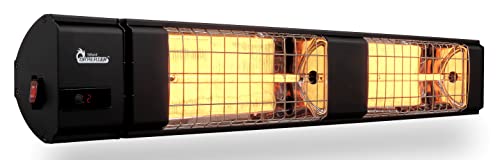
This Dr. Infrared unit is a 3000 W carbon infrared heater rated for 220–240V operation and designed for both indoor and covered outdoor spaces. It’s offered with mounting hardware and remote control for user-friendly operation.
Call 888-896-7031 for Free Local HVAC Quotes – Compare and Save Today!
- Key Features: 10,260 BTU output from a 3000 W carbon infrared element, weatherproof IP55 rating, remote control, two power levels, instant infrared heat that warms objects and people directly.
- Installation: Ceiling or wall mount using included hardware; intended for areas like patios, garages, or commercial outdoor seating where direct radiant warmth is desired.
- Performance Notes: Infrared heating warms surfaces and occupants rather than primarily heating air, which can be more efficient in semi-outdoor or drafty settings.
- Durability & Use: IP55 weatherproofing enables sheltered outdoor use; suitable for patios, garages, or workshop zones where direct radiant heat is preferred.
Prefer this model when you need radiant, instant warmth for open or semi-open spaces and want a weatherproof option with remote control convenience.
DR. INFRARED DR218-3000W Greenhouse Garage Workshop Heater

The DR218-3000W is a 3000 W infrared-style heater marketed for greenhouses but commonly used in garages and workshops. It offers two heat settings and protection against water splashing (IPX4).
- Key Features: 3000 W high/low settings, IPX4 splash protection, designed to maintain greenhouse temperature for plant health but equally applicable to small workshops.
- Installation: Wall- or ceiling-mounted; wiring and mounting should match local codes—professional install recommended for 220V circuits.
- Performance Notes: Infrared heating supports localized warmth with reduced air heating; useful in spaces where preventing drafts or maintaining plant/animal-friendly temps matters.
- Versatility: Works for greenhouse temperature control, hobby workshops, or insulated garages where targeted radiant heat is adequate.
Use this when you need plant-friendly radiant warmth or a compact 3000 W unit that tolerates occasional moisture exposure in sheltered areas.
Buying Guide: How To Choose A 220V Space Heater
Choosing the right 220V space heater depends on space size, installation capability, desired heat delivery, and safety needs. This buying guide covers technical and practical considerations to compare models effectively.
1. Determine The Intended Space And Heat Load
Estimate the cubic footage of the area and consider insulation levels, ceiling height, and how often doors open. Higher ceilings and poor insulation require more wattage. Use radiant heaters for spot heating in open areas and fan-forced or convection for more even air heating in enclosed rooms.
2. Compare Heater Types
- Fan-Forced Heaters: Faster warm-up, better air circulation, suited to garages and workshops. Typically louder and may move dust.
- Convection (Fanless) Heaters: Silent, gentle warming ideal for bedrooms and living areas. Slower heat distribution but quieter and less dust movement.
- Infrared Heaters: Radiant heat warms objects and people directly, efficient in semi-outdoor or drafty environments where heating air is inefficient.
3. Electrical Requirements & Installation
Confirm breaker capacity and outlet type. Many 220V heaters require dedicated circuits, hardwiring, or specific NEMA outlets (e.g., 6-30R). Consult an electrician if your panel lacks spare capacity. Proper wiring ensures safe operation and prevents nuisance tripping.
4. Safety Features To Prioritize
- Overheat Protection: Automatic shutoff on excessive temps.
- Tip-Over / Removal Sensors: Relevant for portable or wall-detachable units.
- Cool-To-Touch Surfaces: Important in family spaces to reduce burn risk.
- IP Rating: For outdoor or damp locations, higher IP ratings (e.g., IP55) matter.
5. Mounting And Space Constraints
Ceiling-mounted units free floor space and distribute heat differently than wall-mounted or portable units. Ensure mount location adheres to clearance specifications and local building codes. For workshops and garages, ceiling or high-wall mounting often yields best coverage.
6. Control Options And Convenience
Remote control, thermostatic control, timers, and multi-level power settings improve user convenience and energy management. Thermostats can reduce energy consumption by preventing overheating of the space.
7. Noise And Air Quality Considerations
Fan-forced heaters generate noise and may circulate dust; fanless convection models are silent and better for allergy sufferers. Infrared units minimally disturb air and reduce dust movement but may not warm air quickly.
8. Weather Resistance And Location Suitability
For patios or partially open garages, choose weatherproof or IP-rated heaters. Fully outdoor-exposed installations usually require equipment designed and rated for outdoor use and proper mounting to avoid moisture issues.
9. Energy Efficiency And Usage Pattern
Match wattage to usage: high-output heaters for intermittent, quick warm-up; lower-output, continuous heaters for zone heating and energy savings. Infrared heaters can be efficient for occupied spaces where radiant heating is effective.
10. Electrical Safety Checklist
- Confirm breaker amperage and wire gauge suitability for the heater’s rated current.
- Use dedicated circuits where specified.
- Install GFCI protection where required for damp locations.
- Follow manufacturer clearance and mounting instructions to reduce fire risk.
Weigh these factors—space size, heater type, installation complexity, and safety features—when selecting a 220V heater. Matching the heater’s characteristics to your environment will provide better performance and safer operation.
Tips for Getting the Best HVAC Prices
- Prioritize Quality Over Cost
The most critical factor in any HVAC project is the quality of the installation. Don’t compromise on contractor expertise just to save money. - Check for Rebates
Always research current rebates and incentives — they can significantly reduce your overall cost. - Compare Multiple Quotes
Request at least three estimates before making your choice. You can click here to get three free quotes from local professionals. These quotes include available rebates and tax credits and automatically exclude unqualified contractors. - Negotiate Smartly
Once you've chosen a contractor, use the proven strategies from our guide — How Homeowners Can Negotiate with HVAC Dealers — to get the best possible final price.