
Finding the right radiant heater for a garage means balancing heat type, power source, safety, and installation. Below is a concise comparison of five top-rated radiant heaters suitable for garages and workshops, followed by detailed product sections and a buying guide to help you choose.
| Product | Type | Key Benefit |
|---|---|---|
| Dr Infrared Heater DR-238 | Electric Carbon Infrared | IP55 outdoor-rated instant infrared |
| Gasland MHA18BN | Portable Propane Radiant | 18,000 BTU, mobile, no electricity |
| Mr. Heater MHVFRD20NGT | Vent-Free Natural Gas Radiant | 20,000 BTU vent-free wall model |
| 15,000 BTU Tank Top Propane Radiant | Propane Tank-Top Radiant | Mounts to 20 lb tank for portability |
| ThermoMate 1500W Tower Infrared | Electric Infrared Tower | IP55 rated, instant heat, portable |
Content Navigation
Dr Infrared DR-238 Carbon Infrared Heater
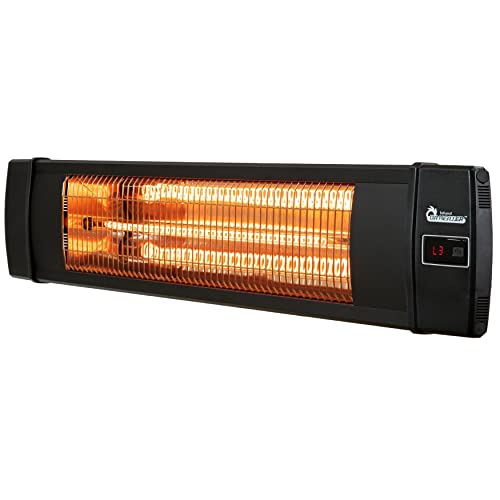
The DR-238 Carbon Infrared Heater is designed for both indoor and outdoor use with an IP55 rating, making it suitable for garages with occasional exposure to moisture or dust. It provides clean, instant, odorless infrared heat using carbon heating elements and offers three power settings: 900W, 1200W, and 1500W on a standard 120V circuit.
- Installation & Use: Plug-and-play operation with a remote control simplifies use in garages and semi-covered workshops.
- Performance: Carbon infrared delivers directional radiant heat that warms people and surfaces rather than just air.
- Suitability: Best for attached garages, partially enclosed spaces, and areas where weather resistance is beneficial.
- Safety & Controls: Multiple power settings allow control of output; remote control provides convenience.
Gasland MHA18BN 18,000 BTU Propane Heater

The Gasland MHA18BN is a portable propane radiant heater offering 18,000 BTU of output and coverage up to approximately 450 sq. ft. It is built for ventilated garages, workshops, and construction sites where electric power may be unavailable or where high BTU output is needed quickly.
- Power Source: Runs on a 20 lb propane cylinder; no electricity needed for ignition and heat production.
- Safety Features: Includes tip-over and low-oxygen shut-off systems to reduce risk in occupied spaces.
- Mobility: Rolling wheels and a handle enable moving the unit between work areas.
- Use Cases: Suitable for detached garages with ventilation, temporary job-site heating, and areas prone to power outages.
Mr. Heater MHVFRD20NGT Vent-Free Radiant Heater

Call 888-896-7031 for Free Local HVAC Quotes – Compare and Save Today!
The Mr. Heater MHVFRD20NGT is a vent-free natural gas wall-mounted radiant heater that claims up to 20,000 BTU and effectiveness in areas up to around 700 sq. ft. It uses infrared-style radiant tiles to warm surfaces and occupants directly.
- Installation: Hard-mounted wall heater requiring a natural gas supply and professional installation in most cases.
- Efficiency & Coverage: Vent-free operation maximizes usable heat output since exhaust is not vented outdoors.
- Safety: Equipped with an automatic low-oxygen shut-off to cut gas flow if O2 levels drop.
- Best For: Well-vented attached garages with natural gas service where permanent, high-output heating is desired.
15,000 BTU Tank-Top Propane Radiant Heater

This single-tank top propane radiant unit mounts directly to a 20 lb cylinder for simple portability. It offers three heat settings via a high-medium-low regulator and includes a tip-over safety shut-off.
- Portability: Tank-top mounting keeps the unit compact and easy to move between garage bays or outdoor workstations.
- BTU Settings: Adjustable output typically ranges around 10,000–15,000 BTU depending on regulator setting.
- Safety: Tip-over shut-off provides basic protection against accidental knockdowns; ensure proper ventilation.
- Use Cases: Good choice for detached garages, workshops, or for supplemental heat near workbenches.
ThermoMate 1500W Tower Infrared Heater

The ThermoMate 1500W Portable Tower uses a carbon fiber element to produce near-instant radiant heat with minimal glare. It is IP55-rated and ETL-certified, offering tip-over protection, overheat shutoff, a remote, and a 24-hour timer. This tower design provides directional radiant warmth for occupants and nearby surfaces.
- Instant Warmth: Carbon fiber heating element provides rapid perception of heat without heating all the air in a large garage.
- Outdoor-Rated Build: IP55 rating allows use in semi-exposed garages or covered outdoor areas.
- Controls & Safety: Remote control, timer, and tip-over/overheat protections improve usability in busy workspaces.
- Best For: Smaller garages, attached garages, or as a supplemental heater near a work zone.
Buying Guide: Choosing A Radiant Heater For Your Garage
Choosing the right radiant heater for a garage requires weighing heat type, power source, coverage, safety features, and installation constraints. Below are targeted considerations to compare products objectively.
Call 888-896-7031 for Free Local HVAC Quotes – Compare and Save Today!
Heat Type: Infrared Radiant Vs. Gas Radiant
Infrared (Electric) Radiant: Heats people and surfaces directly, works fast, and often requires no ventilation. Best for targeted warmth near benches or quick warm-ups. Electric infrared units tend to be quieter and simpler to install (plug-in or hardwired).
Gas (Propane/Natural Gas) Radiant: Produces higher BTU output for larger or poorly insulated garages. Propane units offer portability and functionality during power outages; natural gas vent-free models provide permanent, powerful heat but usually require proper installation and attention to combustion byproducts.
Power Source And Availability
- Electric 120V/240V: Convenient plug-in solutions for smaller garages or targeted heating; 240V hardwired units deliver more power for whole-space heating.
- Propane: Portable, high-BTU and independent of grid power; requires storage of cylinders and ventilation for indoor use.
- Natural Gas: Cost-effective for permanent installations if a gas line is available; often requires professional installation.
Coverage And BTU/Watts
Match the heater output to garage size: electric infrared towers (1,500W) are best for spot heating or small garages, while propane and high-BTU natural gas units are better for larger, colder, or uninsulated spaces. Estimate required BTUs based on square footage and insulation level.
Installation And Mounting
- Portable Units: Easy to reposition; ideal for temporary needs or multi-bay garages.
- Wall/Ceiling-Mount: Permanent and space-saving; professional installation may be needed for gas or hardwired electric models.
- Vent-Free vs. Venting: Vent-free gas models deliver high usable heat but require monitoring of indoor air quality and adherence to local codes.
Safety Features
Prioritize units with tip-over shut-off, low-oxygen/CO monitoring (for combustion heaters), overheat protection, and ETL/CSA certifications. For gas heaters, confirm built-in safety sensors and follow ventilation recommendations to prevent combustion byproduct buildup.
Durability And Environmental Exposure
If the garage is partially open or exposed to moisture, choose units with an IP rating or outdoor-rated construction. Carbon infrared and some outdoor-rated tower heaters offer IP55 protection suitable for semi-covered garages and patios.
Operational Costs And Efficiency
Electric heaters convert nearly all input to heat but can be costly at high wattages over long runtimes. Propane and natural gas
Noise And Comfort
Infrared radiant heaters are often quieter since they do not rely on fans. Fan-forced units circulate warm air uniformly but generate noise. Consider whether quiet operation or full-room air circulation is a priority.
Comparison Perspectives
- Spot Heating: Choose portable infrared towers or wall-mounted carbon heaters for focused warmth at workbenches.
- Whole-Garage Heat: Consider high-BTU propane units or hardwired gas wall heaters for larger, cold, or poorly insulated garages.
- Portable Power-Free Heat: Propane tank-top and cabinet heaters provide heat during outages and on job sites.
- Permanence & Convenience: Vent-free natural gas heaters offer permanent installation with high output but need compliance with codes and oxygen-safety features.
Use the product summaries above to match the heater type to your garage size, ventilation, and usage patterns. Always follow manufacturer installation guidelines and local codes for gas appliances and hardwired heaters.
Tips for Getting the Best HVAC Prices
- Prioritize Quality Over Cost
The most critical factor in any HVAC project is the quality of the installation. Don’t compromise on contractor expertise just to save money. - Check for Rebates
Always research current rebates and incentives — they can significantly reduce your overall cost. - Compare Multiple Quotes
Request at least three estimates before making your choice. You can click here to get three free quotes from local professionals. These quotes include available rebates and tax credits and automatically exclude unqualified contractors. - Negotiate Smartly
Once you've chosen a contractor, use the proven strategies from our guide — How Homeowners Can Negotiate with HVAC Dealers — to get the best possible final price.