
Choosing the best RV propane heater with thermostat requires balancing size, BTU output, safety features, and compatibility with RV control systems. The table below summarizes five relevant products selected for RV owners seeking controlled propane heating or compatible thermostat replacements.
| Product | Type | Key Features |
|---|---|---|
| Suburban 161154 Wall Thermostat – Heat Only | Wall Thermostat | Heat-only control, compact dimensions, OEM style |
| ProCom ML100TPA-B Ventless Infrared Heater | Infrared Propane Heater | 10,000 BTU, thermostat control, wall or floor mount |
| ProCom ML300TBA-B Ventless Blue Flame Heater | Blue Flame Propane Heater | 30,000 BTU, thermostat control, larger coverage |
| Mr. Heater MHVFBF20LPT 20,000 BTU Blue Flame | Blue Flame Propane Wall Heater | 20,000 BTU, thermostat, ODS safety, battery ignition |
| RV Thermostat Compatible With Dometic (Single Zone) | Capacitive Touch Thermostat | 12V DC, capacitive touch, cool/heat single zone |
Content Navigation
- Suburban 161154 Wall Thermostat – Heat Only
- ProCom ML100TPA-B Ventless Propane Heater With Thermostat
- ProCom ML300TBA-B Ventless Blue Flame Heater With Thermostat
- Mr. Heater MHVFBF20LPT 20,000 BTU Blue Flame Wall Heater
- RV Thermostat Compatible With Dometic 3316250.712
- Buying Guide: Choosing An RV Propane Heater With Thermostat
Suburban 161154 Wall Thermostat – Heat Only
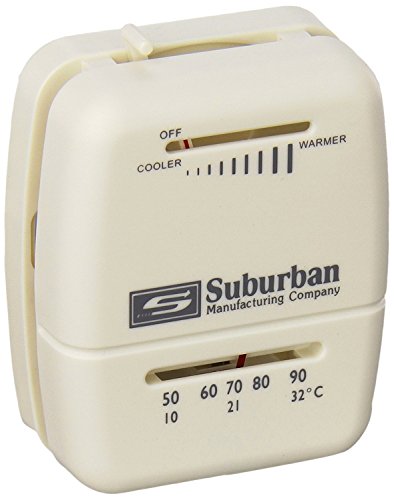
This Suburban 161154 is a compact wall thermostat designed for heat-only control in RV systems. The listing shows package dimensions and a lightweight design suitable for tight spaces, and it originates from China per manufacturer details. As a replacement thermostat, it provides a standard user interface for switching heating stages or enabling system ignition when paired with compatible furnaces or heaters.
Use cases include retrofitting an older RV furnace control or replacing a malfunctioning OEM stat. Verify electrical and control wiring compatibility with your RV system before installation, as thermostat wiring and control signals vary across manufacturers.
ProCom ML100TPA-B Ventless Propane Heater With Thermostat

The ProCom ML100TPA-B is a ventless infrared portable heater rated up to 10,000 BTU, stated to heat areas up to 500 sq. ft. Its features include a built-in thermostat with High/Medium/Low settings and both wall-mount and floor placement options. The design emphasizes compact form and modern styling for indoor spaces.
Call 888-896-7031 for Free Local HVAC Quotes – Compare and Save Today!
For RV applications, the ML100 is suitable when you need a controllable supplemental heat source that doesn’t require venting. Thermostat control helps maintain set temperatures and reduces runtime. Confirm indoor ventless heater suitability with local codes and RV manufacturer guidance regarding ventless appliance use inside living compartments.
ProCom ML300TBA-B Ventless Blue Flame Heater With Thermostat

The ProCom ML300TBA-B offers a higher output, listed at 30,000 BTU, with thermostat-controlled High/Medium/Low settings and coverage claims up to 1,400 sq. ft. This blue flame ventless unit is intended for larger spaces where stronger heat output and steady distribution are required.
In RV contexts, a 30,000 BTU ventless heater requires careful assessment of ventilation, propane supply capacity, and safe operating clearances. The built-in thermostat improves comfort by modulating cycle time. Always confirm that a ventless blue flame appliance is allowed by your RV’s design and local safety regulations before installation.
Mr. Heater MHVFBF20LPT 20,000 BTU Blue Flame Wall Heater
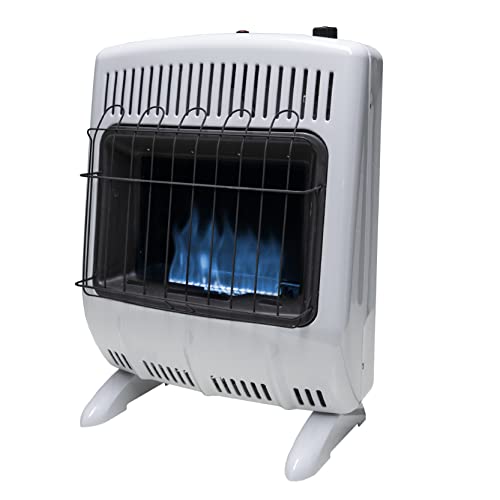
The Mr. Heater MHVFBF20LPT is a wall-mounted blue flame propane heater rated at 20,000 BTU with an integrated thermostat and battery-powered electronic ignition. The product features an Oxygen Depletion Sensor (ODS) for safety and is described for reliable performance up to certain elevations.
Call 888-896-7031 for Free Local HVAC Quotes – Compare and Save Today!
This model is commonly cited for garage, cabin, and room heating and may be applied in larger RVs or fixed installations where wall mounting and consistent output are needed. The ODS provides an automatic shutoff in low-oxygen situations, an important safety aspect for enclosed vehicle spaces. Ensure compatibility with your RV’s propane supply and consult manufacturer installation guidelines for safe use.
RV Thermostat Compatible With Dometic 3316250.712

This FORZEEY RV thermostat is listed as compatible with Dometic single zone systems and operates at 12V DC. Features include capacitive touch controls, blue backlight, and single zone cool/heat management. It’s marketed as a direct-fit replacement for specific Dometic part numbers.
For owners of Dometic-equipped RVs, a modern capacitive touch thermostat can provide more intuitive control and reliable temperature management with heating appliances. Confirm electrical pinout, control signal compatibility, and mounting dimensions before replacing OEM thermostats to avoid control issues.
Buying Guide: Choosing An RV Propane Heater With Thermostat
This buying guide summarizes the key factors to evaluate when selecting a propane heater and thermostat combination for RV use. Consider safety, heat output, installation, control features, and system compatibility.
1. Heat Output And RV Size
- BTU Rating: Match the heater’s BTU output to your RV’s living volume. Small heaters (around 10,000 BTU) suit compact RVs, while larger units (20,000–30,000 BTU) fit larger motorhomes or towable rigs with better ventilation.
- Coverage Claims: Manufacturer square-foot claims assume typical ceiling heights; adjust for high ceilings or poor insulation.
2. Thermostat Control Types
- Built-In Thermostat: Integrated units (ProCom, Mr. Heater) provide on-device temperature control and cycling, simplifying setup.
- Wall Thermostats: OEM or replacement wall stats (Suburban, FORZEEY) can control compatible furnaces or centralized heaters and offer convenient setpoint control from living areas.
- Precision & Interface: Capacitive touch and digital displays often improve setpoint accuracy and user experience over basic mechanical dials.
3. Safety Features
- Oxygen Depletion Sensor (ODS): Automatically shuts off propane flow if oxygen levels drop; vital for enclosed spaces.
- Automatic Shutoff & Overheat Protection: Look for flame fault protection and thermal cutoffs to reduce risk.
- Ventless vs. Venting: Ventless heaters increase indoor combustion products; ensure ODS and local approvals. Venting provides exhaust management but may not be available for all RV installs.
4. Fuel Supply And Consumption
- Propane Flow Rate: Verify that your RV’s regulator and tank capacity support continuous consumption at the heater’s maximum BTU.
- Multiple Appliances: Consider concurrent appliance use (stove, water heater) when sizing tanks and regulators.
5. Installation And Compatibility
- Mounting Options: Wall-mounted units require clearances and secure attachment; portable or floor-mount units need stable placement.
- Electrical Requirements: Thermostats and electronic ignitions often need 12V DC power; confirm your RV wiring and fuse capacity.
- Thermostat Wiring & Signals: Replacement thermostats must match control signal types (on/off, modulating) used by your furnace or heater controller.
6. Comfort And Efficiency
- Thermostat Accuracy: A more accurate thermostat reduces short cycling and improves fuel economy.
- Heat Distribution: Blue flame units and infrared units provide different heat transfer styles—blue flame for convective heating, infrared for radiant warmth.
7. Regulatory And RV Manufacturer Guidance
- Local Codes: Check local regulations about ventless appliance usage in recreational vehicles.
- RV Manufacturer Recommendations: Follow the RV maker’s installation instructions and warranty requirements when altering heating systems or replacing thermostats.
8. Comparison Perspectives
- Small RV / Camper Van: Favor compact, lower-BTU infrared or 10k BTU blue flame units with accurate built-in thermostats.
- Large Motorhome / Park Model: Consider 20k–30k BTU wall or vented options with ODS and thermostat integration for steady climate control.
- Thermostat Replacement: Choose direct-fit replacements for OEM systems (check Dometic compatibility) or universal stats compatible with your furnace controller type.
When evaluating products, cross-reference manufacturer installation guides, safety certifications, and your RV’s appliance configuration. Prioritize units with documented safety features and proven compatibility with your RV’s fuel and electrical systems.
Tips for Getting the Best HVAC Prices
- Prioritize Quality Over Cost
The most critical factor in any HVAC project is the quality of the installation. Don’t compromise on contractor expertise just to save money. - Check for Rebates
Always research current rebates and incentives — they can significantly reduce your overall cost. - Compare Multiple Quotes
Request at least three estimates before making your choice. You can click here to get three free quotes from local professionals. These quotes include available rebates and tax credits and automatically exclude unqualified contractors. - Negotiate Smartly
Once you've chosen a contractor, use the proven strategies from our guide — How Homeowners Can Negotiate with HVAC Dealers — to get the best possible final price.