
The following guide compares high-BTU electric heaters and heat-pump style pool/spa heaters that operate on 110–120V circuits or explicitly list compatibility with 110V. This overview highlights peak output, intended use (room, garage, pool, spa), installation notes, and key features to help U.S. buyers evaluate options for spaces that require higher heat output from a 110V supply.
| Product | Type | Reported Max BTU | 110V Compatibility |
|---|---|---|---|
| Eco Pooltech EU70 | Electric Pool Heat Pump | 22,462 BTU | 110V–120V |
| POOLCOMFT PLC50 | Electric Pool Heat Pump | 15,826 BTU | 110V–120V |
| Villastar YC-005-6 | Pool/SPA Heat Pump | 16,000 BTU/hr (listed) | Advertised 110V |
| Broan‑NuTone 198 Wall Heater | Wall Heater | Up To 4,000W (≈13,650 BTU) @240V; 2,000W @120V | Convertible To 120V (2,000W) |
| 9815WH Wall Heater (Leafinnerin) | Wall Heater | 1,500W (≈5,118 BTU) | Factory Wired 120V / 1500W |
Content Navigation
- ECO POOLTECH EU70 Electric Pool Heater
- POOLCOMFT Electric Heat Pump PLC50
- villastar Pool & Spa Electric Heater YC-005-6
- Broan‑NuTone 198 High Capacity Wall Heater
- 9815WH Large Capacity Electric Wall Heater (Leafinnerin)
- Buying Guide: How To Choose The Best High‑BTU Electric Heater For 110V
- 1. Confirm Electrical Compatibility And Circuit Capacity
- 2. Understand The Difference: Resistive Heaters vs Heat Pumps
- 3. Match BTU Output To Space Or Water Volume
- 4. Installation, Clearance And Maintenance
- 5. Efficiency, COP, And Operating Cost
- 6. Safety Features And Controls
- 7. Vendor Claims And Realistic Expectations
- Comparison Perspectives
ECO POOLTECH EU70 Electric Pool Heater

Key Features: Max output reported at 22,462 BTU/hr, designed for above-ground and in-ground pools up to about 6,500 gallons, operates on 110V–120V/60Hz, heat-pump technology with COP ~4.7, ambient operating range down to 30°F, and plug-in convenience.
The EU70 Is Presented As A High-BTU, 110V-Compatible Heat Pump Intended To Extend Swim Seasons. Its primary heating method is air-source heat-pump technology, which transfers heat from ambient air into pool water and claims a high efficiency (COP) so electrical input is multiplied into greater heat output. The product listing emphasizes compatibility with both above-ground and in-ground pools under certain volume limits and a relatively broad ambient temperature operating range.
Installation Notes: Designed as a plug-in unit for 110–120V circuits; follow manufacturer electrical and plumbing connection instructions. Heat-pump units require proper siting for airflow and clearance. Performance varies with ambient temperature and pool size.
POOLCOMFT Electric Heat Pump PLC50

Call 888-896-7031 for Free Local HVAC Quotes – Compare and Save Today!
Key Features: Max output 15,826 BTU, designed for above-ground pools up to ~4,000 gallons, operates on 110V–120V/60Hz, emphasizes energy-saving heat transfer operation and a temperature map guidance for model selection.
This Unit Targets Smaller Pools And Offers A Moderate BTU Output On Standard 120V Supply. As A Heat Pump, It Moves Ambient Heat Rather Than Generating Heat Resistively, which increases electrical efficiency in suitable climates. The PLC50’s stated BTU rating is intended for conditions when ambient temperatures are above the recommended threshold; output will decline in colder conditions.
Installation Notes: Requires pump plumbing integration and proper airflow clearance. Check compatibility with pool pump plumbing and local ambient conditions for effective operation.
villastar Pool & Spa Electric Heater YC-005-6

Key Features: Advertised as 16,000 BTU/hr, advanced energy-saving technology with high COP (listed at 6.2), uses a compressor-driven system with titanium heat exchanger, intended for pools up to 10,000 gallons, and labeled as 110V High Efficiency Pump in the title.
The Villastar Listing Emphasizes Heat-Pump Efficiency And Corrosion-Resistant Components Like A Titanium Spiral Heat Exchanger. The COP Value Listed (6.2) Suggests Very High Rated Efficiency Under Specific Test conditions; real-world COP will depend on ambient temperature and system load. The model positions itself as a versatile option for both above-ground and in-ground pools and spa applications.
Call 888-896-7031 for Free Local HVAC Quotes – Compare and Save Today!
Installation Notes: Confirm electrical requirements and pump compatibility. Heat pumps need unobstructed airflow and proper clearance. Verify the product listing and seller documentation for exact 110V wiring and plug requirements.
Broan‑NuTone 198 High Capacity Wall Heater
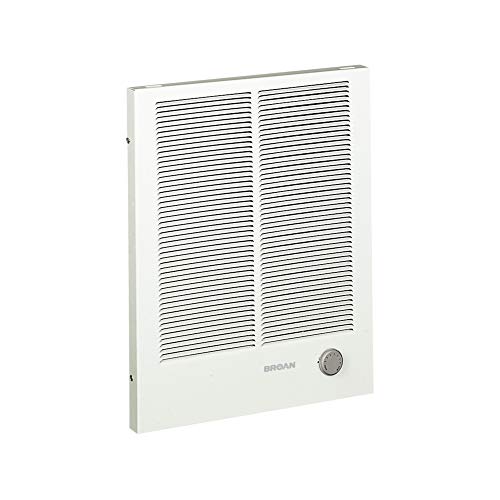
Key Features: High-capacity wall heater with heavy-duty steel grille, operates at 240VAC 4,000W but convertible to 120VAC 2,000W, front-mounted adjustable thermostat, downflow louvers, baked enamel finish for durability.
The Broan‑NuTone 198 Is A Traditional Electric Wall Heater That Provides Direct Room Heating With A Built-In Thermostat. For 110–120V Use, The Listing Notes A 2,000W Configuration When Converted To 120V — which equates to roughly 6,800 BTU/hr. While Not A High-BTU Device At 120V Compared To 240V Operation, Its Convertible Design Is Notable For Installations Restricted To 120V Circuits.
Installation Notes: Professional installation is recommended for conversion and wiring changes. The heater’s louvers direct warm air downward for floor-level heat distribution. Check local codes and clearances for wall-mounted electric heaters.
9815WH Large Capacity Electric Wall Heater (Leafinnerin)

Key Features: Factory-wired for 120V / 1500W operation, louvers for even heat distribution, quiet copper motor, overheat protection, option to switch wiring for 240V/1500W adaptability noted in listing, designed for quiet continuous operation.
The 9815WH Is A Compact Wall-Mounted Unit Intended For Supplemental Heating In Smaller Rooms. At 1500W On 120V, The Unit Produces Approximately 5,118 BTU/hr, Typical For Many 120V space heaters. Its design focuses on even distribution and quiet operation rather than high-BTU output.
Installation Notes: Factory-wired for 120V simplifies installation where only a standard circuit is available. Verify mounting location, clearances, and wiring options if a different voltage configuration is required.
Buying Guide: How To Choose The Best High‑BTU Electric Heater For 110V
Selecting a high-BTU electric heater for a 110–120V circuit requires balancing desired heat output, electrical limits, intended application, installation complexity, and climate. Below are key factors and comparison perspectives to guide purchasing decisions.
1. Confirm Electrical Compatibility And Circuit Capacity
- 120V Circuit Limits: Most household 120V circuits are 15A or 20A. Continuous loads should not exceed 80% of circuit capacity (12A on a 15A circuit, 16A on a 20A circuit).
- Wattage To Amps: Convert watts to amps: Amps = Watts / 120. For example, a 1500W heater draws ~12.5A on 120V.
- Dedicated Circuits: High-wattage devices may require a dedicated circuit or special wiring despite nominal 120V operation. Verify product wiring and installation needs.
2. Understand The Difference: Resistive Heaters vs Heat Pumps
- Resistive Heaters: Convert electricity directly into heat with predictable watt-to-BTU conversion (1 watt ≈ 3.412 BTU/hr). Performance is steady regardless of ambient air, but they can be limited by circuit amperage.
- Heat Pumps (Pool/Pool‑Style): Move heat from ambient air into water. They claim higher BTU output on 120V because of COP (coefficient of performance). Their effective output depends heavily on ambient air temperature and humidity.
- Application Fit: For space heating (rooms, garages) resistive wall or forced-air heaters are typical. For pool/spa heating on 110V, heat pumps are the common high-BTU option.
3. Match BTU Output To Space Or Water Volume
- Room Heating: Estimate needed BTU using room size, insulation, and climate. Typical small-room 120V heaters (1,500–2,000W) provide ~5,100–6,800 BTU/hr.
- Pool/Spa Heating: Pool heat pump BTU ratings should be matched to gallon capacity and intended temperature rise. Manufacturer maps or sizing charts help choose appropriate BTU for seasonal averages.
- Real-World Performance: Heat-pump BTU output is rated under specific conditions; colder ambient temps reduce output.
4. Installation, Clearance And Maintenance
- Clearances: Heat pumps and forced-air heaters need sufficient airflow around the unit. Wall heaters require wall cutouts and clearance from combustibles.
- Professional Installation: Hardwired or convertible units may require an electrician or HVAC technician. Pool heat pumps need plumbing integration with the pool circulation system.
- Maintenance: Heat pumps need periodic coil/airflow cleaning; resistive heaters need grille cleaning and occasional thermostat checks.
5. Efficiency, COP, And Operating Cost
- Understand COP: Heat pumps list COP values indicating energy efficiency (COP 4.0 means 4 times heat per unit electricity). Higher COP reduces operating cost but depends on test conditions.
- Compare Wattage To Output: For resistive heaters, calculate BTU/hr directly from wattage. For heat pumps, verify rated BTU and COP at expected ambient temperatures.
- Long-Term Costs: Heat pumps are generally more efficient for pool heating; resistive heaters can be simpler but cost more to run for large heat loads.
6. Safety Features And Controls
- Thermostat Control: Built-in thermostats or remote controls provide temperature regulation and can reduce runtime.
- Overheat Protection: Look for thermal cutoffs, tip-over switches (for portable units), and certified safety listings.
- Noise Levels: Heat pumps and fans produce operational noise; check manufacturer specs if quiet operation matters.
7. Vendor Claims And Realistic Expectations
- Check Fine Print: Manufacturer BTU and COP claims often reference ideal conditions. Review operating temperature ranges and performance charts if available.
- Confirm 110V Wiring Details: Some high-BTU units have variants or require conversion for 120V operation; verify the specific model’s wiring and plug type before purchase.
- Warranty & Support: Consider warranty length, availability of replacement parts, and seller support for installation questions.
Comparison Perspectives
- Highest Raw BTU On 110V: Among listed options, the ECO POOLTECH EU70 advertises the largest BTU output while specifying 110–120V compatibility—ideal for pool applications when higher BTU is needed without 240V wiring.
- Best For Small Pools: PLC50 and Villastar models target above-ground pools and smaller water volumes with moderate to high BTU outputs on 120V circuits.
- Room/Wall Heating On 110V: For indoor space heating constrained to 120V, wall-mounted units like the Broan‑NuTone (at 2,000W in 120V mode) and the 9815WH (1,500W) are typical and require less complex electrical work than larger resistive devices requiring 240V.
Use the above sizing and electrical guidance to match product capability to your space, circuit availability, and performance expectations. Always follow manufacturer instructions and local electrical codes for installation.
Tips for Getting the Best HVAC Prices
- Prioritize Quality Over Cost
The most critical factor in any HVAC project is the quality of the installation. Don’t compromise on contractor expertise just to save money. - Check for Rebates
Always research current rebates and incentives — they can significantly reduce your overall cost. - Compare Multiple Quotes
Request at least three estimates before making your choice. You can click here to get three free quotes from local professionals. These quotes include available rebates and tax credits and automatically exclude unqualified contractors. - Negotiate Smartly
Once you've chosen a contractor, use the proven strategies from our guide — How Homeowners Can Negotiate with HVAC Dealers — to get the best possible final price.