
Choosing the right vented natural gas garage heater balances capacity, venting type, safety features, and installation needs. Below is a quick comparison of top vented options selected for garage and workshop use.
| Model | Type | BTU | Coverage Estimate | Notable Feature |
|---|---|---|---|---|
| Dyna-Glo IR30NMDG-1 | Infrared Wall Heater | 30,000 | Up To 1,000 Sq. Ft. | Radiant Infrared Heat |
| Comfort Glow 25,000 BTU | Direct Vent Wall Heater | 25,000 | Up To 825 Sq. Ft. | Sealed Burn System |
| Comfort Glow 17,000 BTU | Direct Vent Wall Heater | 17,000 | Up To 570 Sq. Ft. | Space-Saving Wall Mount |
| Mr. Heater Big Maxx MHU80NG | Unit Heater | 80,000 | Up To 2,000 Sq. Ft. | High Capacity, Venting Options |
| Modine Hot Dawg HD45AS01-21 | Direct Vent Unit Heater | 45,000 | Typical Commercial/Garage Coverage | Compact Unit Heater Design |
Content Navigation
- Dyna-Glo IR30NMDG-1 30,000 BTU Natural Gas Infrared Wall Heater
- Comfort Glow 25,000 BTU Direct Vent Natural Gas Wall Heater
- Comfort Glow 17,000 BTU Direct Vent Natural Gas Wall Heater
- Mr. Heater F260560 Big Maxx MHU80NG Natural Gas Unit Heater
- Modine Direct Vent Garage Heater Hot Dawg HD45AS01-21
- Buying Guide: Choosing The Right Vented Natural Gas Garage Heater
- 1. Heat Output And Coverage
- 2. Vented Type: Direct Vent vs. Unit Heater
- 3. Safety Features
- 4. Venting Requirements And Installation
- 5. Efficiency And Operating Considerations
- 6. Space And Clearance Constraints
- 7. Indoor Air Quality & Permits
- 8. Control Options And Thermostats
- 9. Maintenance And Serviceability
- 10. Comparison Perspectives
Dyna-Glo IR30NMDG-1 30,000 BTU Natural Gas Infrared Wall Heater

Type: Infrared wall-mounted heater designed for natural gas. The unit uses infrared technology to radiate heat to objects and people instead of primarily heating the air, which can be efficient in drafty or intermittently used garages.
Key Features: Natural gas ready (no fuel conversion permitted), radiative heating similar to sunlight, and rated up to 30,000 BTU/hr with coverage claims up to 1,000 sq. ft. Infrared delivery can provide quicker perceptible warmth to occupants and work areas.
Venting & Installation: Designed as a vented model for natural gas; follow manufacturer venting requirements. Wall mounting saves floor space and positions radiant output toward the workspace. Clearances and proper gas hookup are required.
Use Cases: Well-suited for garages where occupants want direct, sun-like warmth near workbenches and vehicles. Infrared is advantageous when heating zones rather than the entire volume.
Call 888-896-7031 for Free Local HVAC Quotes – Compare and Save Today!
Comfort Glow 25,000 BTU Direct Vent Natural Gas Wall Heater

Type: Direct vent wall heater with sealed combustion chamber designed to draw air from outside and exhaust directly outdoors, minimizing indoor air impact.
Key Features: Rated 25,000 BTU with claimed coverage up to 825 sq. ft. Features a sealed burn system, Matchless Piezo Ignition, and a safety pilot with a built-in pressure regulator that stops gas flow if the pilot is extinguished.
Venting & Installation: Direct venting reduces impact on indoor air quality and is preferable where combustion air must not come from the heated space. Mounts on walls to conserve floor area; note stated dimensions for planning.
Use Cases: Ideal for medium-to-large garages where sealed combustion and reduced indoor combustion byproducts are priorities. The 25k output fits many single or two-car garages with moderate insulation.
Comfort Glow 17,000 BTU Direct Vent Natural Gas Wall Heater

Call 888-896-7031 for Free Local HVAC Quotes – Compare and Save Today!
Type: Compact direct vent wall heater targeted for smaller garages or zoned supplemental heating. Sealed combustion reduces indoor air exchange with combustion gases.
Key Features: 17,000 BTU capacity with heating coverage up to 570 sq. ft. Safety includes a sealed burn system, Matchless Piezo Ignition, and a pilot pressure regulator. Space-saving dimensions allow installation in tighter wall spaces.
Venting & Installation: Direct vent requires a simple wall chase for intake and exhaust; follow clearance and installation guidelines. Wall mounting elevates heat source above floor-level obstructions.
Use Cases: Best for smaller garages, workshops, and situations where a compact, sealed-burn heater is preferable. Suitable when you need reliable supplemental heat without venting through the roof.
Mr. Heater F260560 Big Maxx MHU80NG Natural Gas Unit Heater
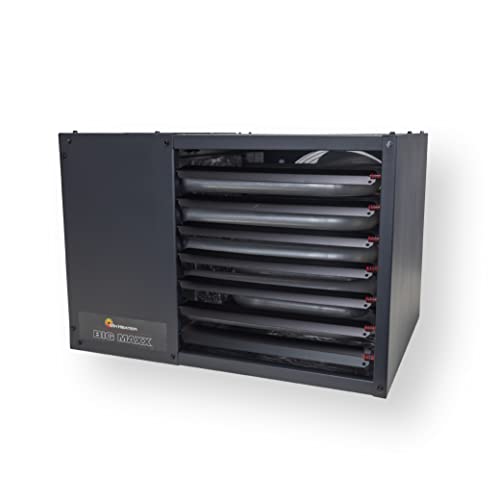
Type: High-capacity unit heater designed for large garages and commercial-style spaces. This is a ducted-style unit heater intended for robust heat output.
Key Features: 80,000 BTU performance covering up to 2,000 sq. ft. Includes two angle brackets and an LP conversion kit (note: use natural gas configuration only as required). Requires 120 V power for blower and control functions.
Venting & Installation: Supports Category 1 verticalCategory 3 horizontal
Use Cases: Suitable for larger or taller garages, commercial bays, and workshops that need sustained heat distribution across wide volumes. The forced-air design helps circulate warmed air throughout the space.
Modine Direct Vent Garage Heater Hot Dawg HD45AS01-21

Type: Compact direct vent unit heater from a manufacturer known for garage and commercial heaters. Typically used where reliable vented combustion and durability are priorities.
Key Features: Marketed as a 45,000 BTU
Venting & Installation: Designed for professional installation with appropriate venting chases. Unit footprint and mounting allow ceiling or wall configurations depending on model specifics and clearance requirements.
Use Cases: A middle-ground option for garages that are larger than typical residential single-car spaces but do not require the maximum capacity of heavy-duty unit heaters. Useful where continuous operation and effective venting are needed.
Buying Guide: Choosing The Right Vented Natural Gas Garage Heater
Selecting a vented natural gas heater for a garage requires attention to size, venting, safety, and installation practicality. Below are key considerations and comparison perspectives to guide decisions.
Tips for Getting the Best HVAC Prices
- Prioritize Quality Over Cost
The most critical factor in any HVAC project is the quality of the installation. Don’t compromise on contractor expertise just to save money. - Check for Rebates
Always research current rebates and incentives — they can significantly reduce your overall cost. - Compare Multiple Quotes
Request at least three estimates before making your choice. You can click here to get three free quotes from local professionals. These quotes include available rebates and tax credits and automatically exclude unqualified contractors. - Negotiate Smartly
Once you've chosen a contractor, use the proven strategies from our guide — How Homeowners Can Negotiate with HVAC Dealers — to get the best possible final price.
1. Heat Output And Coverage
- BTU Rating: Match BTU output to your garage volume, not just floor area. Higher ceilings require more BTU per square foot.
- Coverage Estimates: Use manufacturer coverage as a starting point; factors like insulation, doors, and drafts significantly impact real-world performance.
2. Vented Type: Direct Vent vs. Unit Heater
- Direct Vent Wall Heaters: Sealed combustion draws air from outside and vents to outside, reducing indoor combustion byproducts and improving safety in occupied spaces.
- Unit Heaters (Forced Air): Better for heating entire volumes via blower-driven circulation; venting options depend on the model (vertical/horizontal categories).
- Infrared/Radiant: Heats objects and people directly; effective for spot heating and quick comfort in drafty garages where full-volume warming is impractical.
3. Safety Features
- Sealed Burn Chambers: Prevent indoor air from contacting combustion, improving indoor air quality.
- Oxygen Depletion Sensors & Pilot Safety: Automatic shutoff sensors and safety pilots reduce risks from low oxygen or pilot failure.
- Clearances & Mounting: Respect manufacturer-stated clearances to combustibles and follow installation instructions to minimize fire hazards.
4. Venting Requirements And Installation
- Venting Category: Verify whether the unit requires Category 1, 3, or specific vent systems; venting type dictates routing and materials.
- Placement: Wall-mounted units save floor space; ceiling or high-mounted unit heaters may provide broader circulation.
- Professional Installation: Gas hookups and venting often require licensed professionals and local code compliance. Factor installation complexity into the choice.
5. Efficiency And Operating Considerations
- Infrared Efficiency: Infrared units can feel warmer at lower air temperatures and can be efficient for zone heating.
- Forced-Air Units: Typically distribute heat evenly but may require electricity for blowers and thermostats.
- On-Demand vs. Continuous: Consider usage patterns—intermittent use favors radiant or quick-start units; continuous use favors durable forced-air models.
6. Space And Clearance Constraints
- Measure wall and ceiling space before selecting a wall-mounted or ceiling-mounted unit. Confirm depth and width to avoid interference with doors, cabinetry, or shelving.
- Allow for recommended service access for future maintenance or pilot access.
7. Indoor Air Quality & Permits
- Direct vent units reduce contamination of indoor air by combustion products and are often preferred for occupied garages.
- Check local codes and permit requirements for natural gas appliances in garages; carbon monoxide mitigation and ventilation rules may apply.
8. Control Options And Thermostats
- Units with compatible thermostats provide better temperature control and energy savings. Some high-capacity unit heaters require dedicated thermostats or controls.
- Consider placement of thermostats away from direct radiant output to avoid false readings.
9. Maintenance And Serviceability
- Inspect burners, pilots, vents, and gas fittings periodically. Ensure accessible service panels and replaceable parts.
- Units designed for commercial durability may offer longer service intervals but still require annual inspection.
10. Comparison Perspectives
- Small Garage: A compact direct vent wall heater (17k) or a 30k infrared mounted strategically may be most efficient.
- Medium Garage: 25k–45k direct vent options provide balanced coverage while maintaining sealed combustion.
- Large Or Tall Spaces: High-capacity unit heaters (like the 80k Big Maxx) with forced air and appropriate venting handle larger volumes and circulation needs.