
Finding an 8-element infrared heater means prioritizing even radiant warmth, fast heat-up, and reliable controls. Below is a concise comparison of top models that match the 8-element criterion or offer comparable multi-element infrared performance for medium to large rooms.
| Product | Key Feature | Best For |
|---|---|---|
| LifeSmart LifePro Ultimate 1500W | 8 Infrared Tube Elements, Remote, Casters | Large Indoor Rooms |
| LifeSmart Infrared Quartz 1500W (Black) | 8 Quartz Elements, Digital Thermostat | Precise Temp Control For Home/Office |
| Dr Infrared Heater Portable 1500W | Infrared Quartz + PTC Dual System, Quiet Blower | Large Room Whole-Room Heating |
| Comfort Glow Portable Quartz Heater (4 Element) | Four Quartz Elements, Child Lock | Safer Bedroom/Office Use |
| SereneLife Infrared Patio Heater 1500W | Carbon Fiber Elements, IP65 Outdoor Rating | Indoor/Outdoor Patio Heating |
Content Navigation
- LifeSmart LifePro Ultimate 1500W Space Heater
- LifeSmart Infrared Quartz Space Heater 1500W
- Dr Infrared Heater Portable 1500W (Original)
- Comfort Glow Portable Infrared Quartz Heater
- SereneLife Infrared Patio Heater 1500W
- Buying Guide: How To Choose The Right Infrared Heater
- Heating Technology And Element Type
- Wattage Vs Coverage
- Element Count And Heat Distribution
- Controls, Thermostat, And Modes
- Safety Features
- Portability, Mounting, And Installation
- Noise And Air Movement
- Indoor Versus Outdoor Use
- Comparing Element Count With Practical Performance
- Energy Efficiency And Operating Costs
- Maintenance And Longevity
LifeSmart LifePro Ultimate 1500W Space Heater

The LifeSmart LifePro Ultimate is configured with 8 infrared tube elements designed to heat large indoor spaces. The unit is described as suitable for up to 1500 square feet, making it appropriate for living rooms, basements, and larger bedrooms.
Key features include three heat power settings (high, low, eco), a remote control for adjusting settings and timers, and metal casters for portability. The 8-element array aims to provide even radiant heat distribution rather than focusing on forced-air circulation.
Safety and usability features include a built-in timer capability and the mobility of casters. The product’s design and element count emphasize sustained infrared output suited to whole-room warming through radiant heat transfer.
LifeSmart Infrared Quartz Space Heater 1500W

Call 888-896-7031 for Free Local HVAC Quotes – Compare and Save Today!
This LifeSmart model uses 8 infrared quartz elements and a digital thermostat to control temperatures precisely between 50–90°F. The combination of element count and thermostat supports more controlled comfort for larger rooms or office spaces.
Features listed include 1500W power, 3-mode settings (high/low/eco), fan-only mode, and remote control. The unit’s digital display and thermostat aim to maintain a set temperature rather than cycling broadly, improving comfort consistency.
The inclusion of fan-only mode provides air circulation without heat, while the infrared quartz elements supply radiant warmth that heats objects and occupants directly. The design is targeted at even heating distribution across mid- to large-size indoor areas.
Dr Infrared Heater Portable 1500W (Original)
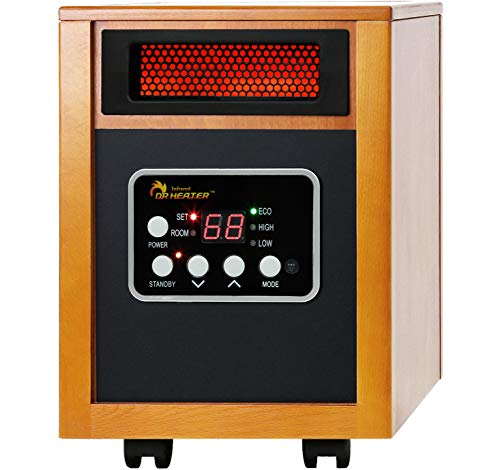
The Dr Infrared Heater Original employs a dual heating system combining infrared quartz tubes with a PTC (Positive Temperature Coefficient) element. This hybrid approach is stated to boost heat output by up to 60% over single-source designs.
Key features include automatic energy saving modes, tip-over and overheat protection, 12-hour timer, and a quiet blower (≈39 dB). The unit emphasizes whole-room heating performance with quieter operation and enhanced safety protections.
Call 888-896-7031 for Free Local HVAC Quotes – Compare and Save Today!
Although the Dr model does not specifically list an 8-element count, its dual-source arrangement targets similar performance goals: efficient, evenly distributed radiant heat with supplemental forced circulation for placement flexibility and faster warm-up times.
Comfort Glow Portable Infrared Quartz Heater

The Comfort Glow model is a four-quartz-element heater designed for indoor use in rooms up to 1,000 sq ft. It lists adjustable heat settings (ECO, 750W, 1500W) and an integrated thermostat for maintaining warmth.
Notable features include child lock, overheat and tip-over shutoff protection, and remote control. While it has fewer elements than an 8-element heater, the four-element quartz array still provides rapid, comfortable infrared warmth suited for bedrooms and offices.
This unit demonstrates that element count is one factor among many: safety features, thermostat control, and element type (quartz) also determine performance and suitability for specific indoor spaces.
SereneLife Infrared Patio Heater 1500W

The SereneLife heater employs carbon fiber heating elements and is rated for indoor/outdoor use with an IP65 weather-resistant rating. It is mountable to walls or ceilings and designed to produce near-instant radiant warmth.
Features highlight remote control, 1500W carbon fiber elements, and an 88% efficiency claim. Carbon fiber elements deliver focused radiant heat that resembles sunlight and perform well in open or partially sheltered outdoor spaces.
This model is relevant when comparing multi-element infrared heaters because carbon fiber arrays often provide efficient radiant output with lower energy loss in outdoor conditions compared to some other element types.
Buying Guide: How To Choose The Right Infrared Heater
This guide outlines key considerations to compare 8-element infrared heaters and similar multi-element models across performance, safety, and use case perspectives.
Heating Technology And Element Type
- Quartz Tubes: Fast heat-up and intense radiant output. Multiple quartz tubes (e.g., 8 elements) increase surface area and evenness of heat.
- Carbon Fiber: Efficient radiant heat, often favored for outdoor or IP-rated units. Carbon fiber can be more durable and energy-efficient in open-air conditions.
- Hybrid Systems: Units pairing infrared tubes with PTC or forced-air blowers offer faster room warm-up and improved air circulation.
Wattage Vs Coverage
- 1500W Standard: Common for portable home units; suitable for medium to large rooms when combined with multiple elements and good placement.
- Higher Wattage Units: Models like 3000W target larger commercial or outdoor areas and often require different electrical specifications.
- Coverage Estimates: Manufacturer area ratings are guidelines; insulation, ceiling height, and room layout affect actual performance.
Element Count And Heat Distribution
- More Elements: An 8-element array generally offers broader radiant coverage and more uniform warmth compared to 2–4 element designs.
- Evenness: Look for units with distributed arrays and reflectors that direct heat rather than concentrating it in one spot.
Controls, Thermostat, And Modes
- Digital Thermostat: Helps maintain a target temperature and prevents short cycling—useful for consistent comfort.
- Remote & Timers: Remote control and program timers add convenience for scheduled heating and off control.
- Multiple Modes: High/Low/Eco and fan-only modes increase operational flexibility and manage energy use.
Safety Features
- Tip-Over And Overheat Protection: Essential for portable indoor units; look for automatic shutoffs and thermal cutouts.
- Child Lock And Cool-Touch Surfaces: Important for households with children or pets.
- Outdoor Ratings: For patio use, choose IP-rated models designed to resist moisture, corrosion, and weather exposure.
Portability, Mounting, And Installation
- Casters And Handles: Useful for moving large 8-element floor units between rooms.
- Wall/Ceiling Mount Options: Fixed mounting is ideal for patios or shops; verify hardware and electrical requirements.
- Electrical Requirements: Confirm voltage and circuit capacity; some high-wattage models need dedicated circuits or 220–240V supply.
Noise And Air Movement
- Infrared Radiant Heaters: Often quieter because they heat objects rather than air. Models with fans or blowers will produce more sound but warm a room faster.
- Noise Ratings: Check decibel claims for units with blowers if quiet operation is required for bedrooms or offices.
Indoor Versus Outdoor Use
- Indoor Units: Prioritize thermostats, safety shutoffs, and portability.
- Outdoor/Patio Models: Choose IP-rated designs with carbon fiber or protected element arrays; these emphasize focused radiant heat in open environments.
Comparing Element Count With Practical Performance
- Element Count Is Part Of The Story: Eight elements usually increase radiant surface area, but element material, reflector design, blower assistance, and thermostat integration determine real-world comfort.
- Hybrid Approaches: Combining infrared elements with PTC or fans can offset fewer elements by improving circulation and response time.
Energy Efficiency And Operating Costs
- Wattage Control: Eco or multi-level settings reduce energy usage when full power isn’t required.
- Element Efficiency: Carbon fiber elements sometimes claim higher radiant efficiency, particularly in outdoor settings where convection losses are high.
Maintenance And Longevity
- Replaceable Elements: Check whether heating tubes or bulbs are user-replaceable in the model you select.
- Dust And Debris: Keep element housing and reflectors clean for optimal radiant performance.
Use these comparison perspectives—element type, wattage, safety features, thermostat control, and intended location—to evaluate which 8-element or multi-element infrared heater best fits your space and usage needs.
Tips for Getting the Best HVAC Prices
- Prioritize Quality Over Cost
The most critical factor in any HVAC project is the quality of the installation. Don’t compromise on contractor expertise just to save money. - Check for Rebates
Always research current rebates and incentives — they can significantly reduce your overall cost. - Compare Multiple Quotes
Request at least three estimates before making your choice. You can click here to get three free quotes from local professionals. These quotes include available rebates and tax credits and automatically exclude unqualified contractors. - Negotiate Smartly
Once you've chosen a contractor, use the proven strategies from our guide — How Homeowners Can Negotiate with HVAC Dealers — to get the best possible final price.