
Selecting the right thermostat heater control depends on your heating type, wiring, and desired features like programmability or smart home compatibility. Below is a quick overview table of the top picks covered in this guide.
| Product | Type | Best For |
|---|---|---|
| Suuwer Non-Programmable Thermostats (Blue Backlight) | Conventional Single-Stage Low-Voltage | Simple replacement for single-stage furnaces |
| Honeywell Home RTH2300B1038 5-2 Day Programmable | Low-Voltage Programmable | Users Who Want Basic Scheduling |
| Mysa Smart Thermostat LITE For Electric Baseboards 240V | Line-Voltage Smart Thermostat | Smart Control For Electric Baseboards |
| Honeywell Home RLV3120A1005 Digital Non-Programmable | Line-Voltage Digital | Accurate Control For Baseboards/Convectors |
| Honeywell Home CT410B Manual 4 Wire Premium Baseboard | Line-Voltage Manual Dial | Simple, Rugged Baseboard Control |
Content Navigation
- Suuwer Non-Programmable Thermostats For Home 1 Heat/1 Cool
- Honeywell Home RTH2300B1038 5-2 Day Programmable Thermostat
- Mysa Smart Thermostat LITE For Electric Baseboard Heaters 240V
- Honeywell Home RLV3120A1005 Digital Non-Programmable Thermostat
- Honeywell Home CT410B Manual 4 Wire Premium Baseboard/Line Volt Thermostat
- Buying Guide: How To Choose The Right Thermostat Heater Control
- 1. Identify Your Heating System Type
- 2. Check Wiring And Installation Requirements
- 3. Decide On Programmability Vs. Manual Control
- 4. Smart Features And Connectivity
- 5. Noise, Accuracy, And Switching Type
- 6. Safety And Certifications
- 7. Energy Savings And Control Strategies
- 8. Installation Difficulty And Professional Support
- 9. Durable Design Vs. Feature Set
- 10. Comparison Perspectives
Suuwer Non-Programmable Thermostats For Home 1 Heat/1 Cool

This Suuwer thermostat is a non-programmable, single-stage replacement designed for conventional systems with up to one heat and one cool stage. It features a blue backlit display and straightforward controls suitable for users replacing basic thermostats.
Key points from the listed features: verify wiring compatibility (2–5 wires) before installation, and note the thermostat does not support multistage systems, heat pumps, line-voltage baseboards, or PTAC units. The vendor emphasizes reading installation pictures and wiring guidance.
Use case: Appropriate for homeowners with standard gas, oil, or electric single-stage furnaces who need a simple, budget-friendly control without scheduling or smart features. Installation caution is advised for DIYers with limited wiring experience.
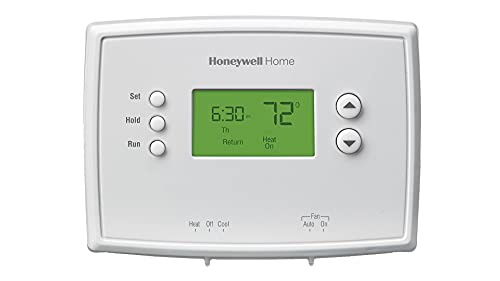
Honeywell Home RTH2300B1038 5-2 Day Programmable Thermostat
Call 888-896-7031 for Free Local HVAC Quotes – Compare and Save Today!
The Honeywell RTH2300B1038 is a 5-2 day programmable thermostat that separates weekday and weekend schedules with four programmable periods per day (wake, leave, arrive, sleep). It focuses on reliable scheduling for energy savings and comfort.
Features highlighted by the manufacturer include ±1°F temperature accuracy, adjustable temperature limits (max heating and min cooling), and a backlit digital display for one-touch setpoint access. The control is intended for standard low-voltage heating and cooling systems.
Use case: Best for homeowners who want a basic programmable thermostat without smart connectivity. It gives simple schedules and accurate control, making it useful for households that benefit from weekday/weekend program separation.
Mysa Smart Thermostat LITE For Electric Baseboard Heaters 240V

Mysa LITE is a smart, line-voltage thermostat built specifically for electric baseboard and fan-forced heaters (120–240V). It offers Wi‑Fi control, compatibility with HomeKit, Alexa, and Google Home, and remote scheduling via a free mobile app.
The product notes a strict compatibility requirement: it only works with high/line-voltage systems and requires at least four conductors (including neutral or a second live). It does not support low‑voltage or two‑wire systems. Mysa claims up to 26% energy savings using optimized schedules.
Call 888-896-7031 for Free Local HVAC Quotes – Compare and Save Today!
Use case: Ideal for homeowners with electric baseboard heating who want smart home integration and remote control. This unit brings advanced scheduling, remote monitoring, and energy-focused features to line-voltage installations when wiring compatibility is met.
Honeywell Home RLV3120A1005 Digital Non-Programmable Thermostat

The Honeywell RLV3120A1005 is a digital non-programmable thermostat for electric heat. It targets baseboards and convectors, offering precise temperature control with high accuracy and silent TRIAC switching.
Manufacturer features include an accuracy of about ±0.27°F with baseboards and convectors, and TRIAC switching for 100% silent operation, eliminating relay clicking and reducing temperature swings. The device is intended for two-wire electric heat installations.
Use case: Appropriate for users who need accurate, quiet control of line-voltage heaters without scheduling. It suits rooms where silent operation and tight temperature stability are priorities, such as bedrooms or home offices.
Honeywell Home CT410B Manual 4 Wire Premium Baseboard/Line Volt Thermostat

The Honeywell CT410B is a manual, non-programmable line-voltage thermostat compatible with electric baseboards, convectors, and non-inductive fan-forced heaters. It uses a bimetal sensor for simple, reliable operation.
Key features include compatibility with 120–240V line voltage systems and a rugged manual control that prioritizes simplicity and durability. The design is targeted to those who prefer mechanical controls over digital interfaces.
Use case: Recommended for homeowners and installers seeking a straightforward, field-tested manual thermostat for baseboards where programmability and smart features are unnecessary or unsupported by wiring.
Buying Guide: How To Choose The Right Thermostat Heater Control
Selecting the right thermostat requires matching the device to your heating type, wiring configuration, and control preferences. This buying guide covers essential factors and comparison perspectives.
1. Identify Your Heating System Type
- Low-Voltage Systems (most central furnaces and central AC): Choose a low-voltage thermostat like the Honeywell RTH2300 for programmable schedules or the Suuwer if replacing a simple single-stage controller.
- Line-Voltage Systems (electric baseboards, convectors): Require specialized thermostats such as Mysa, Honeywell RLV3120A, or CT410B. Standard low-voltage thermostats will not operate line-voltage heaters safely.
- Heat Pumps & Multistage Systems: Ensure compatibility; many basic single-stage units do not support heat pumps or multistage setups. Verify if the thermostat supports 2H/1C, 2H/2C, or other configurations before purchasing.
2. Check Wiring And Installation Requirements
- Count wires at the existing thermostat and confirm functions (R, C, W, Y, G, etc.).
- Smart line-voltage thermostats often need more wires or a neutral; Mysa specifies at least four conductors including neutral or second live.
- If unsure, consult the product wiring diagrams, an HVAC technician, or the manufacturer’s compatibility tool.
3. Decide On Programmability Vs. Manual Control
- Programmable Thermostats (e.g., Honeywell RTH2300) allow schedules and can reduce energy use for predictable routines.
- Non-Programmable Digital/Manual (e.g., RLV3120A, CT410B, Suuwer) suit users who prefer simplicity or have irregular occupancy patterns.
4. Smart Features And Connectivity
- Smart thermostats provide remote control, geofencing, and integration with voice assistants. Mysa LITE is designed for smart control of baseboards with a free app and major platform compatibility.
- Consider long-term software support, privacy policies, and whether cloud services are required for core features.
5. Noise, Accuracy, And Switching Type
- Digital TRIAC switching (as in the RLV3120A) offers silent operation compared with mechanical relays that click on/off.
- Look for documented temperature accuracy if precise control matters (e.g., ±0.27°F for RLV3120A).
6. Safety And Certifications
- For line-voltage devices ensure they meet safety standards and listings (ETL, UL) for high-voltage applications.
- Check features like overheat protection, proper casing insulation, and approved wiring methods for your local code.
7. Energy Savings And Control Strategies
- Programmable schedules and smart algorithms can reduce energy use. Evaluate estimated savings claims and whether they apply to your heating type (line-voltage savings may differ from low-voltage systems).
- For electric baseboards, zoning with multiple thermostats or adaptive scheduling can produce larger savings than single-zone control.
8. Installation Difficulty And Professional Support
- Simple replacements for like-for-like thermostats are often DIY-friendly if wiring matches. Devices that need neutral or multiple conductors may require an electrician.
- For multistage systems, heat pumps, or complex wiring, seek HVAC technician assistance to ensure compatibility and safe installation.
9. Durable Design Vs. Feature Set
- Manual thermostats like the CT410B favor durability and simplicity for rugged applications.
- Digital or smart thermostats offer features but can add complexity and reliance on software updates.
10. Comparison Perspectives
- Budget vs. Functionality: Manual and non-programmable models (Suuwer, CT410B) cost less and are easier to install for simple systems. Programmable and smart units (Honeywell RTH2300, Mysa) deliver scheduling and remote control features for higher convenience and potential savings.
- Low-Voltage vs. Line-Voltage: Match the thermostat to the voltage type. Low-voltage devices cannot operate line-voltage heaters and vice versa.
- Noise and Precision: For quiet rooms, prefer digital TRIAC or high-accuracy controllers like the RLV3120A. Mechanical bimetal or relay-based units may be audible.
Use the factors above to compare the shortlisted products: verify system compatibility first, then assess desired features like programmability, smart integration, accuracy, and silent operation. For complex or high-voltage installs, consider professional installation to meet safety and local code requirements.
Tips for Getting the Best HVAC Prices
- Prioritize Quality Over Cost
The most critical factor in any HVAC project is the quality of the installation. Don’t compromise on contractor expertise just to save money. - Check for Rebates
Always research current rebates and incentives — they can significantly reduce your overall cost. - Compare Multiple Quotes
Request at least three estimates before making your choice. You can click here to get three free quotes from local professionals. These quotes include available rebates and tax credits and automatically exclude unqualified contractors. - Negotiate Smartly
Once you've chosen a contractor, use the proven strategies from our guide — How Homeowners Can Negotiate with HVAC Dealers — to get the best possible final price.