
Quick Overview: This guide compares reliable 120V electric heaters for garages, workshops, basements, and living spaces. Below is a summary table of the five selected 120V heater models to help you scan features at a glance.
| Product | Type | Power / Output | Key Feature |
|---|---|---|---|
| NewAir NGH160GA00 | Portable Garage Heater | Ceramic / Fan | Cool-To-Touch, Portable, Adjustable Tilt |
| Cadet Com-Pak CSC151TW | Wall Heater With Thermostat | 1500W / 5120 BTU | Complete Unit With Built-In Thermostat |
| Dura Heat EUH1465 | Forced Air Portable Heater | 1500W / 5120 BTU | PTC Ceramic, Pivoting Base |
| Cadet F Series 36″ (3F750-1W) | Baseboard Heater | 750W / 2560 BTU | Low-Profile Baseboard For Supplemental Heat |
| Cadet F Series 72″ (6F1500-1W) | Baseboard Heater | 1500W | Full-Length Baseboard For Continuous Heat |
Content Navigation
- NewAir NGH160GA00 120V Electric Portable Garage Heater
- Cadet Com-Pak CSC151TW Electric Wall Heater With Thermostat
- Dura Heat EUH1465 Electric Forced Air Heater With Pivoting Base
- Cadet F Series 36″ Electric Baseboard Heater 750W
- Cadet F Series 72″ Electric Baseboard Heater 1500W
- Buying Guide: Choosing The Right 120V Electric Heater
- 1. Heater Type And Intended Use
- 2. Wattage, Coverage, And Performance
- 3. Electrical Requirements And Circuit Considerations
- 4. Safety Features And Certifications
- 5. Control Options And Thermostats
- 6. Installation And Mounting
- 7. Durability, Materials, And Location
- 8. Noise, Airflow, And Comfort Preferences
- 9. Maintenance And Longevity
- 10. Comparison Perspectives
NewAir NGH160GA00 120V Electric Portable Garage Heater

This compact ceramic garage heater is designed for spot heating in small to medium spaces. It combines a ceramic heating plate with a forced-air fan to move warm air quickly.
- Safety Features: Cool-to-the-touch housing, internal thermostat, and automatic shut-off to reduce overheating risk.
- Portability: Carry handle and tilting head allow aiming heat where needed; two heat modes provide flexibility.
- Heating Performance: Ceramic heating plate and a 200 CFM fan provide fast warm-up and consistent air circulation for targeted areas.
This model is suited for garages, workshops, and utility spaces where a portable, safe unit is preferred. It emphasizes mobility and built-in safety rather than whole-room central heating.
Cadet Com-Pak CSC151TW Electric Wall Heater With Thermostat

The Cadet Com-Pak is a wall-mounted 120V complete heater unit with integrated thermostat, intended for room-level supplemental heating and consistent temperature control.
Call 888-896-7031 for Free Local HVAC Quotes – Compare and Save Today!
- Integrated Thermostat: Built-in thermostat simplifies installation and temperature management without needing separate controls.
- Output: 1500 watts (approx. 5120 BTU) suitable for small to medium-sized rooms depending on insulation and layout.
- Design: Compact, white finish fits against wall surfaces and is aimed at providing continuous radiant/convection heat.
Wall-mounted heaters like this are useful for rooms without ductwork or where wall space is available for dedicated heating. The included thermostat makes setup and operation straightforward.
Dura Heat EUH1465 Electric Forced Air Heater With Pivoting Base
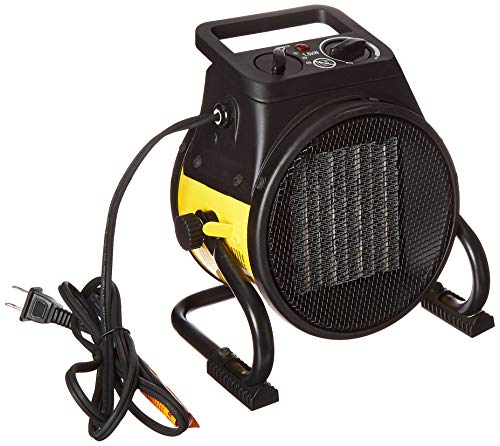
Designed for quick spot warming in garages and work areas, the Dura Heat EUH1465 uses PTC ceramic heating and a pivoting base for directional airflow.
- Power And Heating: 1500W PTC ceramic element offers rapid heat production and stable operating temperature.
- Construction: Rugged steel body built for workshop and garage conditions where durability is important.
- Versatile Use: Heat and fan-only modes make this a flexible tool for both warming and circulating air.
The pivoting base enables directional heating for targeted comfort. It’s a practical option for mechanics, hobbyists, and small workspaces needing immediate warmth.
Cadet F Series 36″ Electric Baseboard Heater 750W
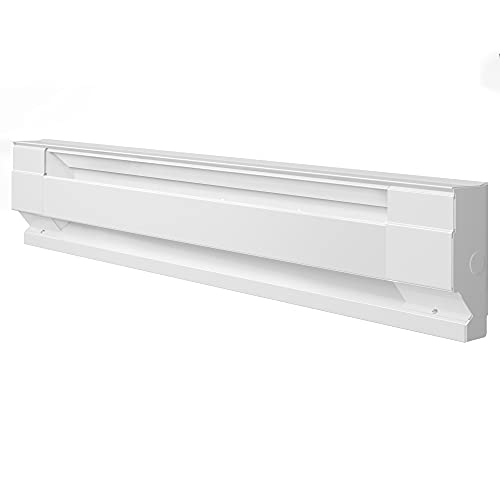
Low-profile electric baseboard heaters provide continuous, convective heating along the wall. This 36-inch model is designed for smaller rooms or targeted use under windows.
Call 888-896-7031 for Free Local HVAC Quotes – Compare and Save Today!
- Design And Materials: 25 gauge steel construction with powder coat finish for durability and a clean look.
- Power: 750 watts suited for smaller spaces or supplementation to central systems; requires a thermostat for controlled operation.
- Installation: Standard baseboard mounting; includes junction box and metal construction for professional installations.
Baseboard units provide even, silent heat distribution and are commonly used in bedrooms, sunrooms, or additions where quiet near-wall heating is preferred.
Cadet F Series 72″ Electric Baseboard Heater 1500W

This full-length baseboard heater is intended to provide continuous heating for larger rooms or as a primary supplemental heat source along perimeter walls.
- Full-Length Coverage: 72 inches provides extended heat output and better distribution for mid-sized rooms.
- Power: 1500 watts delivers continuous heat; designed for continuous transmission of warmth along the wall surface.
- Build: All-metal construction with powder-coated finish for typical indoor installations.
These baseboard heaters are commonly used in living rooms, long bedrooms, or rooms with large exterior walls where steady perimeter heat reduces cold spots.
Buying Guide: Choosing The Right 120V Electric Heater
Selecting a 120V electric heater requires matching the unit’s type, power, and safety features to the intended space and use. Below are key factors to evaluate when choosing a 120V heater.
1. Heater Type And Intended Use
- Portable Ceramic / Forced Air Heaters: Good for spot heating in garages, workshops, and small rooms. They heat quickly and are movable.
- Wall-Mounted Electric Heaters: Offer hands-off, mounted heating with integrated thermostats. Suitable for rooms lacking central heat or ductwork.
- Baseboard Heaters: Provide continuous convective heat along walls, ideal for quiet, steady temperature control in living spaces.
2. Wattage, Coverage, And Performance
- Wattage: Most 120V units are 750W to 1500W. Higher wattage provides more heat but requires appropriate circuit capacity.
- Room Size Estimates: As a rough guide, 10 watts per square foot can be used for basic sizing—adjust for ceiling height, insulation, and climate.
- Heat Delivery: Forced-air units give faster warm-up; baseboard and wall units provide gentler, continuous warmth.
3. Electrical Requirements And Circuit Considerations
- Circuit Capacity: Standard 120V household circuits are typically 15A or 20A. A 1500W heater draws about 12.5A (1500W / 120V).
- Avoid Overloading: Do not operate high-wattage heaters on a shared circuit with other heavy loads (microwaves, refrigerators, power tools).
- Dedicated Circuits: Consider a dedicated circuit or confirm existing wiring and breaker ratings before installing permanent heaters.
4. Safety Features And Certifications
- Overheat Protection: Automatic shut-off if internal temperatures exceed safe limits is essential for portable and fixed units.
- Cool-To-Touch Housing: Important in garages or where pets and children may contact the unit.
- Tip-Over Switch And Thermal Cut-Out: For portable devices, look for tip-over protection and thermal cut-outs as standard.
- Certifications: UL, ETL, or CSA listings indicate products meet recognized safety standards.
5. Control Options And Thermostats
- Built-In Thermostats: Provide automatic temperature control and energy savings for wall units and some baseboards.
- External Controls: Baseboard heaters often require a separate wall thermostat; ensure compatibility and wiring for proper control.
- Manual Vs. Digital: Digital thermostats and programmable controls enable better energy management than basic manual dials.
6. Installation And Mounting
- Portable Units: Minimal installation; verify plug type and cord length for placement.
- Wall / Baseboard Units: May require hard-wiring or professional installation. Confirm mounting clearances and local code requirements.
- Ventilation and Clearance: Maintain manufacturer-recommended clearances from combustibles and ensure airflow is not obstructed.
7. Durability, Materials, And Location
- Build Quality: Metal housings and powder coatings resist dings and wear, useful in garages and work areas.
- Indoor vs. Semi-Exposed Areas: Choose weather-resistant or protected units if installing in damp garages or non-climate-controlled spaces.
8. Noise, Airflow, And Comfort Preferences
- Fan Noise: Forced-air heaters are more audible, while baseboard and radiant options are near-silent.
- Air Movement: If you prefer air circulation (to dry dampness or distribute heat), choose fan-equipped models.
9. Maintenance And Longevity
- Filter And Dust: Clean fan intakes and surfaces for forced-air units to maintain performance and prevent dust circulation.
- Thermostat Calibration: Verify thermostat accuracy periodically to avoid unnecessary cycling or energy waste.
- Serviceability: Select models with accessible components if you prefer user-serviceable parts.
10. Comparison Perspectives
- Spot Warmth Vs. Whole-Room Comfort: Portable forced-air heaters give quick spot heat; baseboard and wall units work better for whole-room comfort over time.
- Energy Use: All resistive 120V heaters convert electricity to heat at high efficiency, but runtime and thermostat control determine total energy consumption.
- Installation Complexity: Portable units require no wiring; wall and baseboard heaters may need professional installation and dedicated circuits.
Final Considerations: Match heater type to your specific needs—portable ceramic/forced-air for quick spot heat in garages and workshops, wall-mounted units for room-level automatic control, and baseboard heaters for quiet, continuous perimeter warmth. Verify circuit capacity, installation requirements, and safety features before purchase.
Tips for Getting the Best HVAC Prices
- Prioritize Quality Over Cost
The most critical factor in any HVAC project is the quality of the installation. Don’t compromise on contractor expertise just to save money. - Check for Rebates
Always research current rebates and incentives — they can significantly reduce your overall cost. - Compare Multiple Quotes
Request at least three estimates before making your choice. You can click here to get three free quotes from local professionals. These quotes include available rebates and tax credits and automatically exclude unqualified contractors. - Negotiate Smartly
Once you've chosen a contractor, use the proven strategies from our guide — How Homeowners Can Negotiate with HVAC Dealers — to get the best possible final price.