
Choosing a tall indoor heater helps spread warmth across larger rooms while minimizing floor footprint. Below is a quick comparison of the five tall tower and upright heaters selected for performance, safety features, and thermostat control.
| Product | Type | Key Features |
|---|---|---|
| Dreo 25″ Ceramic Tower Heater | Tower/Ceramic | 11.5 ft/s fast heat, remote, thermostat, tip-over & overheat protection |
| Lasko Oscillating Digital Ceramic Tower 29″ | Tower/Ceramic | 1500W, elongated element, thermostat, oscillation, timer |
| Lasko Oscillating Ceramic Tower 22.5″ | Tower/Ceramic | 1500W, patented comfort system, thermostat, auto-off timer |
| Dreo 70° Oscillating 1500W Heater | Tower/Ceramic | 70° oscillation, 8 safety protections, quiet operation |
| WINHL 17″ PTC Ceramic Heater | Compact Tower/Ceramic | 1500W, 3 power levels, thermostat, remote |
Content Navigation
Dreo Space Heater For Indoor Use, 25″ Gold

Design & Heating: This 25″ tower heater uses an upgraded ceramic PTC design and a hyperamics thermal funnel to deliver fast airflow up to 11.5 ft/s, extending warm air reach for larger rooms.
Controls & Modes: The unit includes a remote and thermostat control with multiple modes for tailored comfort. Its extended impeller and oscillation aim to cover broader floor plans compared to smaller heaters.
Safety & Quietness: Built with V0 flame-retardant materials and ETL certification, the heater provides tip-over and overheat protection plus a child lock. Noise reductions claim levels down to 32dB, suitable for bedrooms or offices.
Lasko Oscillating Digital Ceramic Tower Heater 29″ (5586)

Call 888-896-7031 for Free Local HVAC Quotes – Compare and Save Today!
Design & Coverage: The 29″ tower emphasizes whole-room heating with a long ceramic element and 1500W power to circulate warm air across larger spaces.
Usability: Electronic controls, an easy-to-read digital display, remote control, and an 8-hour auto-off timer provide convenience for scheduled operation and thermostat-maintained comfort.
Oscillation & Noise: Built-in oscillation spreads heat across a wider area. The model’s focus is steady, user-friendly control rather than advanced safety sensors; check product specs if enhanced child or tip protections are a priority.
Lasko Oscillating Ceramic Tower Heater 22.5″ (5775)
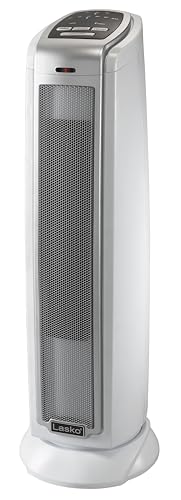
Heating Approach: This 22.5″ tower uses a patented comfort system to distribute 1500W of heat efficiently, suitable for medium-sized rooms where a taller profile helps with airflow without taking much floor space.
Controls & Schedule: Features include two heat settings plus a thermostat for auto regulation, and a programmable auto-off timer for up to 7 hours to manage overnight or daytime cycles.
Call 888-896-7031 for Free Local HVAC Quotes – Compare and Save Today!
Practical Notes: Its compact tall form is designed for portability and targeted whole-room heating. For households prioritizing simple, reliable features and a smaller tower footprint, this model is appropriate.
Dreo Space Heater, 1500W With 70° Oscillation

Oscillation & Coverage: This model offers 70° oscillation to increase lateral heat spread, making it effective in larger rooms or open-plan spaces where a taller heater can project heat farther.
Safety & Runtime Features: It lists 8 safety protections including smart tip-over, overheat protection, and a 12-hour timer with automatic power-off to reduce unattended risks.
Noise & Suitability: Designed for quiet operation (~34dB cited), the heater fits bedrooms, offices, and larger living spaces where low noise and consistent warmth are desired.
WINHL Space Heater 17″ PTC Ceramic Tower

Size & Heat Output: At 17″ tall, this PTC ceramic tower balances compact vertical design with up to 1500W heating power, suitable for smaller rooms that still benefit from a tall form factor.
Controls & Thermostat: It offers three power levels (700W/1000W/1500W) and a built-in thermostat to automatically adjust output. A remote and 12-hour timer add convenience.
Use Cases: The unit is aimed at bedrooms, small offices, and bedside use where a slimmer tower is preferred but thermostat control and safety are needed.
Buying Guide: How To Choose A Tall Indoor Heater
This buying guide highlights the main factors to weigh when selecting a tall heater for indoor spaces. Consider room size, heater type, safety features, noise level, controls, and energy use.
Room Size And Heat Output
- Match Wattage To Space: Most tower heaters top out at 1500W. These are suitable for single rooms up to ~200 sq ft; larger or open-plan areas may require multiple units or alternative heating solutions.
- Oscillation Helps Coverage: Models with wider oscillation angles or extended airflow design move heat across more of a room, useful when a tall heater needs to serve a living room or open layout.
Type Of Heater
- Ceramic/PTC Heaters: Quick warm-up and fan-assisted circulation. Good for fast targeted heating and commonly available in tower formats.
- Oil-Filled Radiators: Offer slower, steady radiant warmth and retain heat after shutdown. They are quieter and efficient for maintaining temperature but slower to respond.
Safety Features
- Tip-Over And Overheat Protection: Essential for upright towers, especially in homes with pets or children.
- Flame-Retardant Materials & Certifications: ETL listing or similar certification indicates independent safety testing.
- Child Lock & Cord Design: Child lock prevents unintended changes; a flat or reinforced cord reduces trip hazards and improves durability.
Controls, Scheduling & Thermostat Accuracy
- Digital Thermostat: Precision to 1°F increments can improve comfort and energy use; analog thermostats are simpler but less exact.
- Timer & Remote: Useful for pre-scheduling operation and for controlling the heater from a distance.
- Auto-Off & Adaptive Timers: Helpful for overnight use and unattended operation to limit runtime and reduce risk.
Noise Level And Sleep Use
- Decibel Ratings: Look for models advertising 30–35dB if you need quiet performance in bedrooms.
- Fan Type: Oblique airflow and optimized impellers can reduce fan noise while maintaining airflow.
Placement, Footprint & Height
- Tall Footprint: Tall heaters save floor space compared to bulky radiators; ensure the base is stable to reduce tip-over risk.
- Clearance: Maintain recommended clearances from furniture, curtains, and walls per manufacturer instructions.
Energy Efficiency & Running Costs
- Thermostat Use Lowers Consumption: A precise thermostat and timer reduce unnecessary runtime versus running at full power constantly.
- Mode Variety: ECO or low-power settings help balance warmth and electricity use.
Comparison Perspectives
- Performance Focus: Choose models with higher airflow speeds, oscillation, and 1500W output for larger rooms.
- Safety Priority: Select units with multiple ETL-listed protections and robust tip-over sensors for households with children or pets.
- Quiet/Bedroom Use: Prioritize listed dB levels, sleep modes, and minimal fan noise.
- Space-Constrained Rooms: Taller slim towers provide coverage while keeping floor footprint minimal; oil-filled units give sustained warmth if you prefer radiant heat.
When evaluating tall indoor heaters, balance coverage needs, safety certifications, thermostat accuracy, and noise levels. Match the heater style to your room layout and usage patterns—oscillating tall towers for wider coverage, compact tall units for small rooms, and oil-filled radiators for steady long-term warmth.
Tips for Getting the Best HVAC Prices
- Prioritize Quality Over Cost
The most critical factor in any HVAC project is the quality of the installation. Don’t compromise on contractor expertise just to save money. - Check for Rebates
Always research current rebates and incentives — they can significantly reduce your overall cost. - Compare Multiple Quotes
Request at least three estimates before making your choice. You can click here to get three free quotes from local professionals. These quotes include available rebates and tax credits and automatically exclude unqualified contractors. - Negotiate Smartly
Once you've chosen a contractor, use the proven strategies from our guide — How Homeowners Can Negotiate with HVAC Dealers — to get the best possible final price.