
Hardwired baseboard heaters provide reliable, low-maintenance warmth for many American homes. The selections below focus on true hardwired electric baseboard units, compatible covers, and control options that work with line-voltage systems. Use the summary table to compare models at a glance, then read short product sections and a buying guide that covers installation, sizing, safety, and thermostat choices.
| Product | Type / Voltage | Key Feature |
|---|---|---|
| KING 4K1210BW K Series Baseboard Heater | 120V Hardwired, 1000W | Aluminum Ribbon Fin Element, Full-Length Safety Cutout |
| Cadet F Series 36″ Electric Baseboard Heater (3F750-1W) | 120V Hardwired, 750W | All-Metal Construction, Requires Thermostat |
| Cadet F Series 24″ Electric Baseboard Heater (2F350W) | 240/208V Hardwired, 350/262W | Steel Construction, Compact Footprint |
| Fahrenheat PLF504 Baseboard Heater | Hydronic-Style Convection, Line Voltage | Quiet Fanless Operation, Overheat Protection |
| Mysa Smart Thermostat For Electric Baseboards | 240V/120V Control (Line-Voltage Compatible) | Smart Wi‑Fi Thermostat Designed For High Voltage Heaters |
Content Navigation
- KING 4K1210BW K Series Baseboard Heater, 4′ / 1000W / 120V
- Cadet F Series 36″ Electric Baseboard Heater (3F750-1W)
- Cadet F Series 24″ Electric Baseboard Heater (2F350W)
- Fahrenheat PLF504 Baseboard Heater, Small, Navajo White
- Mysa Smart Thermostat For Electric Baseboard Heaters 240V
- Buying Guide: How To Choose A Hardwired Baseboard Heater
- Determine Voltage And Circuit Compatibility
- Wattage, Zone Sizing, And Heat Output
- Control Options And Thermostat Compatibility
- Construction, Safety Features, And Noise
- Size, Length, And Aesthetics
- Installation Considerations
- Durability And Maintenance
- Comparing Perspectives: Efficiency, Comfort, And Cost To Operate
- When To Choose Covers Or Retrofit Options
KING 4K1210BW K Series Baseboard Heater, 4′ / 1000W / 120V

The KING K Series is a purpose-built hardwired baseboard heater delivering 1000W at 120V. It is not a plug-in model and must be hard-wired into a line-voltage circuit, matching the typical residential installation for permanent heating. The unit uses an aluminum ribbon fin element for efficient convective heat transfer and includes a full-length safety cutout to interrupt power in case of overheating or internal fault.
Construction and electrical design prioritize continuous wall-mount heating. Ideal for rooms requiring a mid-level wattage output, this model is often selected where permanent wiring and a dedicated thermostat or zone control are planned. Installation requires proper junction box wiring and adherence to local electrical codes.
Cadet F Series 36″ Electric Baseboard Heater (3F750-1W)
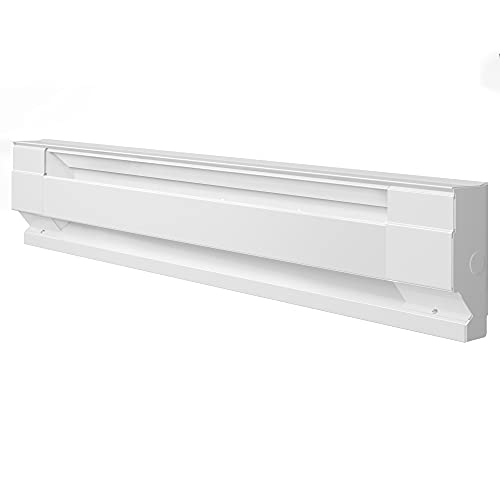
The Cadet F Series 36″ model delivers 750W at 120V and is built with 25-gauge steel body, a 20-gauge junction box with ground, and powder-coated all-metal construction. It is designed to be hardwired and requires a separate thermostat for temperature control, giving flexibility for wall or line-voltage thermostats.
Call 888-896-7031 for Free Local HVAC Quotes – Compare and Save Today!
Cadet units emphasize durable metal construction and compatibility with standard high-voltage thermostats. The product is suitable for rooms where a low-profile, reliable hardwired unit is desired and where an in-room or centralized thermostat is preferred for control and energy management.
Cadet F Series 24″ Electric Baseboard Heater (2F350W)
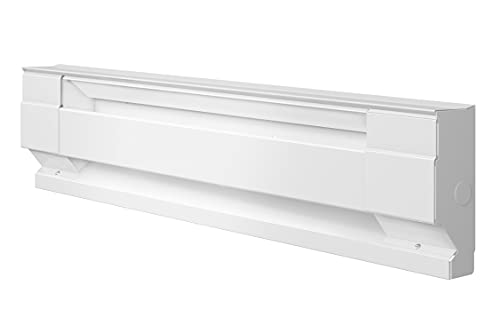
This shorter Cadet F Series unit supports 240/208V inputs with 350/262W outputs at the respective voltages and is made from steel for durability. It’s a compact choice for tight wall spaces, bathrooms, or supplemental zones where a smaller wattage and shorter length are appropriate.
Because it is designed for line-voltage operation, install it as a hardwired fixture with proper circuit matching and a compatible high-voltage thermostat or control. Its small footprint suits installations where space is limited but continuous convective heat is needed.
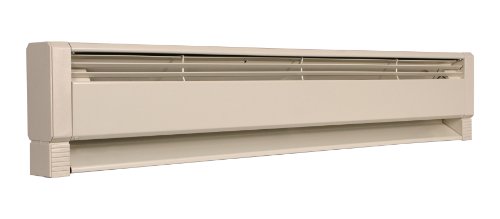
The Fahrenheat PLF504 is a hydronic-style convection baseboard heater that operates quietly with fanless operation, reducing airborne dust circulation and eliminating the popping or pinging typical of some metal element heaters. It includes overheat protection and a design that minimizes noise and allergen movement.
Call 888-896-7031 for Free Local HVAC Quotes – Compare and Save Today!
It behaves similarly to hydronic units in that it provides steady, even heat without forced air. The unit is suitable for bedrooms and living spaces where quiet, low-draft heating is preferable and where line-voltage hardwiring is used for a permanent installation.
Mysa Smart Thermostat For Electric Baseboard Heaters 240V

The Mysa smart thermostat is designed specifically for high/line-voltage electric heating systems, including 120–240V baseboard heaters and fan-forced units. It supports loads up to 1900W at 120V or 3800W at 240V and requires at least four wires (including neutral or a second live) for full functionality.
Mysa integrates with smart home platforms (HomeKit, Alexa, Google) and offers an app for scheduling, energy tracking, and temperature/humidity alerts. It is intended for hardwired systems rather than low-voltage or two-wire legacy baseboards. Compatibility checks are advised before purchase.
Buying Guide: How To Choose A Hardwired Baseboard Heater
Selecting a hardwired baseboard heater involves matching the heater to room size, electrical supply, control method, and safety preferences. The guide below highlights factors to compare and questions to answer before purchase.
Tips for Getting the Best HVAC Prices
- Prioritize Quality Over Cost
The most critical factor in any HVAC project is the quality of the installation. Don’t compromise on contractor expertise just to save money. - Check for Rebates
Always research current rebates and incentives — they can significantly reduce your overall cost. - Compare Multiple Quotes
Request at least three estimates before making your choice. You can click here to get three free quotes from local professionals. These quotes include available rebates and tax credits and automatically exclude unqualified contractors. - Negotiate Smartly
Once you've chosen a contractor, use the proven strategies from our guide — How Homeowners Can Negotiate with HVAC Dealers — to get the best possible final price.
Determine Voltage And Circuit Compatibility
- Verify House Wiring: Confirm whether the room supplies 120V, 208V, or 240V circuits. Pick a heater rated for that voltage.
- Match Circuit Breaker Capacity: Ensure the heater’s wattage aligns with the circuit breaker and wire gauge to avoid overloads.
- Hardwired Only: Many models (e.g., KING, Cadet) require hardwiring and are not plug-in; plan for electrician installation if needed.
Wattage, Zone Sizing, And Heat Output
- Estimate Room Heat Needs: General rule: 10–15 watts per square foot for moderate climates; adjust for insulation, ceiling height, and window area.
- Multiple Units For Large Areas: Use multiple baseboards or longer models to distribute heat evenly across the room.
- Model Wattage Differences: Choose higher wattage (e.g., KING 1000W) for primary heat vs. lower wattage Cadet units for supplemental heat.
Control Options And Thermostat Compatibility
- Line-Voltage Thermostats: Many hardwired baseboards require line-voltage thermostats. Confirm compatibility with the heater’s wiring and load.
- Smart Thermostats: Devices like the Mysa thermostat are designed for high-voltage systems and add scheduling, remote control, and integration with smart homes.
- Installation Wiring: Smart line-voltage thermostats often require additional conductors (neutral or second live); check existing wiring before purchase.
Construction, Safety Features, And Noise
- Element Type: Aluminum ribbon fin elements (KING) offer efficient convective transfer; steel-bodied units (Cadet) focus on durability.
- Safety Cutouts & Overheat Protection: Look for full-length safety cutouts, thermal cutoffs, and overheat protection to reduce risk in case of blocked airflow.
- Noise And Air Movement: Fanless or hydronic-style heaters (Fahrenheat) minimize dust circulation and operate quietly compared to fan-assisted units.
Size, Length, And Aesthetics
- Length Selection: Choose the baseboard length that fits available wall space; longer units spread heat more evenly.
- Cover Compatibility: Slip-on covers and adjustable covers (sold separately) offer cosmetic upgrades and added safety for households with children and pets.
- Finish And Color: Most units come in white or neutral colors; powder-coated steel finishes resist rust and discoloration.
Installation Considerations
- Professional Wiring: Hardwired units should be installed or inspected by a qualified electrician to ensure code compliance and safe breaker sizing.
- Junction Box Access: Verify that the heater’s junction box allows safe connection and grounding; Cadet units specify 20-gauge junction boxes with ground.
- Location And Mounting Height: Follow manufacturer guidance for clearances above floor and around furniture to ensure proper airflow and safety.
Durability And Maintenance
- Material Choice: Steel housings with powder-coat finishes resist rust; 21-gauge steel covers provide added longevity for retrofit applications.
- Cleaning: Periodic vacuuming of intake areas prevents dust buildup. Fanless designs reduce airborne dust movement and maintenance needs.
- Replacement Parts And Service: Check manufacturer support for replacement elements or end caps when purchasing less common sizes.
Comparing Perspectives: Efficiency, Comfort, And Cost To Operate
- Efficiency: All electric baseboards convert nearly 100% of electrical energy to heat, but thermostat control and zoning determine operating cost differences.
- Comfort: Hydronic-style or fanless convective units deliver steady, low-draft warmth. Ribbon element units provide rapid convective warming but may be more responsive to thermostat changes.
- Operational Cost: Energy cost depends on local electric rates and thermostat strategy. Smart thermostats with scheduling and setback can reduce runtime and costs.
When To Choose Covers Or Retrofit Options
- Replace Rusted Covers: Slip-on and adjustable galvanized covers restore appearance and improve safety around hot elements in older installations.
- Hydronic System Compatibility: Make sure covers and end caps fit the specific element profile, especially when retrofitting hydronic-style units.
- Child And Pet Safety: Single-panel covers that prevent direct touching can reduce burn risks while allowing convective airflow.