
Finding the right heating solution for a 1,200 square foot space depends on home layout, fuel preference, installation limits, and noise tolerance. The table below summarizes five relevant Amazon-listed options across wood-burning, ductless mini-split, wall-mounted infrared, and forced-air categories to help narrow choices quickly.
| Product | Type | Coverage / Key Feature |
|---|---|---|
| Ashley Hearth Pedestal Wood Burning Stove | Wood Stove | 68,000 BTU — Heats Up To 1,200 Sq. Ft. |
| Ashley Hearth AW1820E Wood Stove Insert | Insert | 69,000 BTU — Heats Up To 1,200 Sq. Ft. |
| ROVSUN 17000 BTU Mini Split | Ductless Mini-Split Heat Pump | All-season, Efficient 17 SEER2, For Up To ~1,000 Sq. Ft. |
| Heat Storm HS-1500-PHX-WIFI Infrared Heater | Wall-Mounted Infrared | Wi‑Fi Control, Space‑Saving Wall Mount — Point Heating |
| Dura Heat EUH1465 Electric Forced Air Heater | Portable Forced-Air | 1500W PTC Ceramic — Rugged For Garages/Workshops |
Content Navigation
Ashley Hearth Pedestal Wood Burning Stove

This pedestal wood stove is rated at 68,000 BTU and specifies heating capability for up to 1,200 square feet. The unit is firebrick lined to improve combustion efficiency and durability. It accepts logs up to 18″ in length and includes a large ash pan for easier cleanup.
Considerations: Wood stoves provide sustained radiant and convective heat for open plans or multi-room circulation when paired with ceiling fans or ducting. Installation may require a certified flue, chimney clearance, and local code compliance. Fuel storage, emissions, and ongoing maintenance (chimney sweeping, ash removal) should be factored into lifecycle costs and responsibilities.
Ashley Hearth AW1820E Wood Stove Insert

The AW1820E is a wood stove insert designed to replace or retrofit an existing fireplace. Rated at 69,000 BTU, it lists coverage up to 1,200 square feet. It features a cast iron feed door, large ceramic glass viewing window, and heavy gauge steel with firebrick lining for improved heat retention.
Call 888-896-7031 for Free Local HVAC Quotes – Compare and Save Today!
Considerations: Inserts convert a fireplace into an efficient heating appliance and limit heat loss up a chimney compared with an open fire. Installation requires measuring the existing firebox, proper sealing to ensure good airflow and safety, and adherence to manufacturer clearance specs. Inserts are a compromise between central systems and standalone stoves when fireplace infrastructure exists.
ROVSUN 17000 BTU Mini Split

The ROVSUN mini-split is a ductless heat pump offering 17 SEER2 efficiency and a 17,000 BTU capacity intended for rooms up to roughly 1,000 square feet depending on climate and insulation. Features include cooling, heating, dehumidify, inverter technology, quiet operation (~30 dBA low), and built-in modes like ECO, sleep, and timer.
Considerations: Mini-splits deliver zoned temperature control with high efficiency and lower operational noise. For a 1,200 sq. ft. area, performance depends on layout—open floor plans and ceiling heights affect load calculations. Professional sizing and placement are recommended to ensure the unit can meet heating demand in colder climates and to optimize outdoor condenser siting and refrigerant line lengths.
Heat Storm HS-1500-PHX-WIFI Infrared Heater

This wall-mounted infrared heater emphasizes localized, radiant heating with Wi‑Fi control for smartphone temperature management. It includes a touch screen, digital thermostat, remote, and tip-over safety shutoff. The space-saving design is positioned for bedrooms, offices, kitchens, and targeted zones.
Call 888-896-7031 for Free Local HVAC Quotes – Compare and Save Today!
Considerations: Infrared heaters heat objects and people directly rather than the entire air volume, making them efficient for supplementing central heat or for targeted comfort. Coverage claims vary with ceiling height, insulation, and room configuration. Wall mounting preserves floor space, but permanent placement requires stud anchoring and electrical considerations. Infrared units are most effective for spot heating rather than replacing a primary system for large open areas.
Dura Heat EUH1465 Electric Forced Air Heater
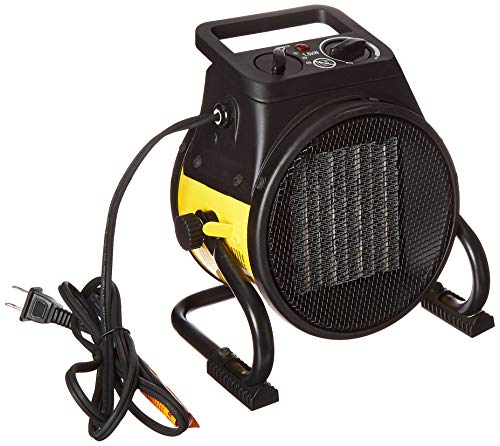
The Dura Heat EUH1465 is a compact, forced-air electric heater delivering 1,500W of PTC ceramic output and advertised as a rugged option for garages, workshops, or small enclosed spaces. It provides heat and fan-only settings and features a pivoting base for directional airflow.
Considerations: Forced-air electric heaters produce convective warmth quickly but are limited by wattage and will struggle to heat 1,200 sq. ft. as a sole source. They are well-suited for workshop zones, intermittent on-demand warmth, or supplemental heating in poorly insulated areas. Electrical circuit capacity and safety certifications should be confirmed for prolonged use in work environments.
Buying Guide: Choosing The Right Heater For 1,200 Sq. Ft.
Matching heating technology to a 1,200 square foot space requires balancing heat output, installation complexity, operating cost, zoning needs, and safety.
Heat Output And Sizing
- BTU And Watts: Use BTU for combustion systems and heat pumps; use watts for electric heaters. A general rule: tightly insulated homes need fewer BTUs per square foot than poorly insulated spaces.
- Sizing For Mini-Splits: Follow professional load calculations (Manual J) rather than relying solely on square footage. Mini-splits are rated for ideal conditions; colder climates may need higher capacity or supplementary heat.
Fuel Type And Operating Costs
- Wood: Wood stoves and inserts offer high delivered heat per cord but require storage, handling, and chimney maintenance. They can be cost-effective where firewood is available and acceptable for emissions and indoor air quality.
- Electric: Infrared and forced-air electric heaters are lower upfront cost and easier to install but can be expensive for continuous whole-house heating. They are excellent for zone heating and intermittent use.
- Heat Pumps / Mini-Splits: Higher efficiency for year-round heating and cooling. Moderate installation complexity and generally lower operating costs than electric resistance in most climates.
Installation And Space Considerations
- Chimney/Flue Needs: Wood stoves and inserts require proper flues, clearances, and professional installation to meet codes.
- Electrical Supply: High-power electric heaters and heat pumps may require dedicated circuits or 240V connections. Confirm breaker capacity and outlets.
- Placement: For radiant or wall-mounted units, position for direct coverage of occupied areas. For mini-splits, indoor unit placement impacts airflow and temperature uniformity.
Noise, Air Quality, And Comfort
- Noise: Mini-splits operate quietly; forced-air fans and portable units vary by model and speed.
- Air Quality: Combustion appliances and portable units can affect indoor air; ensure adequate ventilation, use clean-burning appliances, and follow maintenance guidance.
- Thermostat And Controls: Smart thermostats, Wi‑Fi controls, and timers improve comfort and efficiency by reducing wasted run time.
Durability, Maintenance, And Safety
- Maintenance: Wood systems require ash removal and chimney inspections; mini-splits need periodic filter cleaning; electric units require minimal maintenance but need safe storage and usage protocols.
- Safety Features: Look for tip-over protection, overheat cutoffs, and certifications (ETL, AHRI, EPA) where applicable.
Comparison Perspectives
- Whole-Space Primary Heat: Wood stoves/inserts and properly sized mini-splits can serve as primary heat sources for many 1,200 sq. ft. homes depending on climate and insulation.
- Supplemental Or Zoned Heat: Electric infrared, wall-mounted units, and portable forced-air heaters are well-suited for supplemental heating of frequently used rooms.
- Installation Complexity Vs Flexibility: Electric units offer plug-and-play flexibility; wood and mini-splits need professional install but yield greater sustained efficiency and comfort for whole-space heating.
Final Selection Tips: Prioritize a heat source that aligns with your building envelope, local climate, fuel availability, and tolerance for installation work. When in doubt, consult a licensed HVAC or chimney professional for sizing and code compliance to ensure safety and performance.
Tips for Getting the Best HVAC Prices
- Prioritize Quality Over Cost
The most critical factor in any HVAC project is the quality of the installation. Don’t compromise on contractor expertise just to save money. - Check for Rebates
Always research current rebates and incentives — they can significantly reduce your overall cost. - Compare Multiple Quotes
Request at least three estimates before making your choice. You can click here to get three free quotes from local professionals. These quotes include available rebates and tax credits and automatically exclude unqualified contractors. - Negotiate Smartly
Once you've chosen a contractor, use the proven strategies from our guide — How Homeowners Can Negotiate with HVAC Dealers — to get the best possible final price.