
Looking For A Universal Underdash Heater Or A/C Kit? This guide compares five widely available universal car heater and underdash A/C kits suited for classic cars, trucks, vans, and hot rods. Below is a quick summary table to help you compare core specs at a glance.
| Product | Type | Key Capacity / Feature | Brand |
|---|---|---|---|
| UNIVERSAL AIR CONDITIONING KIT 404-000 (Rectangular Louvers) | Underdash A/C + Heat | 12,700 BTU, 359 CFM, 4-way louvers | Generic |
| Kit Universal A/C Under Dash 404-000 DBSL | Underdash A/C + Heat | 12,700 BTU, 359 CFM, 4-way louvers | Generic |
| Generic A/C Kit UnderDash Evaporator 404-100 | Underdash A/C + Heat | 12,700 BTU, double-shaft blower motor | Generic |
| Saihisday 12V Auxiliary Heater (4 Ports) | 12V Auxiliary Heater | Compact heater, windscreen defrost & demist | Saihisday |
| 13,000 BTU 12V Low Profile Auxiliary Cab Heater | Auxiliary Cab Heater | 13,000 BTU, low profile for cabs/UTVs | American Cooling Solutions |
Content Navigation
- UNIVERSAL AIR CONDITIONING KIT 404-000 Rectangular Louvers
- Kit Universal A/C Under Dash 404-000 DBSL 12.700 BTU
- Generic A/C KIT UnderDash Evaporator 404-100 Heat And Cool
- Saihisday 12V Car Auxiliary Heater 4 Ports Underdash
- 13,000 BTU 12 Volt Low Profile Universal Auxiliary Cab Heater
- Buying Guide: How To Choose A Universal Car Heater Kit
- 1. Type: Refrigerant A/C vs Auxiliary Heater
- 2. Capacity And Airflow
- 3. Physical Fit And Mounting
- 4. Compressor And Condenser Compatibility
- 5. Electrical Requirements
- 6. Controls And Usability
- 7. Installation Complexity And Tools
- 8. Safety And Compliance
- 9. Parts, Serviceability And Spare Components
- 10. Comparison Perspectives
UNIVERSAL AIR CONDITIONING KIT 404-000 Rectangular Louvers

This underdash kit is a full heat-and-cool universal evaporator assembly designed for retrofits in classic cars, hot rods and other vehicles. The kit lists an E-404-000 DBSL evaporator with four black star louvers and a 4-way airflow pattern to distribute conditioned air under the dash.
Core components reference a 12,700 BTU capacity evaporator (359 CFM), a Sanden-style compressor (C5H142A12V SD508), and a parallel-flow condenser (CPF142018). The package mentions an expansion valve, 3-speed blower switch, mounting bracket, drain hose and a 10′ flexible duct.
Dimensions provided are L 15¾” x D 12½” x H 6″, and duct diameter is 2½”. These specifications indicate compatibility with many compact and mid-size cabin installations, though local fit checks and custom mounting may be required for unique dashboards.
Kit Universal A/C Under Dash 404-000 DBSL 12.700 BTU

Call 888-896-7031 for Free Local HVAC Quotes – Compare and Save Today!
This kit shares the E-404-000 DBSL evaporator platform and the same stated 12,700 BTU capacity and 359 CFM airflow rating. The product description emphasizes the same 4-way aluminum coil, rotative 3-speed blower switch, and included mounting hardware.
The condenser listed (CPF142018 parallel flow) and the Sanden-style compressor are identical in spec to similar packages, suggesting interchangeability of components across the manufacturer’s model variations. Installation considerations include routing the 10′ flexible duct and securing the condenser in front of the radiator for adequate airflow.
For retrofit projects, the stated expansion valve and drain hose inclusion are useful for reducing additional parts sourcing, but professional installation or HVAC experience will help ensure correct refrigerant charge and proper hose fittings.
Generic A/C KIT UnderDash Evaporator 404-100 Heat And Cool

The E-404-100 underdash evaporator differs by calling out a 12-volt double-shaft blower motor and a slightly different pass count for the coil. It retains the 12,700 BTU and 359 CFM ratings and includes an expansion valve, thermostat and rotative 3-speed blower control.
Component list includes the same Sanden-style compressor (C5H142A12V SD508) and parallel-flow condenser (CPF142018). The product notes optional configurations for fully electric compressors and mentions additional cost for those variants, indicating modular component choices.
Call 888-896-7031 for Free Local HVAC Quotes – Compare and Save Today!
Mechanical dimensions are comparable to other kits (L 15¾” x D 12½” x H 6″), making the evaporator suitable for similar dashboard cavities. The double-shaft blower motor could simplify mounting when space allows dual-direction airflow or drive options.
Saihisday 12V Car Auxiliary Heater 4 Ports Underdash

This compact 12V auxiliary heater is positioned as a simple underdash solution for defrosting, demisting and providing cabin heat. It uses a powerful blower motor with four vent holes and is wired for a small electrical draw (noted as 8A power supply in the listing).
Designed for direct connection to the vehicle battery, the unit is a non-refrigerant heater (uses engine coolant or internal heating element depending on configuration). The listing indicates a 5/8″ (16 mm) water hose fitting requirement where vehicle coolant integration is intended; hoses are not included.
Electrical installation requires correct wiring of speed control switch leads; the listing includes basic switch instruction notes. Because it is compact, this heater is best suited to smaller cabins, auxiliary defrosting and as a supplement to primary HVAC systems.
13,000 BTU 12 Volt Low Profile Universal Auxiliary Cab Heater
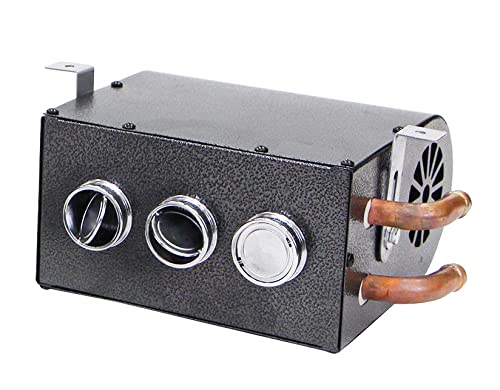
This low-profile auxiliary cab heater is specified at 13,000 BTU and targeted for universal applications in tractors, trucks, buses, vans, cars and UTVs. The kit mentions inclusion of an installation kit, suggesting mounting brackets and basic hose/clamp hardware are provided.
As an auxiliary cab heater, the unit is designed to fit tight spaces behind or under dash panels. Its higher BTU rating is useful for larger cabs where quick warm-up and strong defrost performance are required. Fitment to the vehicle firewall and coolant lines should be verified before purchase.
Intended uses include worker vehicles, off-road machines and utility cabs; the product emphasizes universality, but proper ventilation and exhaust routing (for combustion heaters) must be addressed per the specific heater type and local regulations.
Buying Guide: How To Choose A Universal Car Heater Kit
Selecting the right universal underdash heater or A/C kit requires assessing vehicle compatibility, heating/cooling capacity, installation complexity and safety features. Below are key considerations to compare across options.
1. Type: Refrigerant A/C vs Auxiliary Heater
- Refrigerant A/C Kits (underdash evaporators + compressor + condenser) provide cooling and typically include heat exchange functionality. They require refrigerant handling, condenser mounting space, and compressor drive or electric compressor wiring.
- Auxiliary Heaters (12V electric/coolant-based or diesel/combustion heaters) provide cabin heat and defrost without refrigerant. They often integrate with engine coolant or burn fuel; installation varies significantly.
2. Capacity And Airflow
- BTU and CFM ratings indicate heating/cooling power and airflow. For small cars and classic dashboards, 12,000–13,000 BTU kits and ~350–400 CFM are commonly cited.
- Match the BTU/CFM to cabin volume: larger vans and trucks need higher capacity or multiple ducts to achieve even distribution.
3. Physical Fit And Mounting
- Confirm evaporator dimensions and duct diameter to ensure they fit available dash cavities and duct runs. Typical underdash evaporators list dimensions (example: L15¾” x D12½” x H6″).
- Consider flexible duct length and routing; many kits include 10′ of flexible duct (2½” diameter). Custom mounting brackets or trimming may be necessary.
4. Compressor And Condenser Compatibility
- For refrigerant systems, check the compressor type (e.g., Sanden-style C5H142A12V) and compressor drive/pulley options. Ensure your vehicle accessory drive can accept the compressor or plan for an electric compressor retrofit.
- Condenser placement must have good airflow; parallel-flow micro-tube condensers are common in compact aftermarket kits but require space ahead of the radiator.
5. Electrical Requirements
- Check voltage and current draw. Many auxiliary heaters are 12V and pull several amps; A/C systems may require additional wiring for compressor and blower relays.
- Include proper fusing, relays, and switch gear. Some kits include a wiring harness and rotative 3-speed switch; others require custom wiring.
6. Controls And Usability
- Look for adjustable blower speeds, thermostats, and clear switch instructions. Mechanical thermostats and 3-speed switches are common on underdash kits.
- Consider duct outlet style: 4-way louvers, circular ducts or chrome star vents affect airflow distribution and cabin air direction control.
7. Installation Complexity And Tools
- Refrigerant A/C retrofits typically require HVAC tools, vacuum pumps, refrigerant charging gauges and certified handling if existing refrigerants are involved.
- Auxiliary heaters may need coolant routing or exhaust routing and can require drilling the firewall, installing fuel lines (for combustion heaters) or electrical integration.
8. Safety And Compliance
- Ensure combustion-type auxiliary heaters have approved exhaust routing and proper clearance to prevent in-cabin fumes. Follow manufacturer installation guidelines.
- Confirm that electrical modifications follow vehicle wiring standards and include fuses and proper ground connections.
9. Parts, Serviceability And Spare Components
- Check whether the kit provides expansion valves, drain hoses, mounting brackets and ducting. These reduce the need for additional purchases.
- Consider availability of replacement parts for compressor clutches, blower motors or louvers if long-term maintenance is expected.
10. Comparison Perspectives
- Cost-to-completeness: Some packages include nearly everything needed; others are evaporator-only requiring a compressor or condenser sourced separately.
- Performance vs. space: Higher BTU and CFM typically demand more condenser area and airflow; low-profile heaters prioritize fit over raw power.
- DIY vs. Professional Installation: Refrigerant systems often require professional HVAC service for vacuuming and charging, while electric auxiliary heaters may be DIY-friendly with clear wiring and hose routing.
By weighing type, capacity, fit, electrical demands and installation complexity, you can narrow options to the universal kit that best suits your vehicle and your intended use—whether a full A/C retrofit or a compact auxiliary heater for defrost and cabin comfort.
Tips for Getting the Best HVAC Prices
- Prioritize Quality Over Cost
The most critical factor in any HVAC project is the quality of the installation. Don’t compromise on contractor expertise just to save money. - Check for Rebates
Always research current rebates and incentives — they can significantly reduce your overall cost. - Compare Multiple Quotes
Request at least three estimates before making your choice. You can click here to get three free quotes from local professionals. These quotes include available rebates and tax credits and automatically exclude unqualified contractors. - Negotiate Smartly
Once you've chosen a contractor, use the proven strategies from our guide — How Homeowners Can Negotiate with HVAC Dealers — to get the best possible final price.